Table of Contents
- Introduction
- Why Indianapolis Feels Like One Big Metro Area
- How to Choose the Best Small Cities Near Indianapolis
- 1. Greenfield, Indiana: Small City Living Near Indianapolis (East Side)
- 2. Franklin, Indiana: A Growing Small City South of Indianapolis
- 3. Lebanon, Indiana: Northwest Small City Near Indianapolis to Watch
- What Makes These Small Cities Near Indianapolis Stand Out
- FAQs About Living in Small Cities Near Indianapolis
- Final Thoughts on Living in Small Cities Near Indianapolis
Introduction
Indianapolis has grown a lot. And when a big city expands, it can start to blur the line between neighborhoods, suburbs, and nearby towns. That is why people searching for small cities near Indianapolis often tell us they do not want to feel fully swallowed by Indy or trapped in a constant suburb-like routine.
There is a sweet spot a little farther out. The communities below are close enough that daily errands and city access are still easy, but they still have their own identity, their own downtown energy, and their own “this is our place” vibe. We are focusing on three Indiana cities that have not disappeared into the metro the way some surrounding areas have.
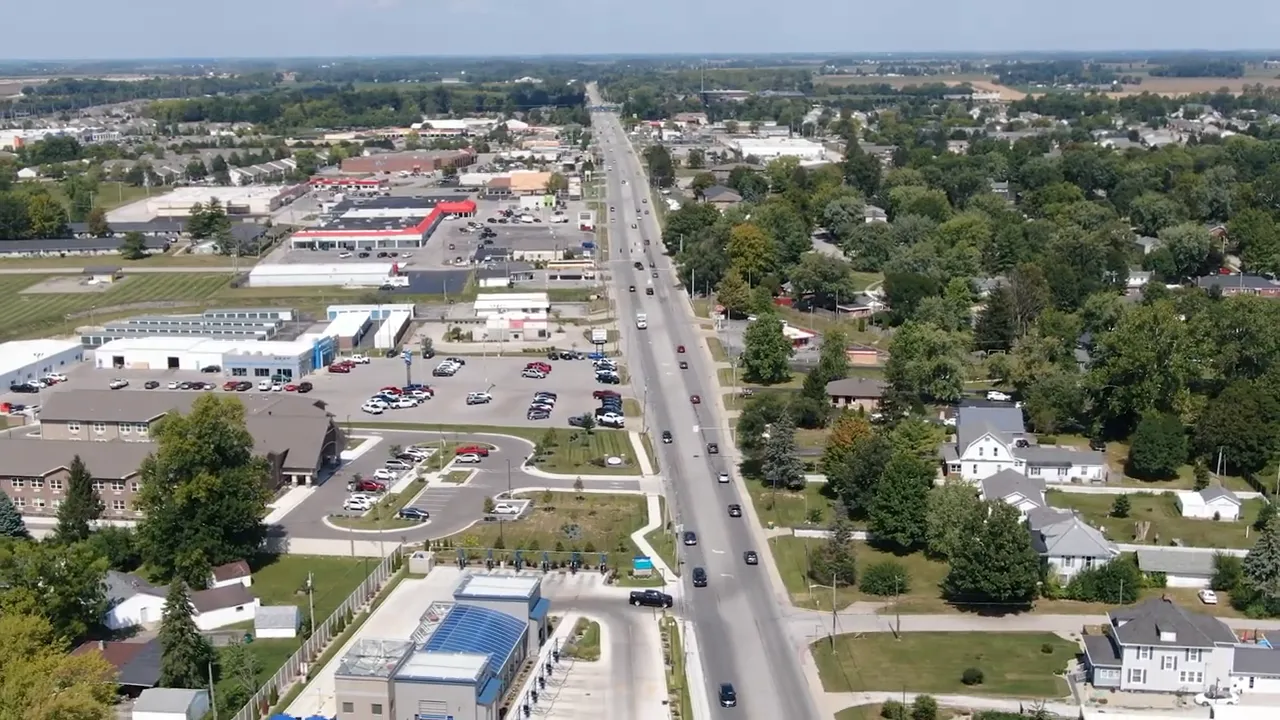
THINKING OF BUILDING YOUR NEXT HOME? HERE'S A LOCAL GUIDE TO BUILDERS AND PITFALLS
Why Indianapolis Feels Like One Big Metro Area
One of the funniest things we run into when looking at the Indy metro is how seamless it can feel. Borders between cities can be hard to see. Sometimes the towns grow until the change in signage and streets is barely noticeable.
That is great if you love convenience. But if you crave a clearer sense of “we live here,” it can be a little unsatisfying. People want to be near Indianapolis without losing the feeling that they are living in a smaller community.
How to Choose the Best Small Cities Near Indianapolis
Over the last couple of years, conversations with clients and people house hunting in the area tend to follow a similar pattern.
Most of the time, they are not trying to escape traffic entirely or live completely off the grid. They just want something different from the “bigger suburb” experience. The priorities usually look like this:
- More small town feel than the busiest metro areas
- Not isolated meaning still close to Indianapolis
- Easy access to stores and everyday shopping
- Local identity with unique restaurants, events, and downtown character
With that framework in mind, we will highlight three smallish cities that still keep enough separation to feel distinct while staying connected to Indy.
1. Greenfield, Indiana: Small City Living Near Indianapolis (East Side)
Greenfield is our first stop, and it is positioned to the east of Indianapolis. It is also one of those places where it is easy to underestimate what you get because the map can make distances and spacing look bigger than they really are.
What Greenfield feels like day to day
Greenfield sits near I70, and that matters for two reasons. First, it helps explain why it does not feel isolated. Second, it makes the daily commute or regular trips to Indianapolis far more realistic than you might assume.
In practical terms, when you head toward the I70 area and exits like State Road 9, you will notice a lot happening commercially. That is where you get major retailers and all the typical conveniences people need, plus fast food options that are easy to find.
Even with all of that convenience, Greenfield is still a smaller city, with roughly 24,000 people. That is enough population to support its own infrastructure while still leaving room for local downtown character.
Downtown Greenfield has a classic setup
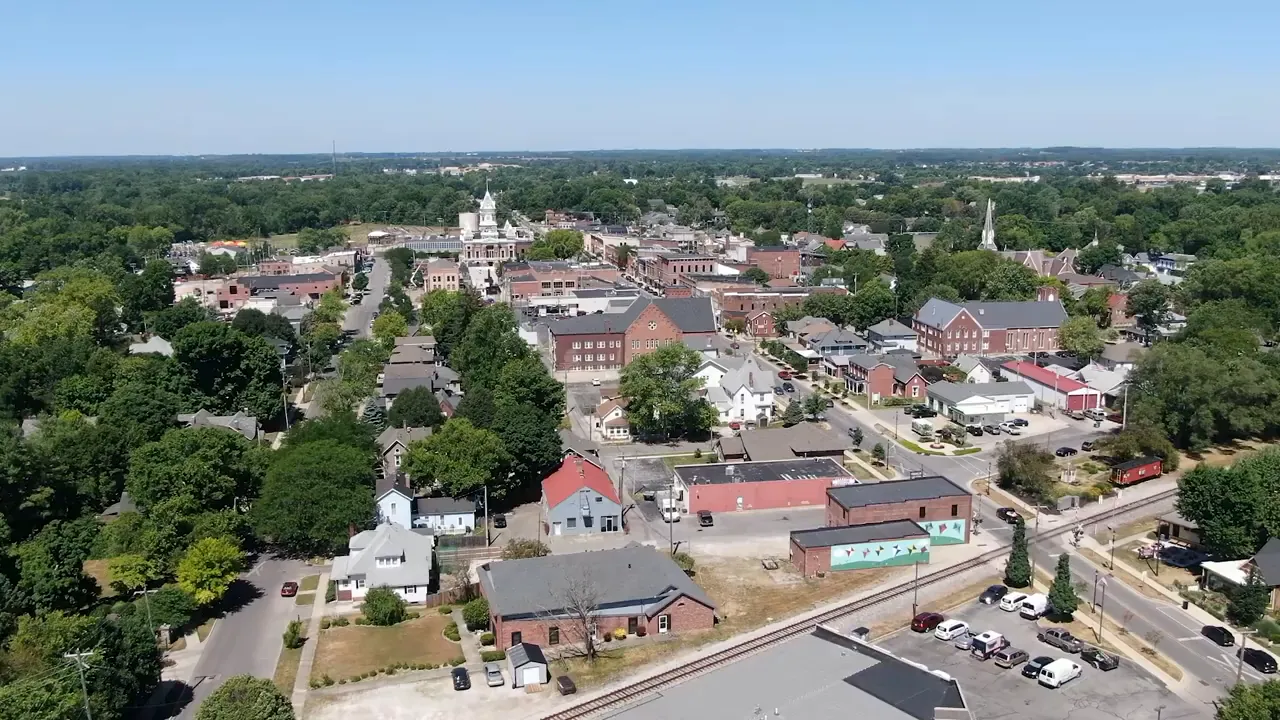
One of the most memorable parts of Greenfield is downtown. It is not just “a few shops.” It has that older style layout where the courthouse is right on the square, with buildings and shops surrounding it. The vibe is more traditional, and the center feels like the heart of the community.
It looks rural on the edge, but it is not far from Indy
Here is where Greenfield gets interesting. There can be a noticeable gap between Greenfield and Indianapolis in some directions. But the spacing is not a permanent wall. Growth continues to fill in, especially near the I70 corridor.
One detail we like to keep in mind is that the area around Greenfield sits in Hancock County, which has less than 100,000 people across the entire county. When you compare that to the larger Indy metro of about 2 million people, it is easier to understand why there is still room for development.
Even if you do not live right next to the densest parts, you can still have a Greenfield address. And as you move west toward Indianapolis, it becomes more active and more residential, with commercial corridors picking up as well.
Commute and access: why I70 changes the story
One big “okay, but how do we get there” question comes up a lot. If you work in Indianapolis, you are probably using I70 from Greenfield. The reason people keep mentioning it is that it tends to be straightforward, and it has been widened over time.
Today, the commute from Greenfield to downtown Indianapolis is described as just under 30 minutes with no traffic. And during growth, the area is getting even more accessible, including changes that are planned around additional exits along I70.
So yes, Greenfield can feel separate. But it does not require a “long way around” to get to what Indianapolis offers.
Signs of growth near Greenfield
Greenfield is not just staying put. There are major indicators that it is growing as a hub, especially near airport and distribution activity.
Along the way, you will see references to the Indianapolis Regional Airport, which is described as the second busiest airport in the Indy Metro, plus large distribution centers, including a brand new Walmart Distribution Center and an Amazon distribution facility.
Those are not small hints. They are clear signals that the space between Indianapolis and Greenfield is continuing to fill in.
2. Franklin, Indiana: A Growing Small City South of Indianapolis
Next is Franklin, located to the south of Indianapolis. If Greenfield is the east-side option, Franklin is the south-side choice that keeps the small-city feel without being too far from Indy’s core.
Size: slightly bigger than Greenfield
Franklin is a little larger than Greenfield, with about 26,000 people.
The location matters too. You can head out of Indianapolis on I65 to get there. There is also US31 as an alternative, though it is described as busier because it is not an interstate.
Separation exists, but it is closing
Franklin has that small gap feeling on the map. But like many areas around Indy, that separation is not a static picture. As nearby suburbs expand, Franklin is getting pulled closer in daily life.
On the north side you have Greenwood, and that area is described as a popular suburb that has a lot of people. As Greenwood grows, Franklin starts to feel closer. There are also other nearby communities like Center Grove mentioned as exceptions, along with areas such as New Whitland and Bargersville further south.
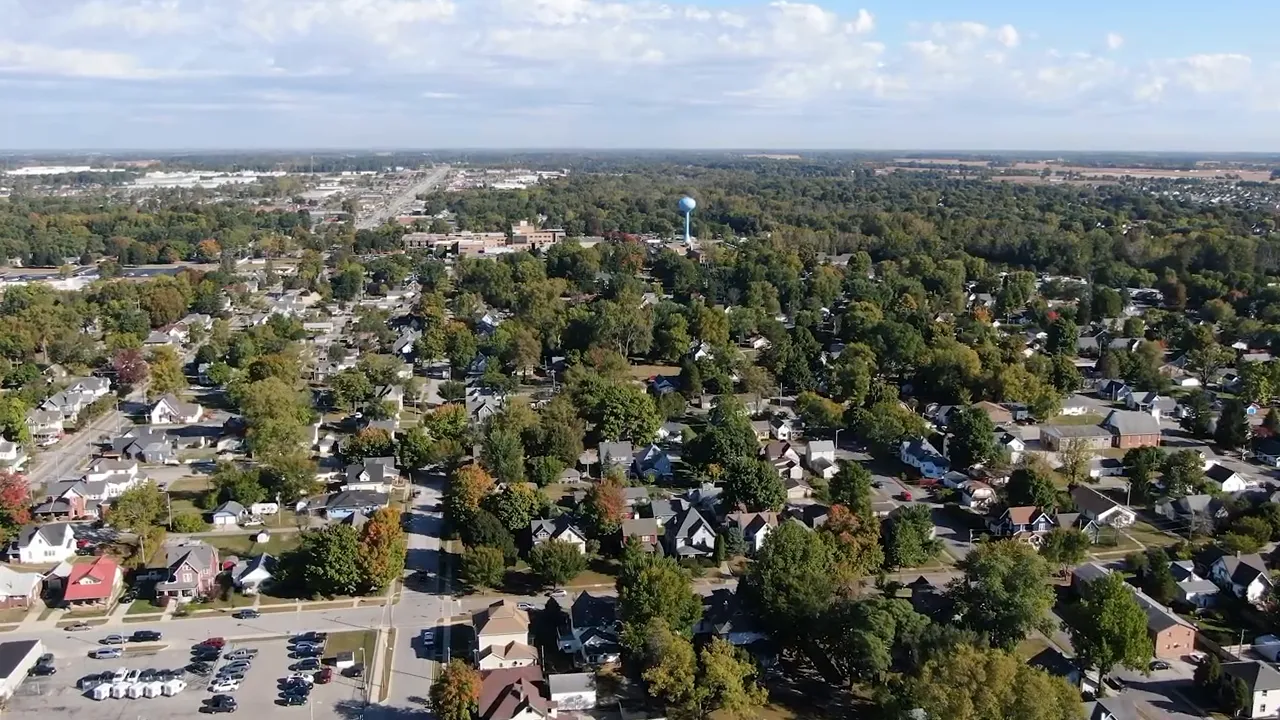
How Franklin access works
The practical takeaway is this: Franklin may look like it stands apart, but it is still connected. It is described as having easy routes to jump back north to Indianapolis either via US31 or I65.
So even if you want a calmer, less suburban feeling, you are not giving up speed to get where you need to go.
Commercial activity keeps showing up along corridors
One thing we keep noticing across the Indy fringe is how quickly corridors fill in. In Franklin, you see that with grocery and retail options. Kroger's appear along US31, and commercial develops in stretches that make daily needs more convenient without requiring long drives.
Franklin has its own downtown identity
Franklin College is one of the landmarks that shows up on maps and in local life, but the downtown scene is also a major draw.
Franklin is described as having a neat downtown area with shops and restaurants, again using that older square style concept. It is noted as being larger than what you have in Greenfield, and it is described as being connected to a large park right next to it, with many events happening there.
And while it is described as happening and lively, the vibe is still positioned as a little less hectic than the kinds of busy places many people try to avoid when they move to Indy’s periphery.
Commute time: less than you might fear
The biggest hesitation we hear about any “small city near Indianapolis” is distance to downtown. For Franklin, the guidance is that if you can get to I65 access quickly, it should not take 40 minutes unless traffic is heavy. Otherwise, it is framed as probably taking less than that to reach downtown.
So the separation is real, but not so dramatic that daily city access becomes a burden.
3. Lebanon, Indiana: Northwest Small City Near Indianapolis to Watch
Now we head to the northeast part of the metro, where Lebanon sits. If you want something that feels distinct but still has easy highway access, Lebanon is one of the standout options.
Highway access: I65 is the main story
Lebanon is described as being a place where most access into Indianapolis is via I65. That matters because I65 is described as a fairly short drive down into Indianapolis, often at 70 mph, into the Northwest side of the city.
So even though Lebanon has separation from Indianapolis, it is still set up for efficient travel.
Lebanon’s size and downtown appeal
Lebanon is described as about 17,000 people in the transcript as a marker of its scale, but the same section then says “Lebanon is actually about 177,000 people.” To avoid confusing that, we are going to treat the overall intent as clear: Lebanon is the largest of the three communities mentioned (in population terms) and it is growing.
What stands out is the downtown. The theme is consistent with the other options: small community energy, small city feel, and a downtown area with unique shops and a lot going on.
The “gap” closing effect
Lebanon also has that “gap” on the map. It can look like there is significant distance between Lebanon and Indianapolis, but the explanation is that the gap is closing, especially around areas like Whitestown and Zionsville that fill in the space.
In this case, a major development driver is mentioned: Eli Lilly is opening a facility in Indianapolis, and that is described as bringing jobs and helping pull development in this direction.
That is why Lebanon keeps coming up. It is positioned as being pulled closer to Indianapolis as the areas in between grow and the commuting distances feel shorter in daily reality.
Shopping and services along the way
One of the most practical ways to gauge a community is to check what happens right near the exits and main commercial corridors. Lebanon has busy development areas that include things like recognizable chain restaurants and retail options along major parkways.
There is an example described of stopping at a Starbucks in Whitestown on the way up to Lebanon, where “just about every single thing you can imagine commercial” is present, including a Lowe’s and other dining options.
Drive time to downtown Indianapolis
Drive time is described in a couple different ways based on where you start on I65, but the key range is that it is around 40 minutes at most, and potentially a bit less if traffic is not heavy.
So Lebanon is not “right next door,” but it is also not so far that it becomes an ordeal. It is still within a workable commuting zone for many people.
What Makes These Small Cities Near Indianapolis Stand Out
Greenfield, Franklin, and Lebanon all share a similar goal: they keep enough separation to feel like they have their own personality, but they still stay connected through major roads.
Here is the simple comparison based on what we highlighted:
- Greenfield: Close access via I70, with a classic downtown square and strong retail presence near exits. Commute to downtown is described as just under 30 minutes without traffic.
- Franklin: Access via I65, with a downtown that has older square character, shops and restaurants, and a park-connected feel. Downtown drive time depends on I65 access and traffic but is framed as under 40 minutes in many conditions.
- Lebanon: Access via I65 as the main route, plus growing commercial corridors near Whitestown. Downtown drive time is described as around 40 minutes at most when traffic is not extreme.
If you are shopping for small cities near Indianapolis, that combination is often the “winning formula.” You get daily conveniences and access to Indy when you need it, but you also get a community identity that feels calmer, more local, and more distinct.
THINKING OF BUILDING YOUR NEXT HOME? HERE'S A LOCAL GUIDE TO BUILDERS AND PITFALLS
FAQs About Living in Small Cities Near Indianapolis
What counts as a small city near Indianapolis
We generally look for communities that are populated enough to support everyday life and local downtown activity, but still have enough separation that it feels like its own place. In the Indy context, that means you can reach Indianapolis easily, but the community does not feel like a direct extension of the metro.
Which highway helps the most for these areas
For the three communities covered here, I70 is the main connector for Greenfield, while I65 is the main connector for Franklin and Lebanon. That highway access is a big reason these places feel close without feeling identical to Indianapolis.
Is the gap between these places and Indianapolis going away
It can be. The “gap” can look larger on maps than it feels in real life. Growth patterns along corridors like I70 and I65 keep filling in space between Indianapolis and smaller communities. The upside is that you still get separation, but you also get increasing access and services.
Are these places good for daily shopping
Yes. Each community described includes commercial corridors with major retailers and grocery options, plus restaurants and everyday services. The goal is to avoid isolation while still maintaining that small city feel.
Which place feels most like a traditional downtown
Greenfield is specifically described as having a classic courthouse square setup with shops and older downtown structure. Franklin is also described as having that older square concept, though on a larger scale, with a connected park and frequent events.
Final Thoughts on Living in Small Cities Near Indianapolis
Choosing a small city near Indianapolis is a great way to enjoy the perfect balance between community charm and easy access to city amenities. Whether you're drawn to the historic downtown of Greenfield, the vibrant community of Franklin, or the growing hub of Lebanon, each of these cities offers something unique. They're all within reach of Indianapolis, yet they maintain their own distinct character and small-town feel.
If you're ready to explore these cities and find your perfect home near Indianapolis, call me today at 317-932-8620. Let's discuss your options and make your dream move a reality!
READ MORE: Living in Westfield, Indiana: How Growth is Shaping the Future of the City