Table of Contents
- Introduction to the Indianapolis Real Estate Market
- Reason 1: Why Indianapolis Real Estate Prices Are Staying Flat
- Reason 2: Rising Inventory in the Indianapolis Housing Market
- Reason 3: Longer Days on Market in Indianapolis Real Estate
- Reason 4: How Indianapolis Neighborhoods and Counties Are Performing Differently
- Reason 5: What’s Supporting the Indianapolis Real Estate Market
- Reason 6: Why Indianapolis Real Estate Feels Confusing Right Now
- What This Means for Buyers and Sellers in Indianapolis Real Estate
- FAQs About Indianapolis Real Estate
- Final Thoughts
Introduction to the Indianapolis Real Estate Market
The Indianapolis real estate is doing something that feels contradictory at first glance. Inventory is up more than 22%. Homes are taking longer to sell. More than half of listings are seeing price reductions before they go under contract. And yet prices are mostly flat instead of falling hard, and Indianapolis is still being called one of the best markets in the country for buyers.
That combination is exactly why so many buyers and sellers feel like this market is hard to read right now. It is not the frenzy of 2021 and 2022. It is also not a collapse. It is a more selective, more patient, more strategy-driven market where the old playbooks can cost real money.
If you are trying to understand the Indianapolis real estate, the key is this: the headline numbers only tell part of the story. What matters now is neighborhood, county, price band, and how well a home is positioned from day one.
EXPLORE HOMES FOR SALE IN INDIANAPOLIS
Reason 1: Why Indianapolis Real Estate Prices Are Staying Flat
One of the strangest parts of the current Indianapolis real estate is that prices are barely moving.
Redfin had the Indianapolis median sale price around $240,000, up about 2.1% year over year. Zillow’s typical home value was roughly $222,000 to $226,000, up only about 0.5% year over year. Either way, the takeaway is basically the same: prices are close to flat.
That matters because both sides of the market came in with expectations that are not really being rewarded.
- Buyers expected bigger price drops.
- Sellers expected meaningful appreciation.
- Neither side is really getting the story they imagined.
What makes the Indianapolis real estate feel weird is not that values are crashing. They are not. It is that supply has increased significantly, but prices have not followed it down in a major way.
Normally, when inventory jumps more than 20%, you would expect stronger downward pressure on prices. That has not happened here across the board. Instead, the market is stuck in an in-between phase where prices are stable, but the experience of buying and selling has changed a lot.
So if you are trying to interpret the data, this is the first important reset: the current Indianapolis real estate is not a free fall. It is a market where momentum has cooled, but the floor is still holding.
Reason 2: Rising Inventory in the Indianapolis Housing Market
The supply side has changed in a way buyers have not seen in years. For a long time, one of the biggest frustrations in the Indianapolis real estate was simply not having enough homes to choose from.
You would find a decent house, hesitate for a moment, and it was gone.
That is not the dominant experience anymore.
Active listings in Indianapolis hit 2,226 homes in January 2026, which was up 22.2% year over year. Overall supply sat around 2.6 months. On paper, that still technically leans seller-friendly. On the ground, though, it feels very different from the market people remember from the post-COVID frenzy.
Buyers now have something they have been missing for a long time: choice.
That changes behavior in a big way. Buyers can now:
- Compare neighborhoods more carefully
- Weigh new construction against resale homes
- Look at several options within the same price range
- Pause before making a decision
- Negotiate more intentionally
That is exactly why Zillow named Indianapolis the number one housing market for buyers in 2026. More inventory plus improving affordability creates a better environment for people who need time and options.
For sellers, though, this is where the pressure starts. More options make buyers more selective. More selective buyers move more slowly. And once buyers stop making snap decisions, homes that are overpriced or poorly positioned start to get exposed quickly.
That is one of the biggest shifts in the Indianapolis real estate right now: buyers have breathing room, and sellers can no longer rely on urgency to do the heavy lifting.
Reason 3: Longer Days on Market in Indianapolis Real Estate
The clearest sign of that seller pressure is how long it is taking homes to sell.
In February 2026, the median days on market in Indianapolis climbed to 73 days. Back in October 2025, it was around 50 days. That is a significant jump in a short amount of time, and it tells you buyer behavior has changed in a real way.
Another stat makes the point even more clearly: in 2025, over 56% of active listings needed at least one price reduction before going under contract.
That is not a minor trend. That is the market telling sellers they cannot price based on memory anymore.
Homes were also closing at about 98.3% of list price on average. On a $300,000 home, that works out to more than $5,000 in negotiated savings. A few years ago, that kind of room often did not exist.
The issue is not that homes are bad. In many cases, the issue is that the strategy is outdated.
A lot of sellers still have the 2021 to 2022 market in their heads:
- Homes selling in a matter of days
- Multiple offers
- Offers over asking price
- Waived contingencies
That market was very real. It happened. But in many parts of the metro, it is gone.
When sellers use yesterday’s strategy in today’s Indianapolis real estate, the result is predictable:
- Stale listings
- Frustration
- Price cuts
- Worse leverage than they would have had with a better launch
The first week matters more now because the market is no longer forgiving bad pricing.
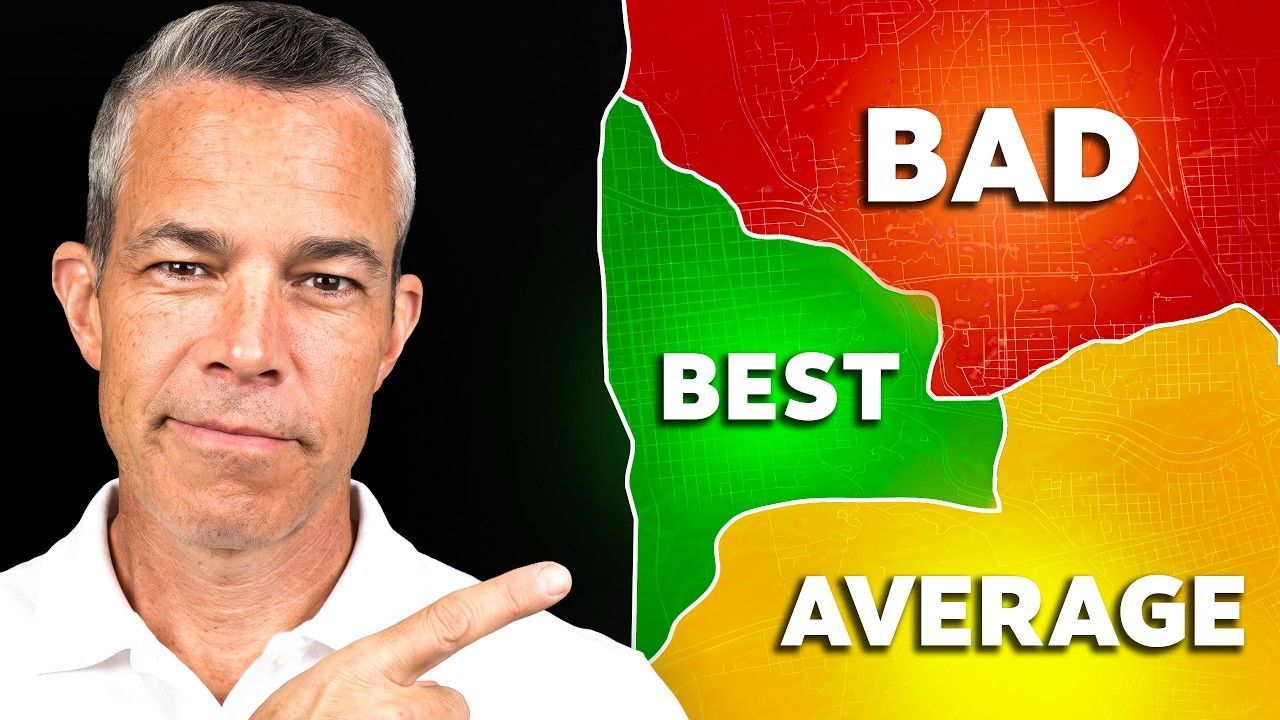
Reason 4: How Indianapolis Neighborhoods and Counties Are Performing Differently
This is where broad headlines about the Indianapolis real estate start to break down. Indianapolis is not one uniform market. It has never been one uniform market.
Right now, the differences between counties, neighborhoods, and price bands are more visible than they have been in a long time.
Hamilton County is holding up much better
Hamilton County, including Carmel, Fishers, Westfield, and Noblesville , is performing significantly better than the broader metro in many cases.
The median sale price there has been running around $420,000 to $470,000 and sometimes even higher. Well-positioned homes are still moving quickly. Some listings are still getting multiple offers and selling in under a week.
That means the competitive energy is still alive in Hamilton County in a way that simply is not true everywhere else.
Marion County is where more of the softness is showing
Marion County, which is basically Indianapolis proper, is where much of the softness is concentrated.
There, you are more likely to see:
- Higher inventory
- Longer time on market
- More price flexibility
- More room to negotiate than a year ago
That said, even Marion County is not all one thing. Some areas near downtown, the north side, and the near north side still have steady demand. Other areas are sitting longer and giving buyers more leverage.
Price band matters too
The Indianapolis real estate also behaves differently depending on price range.
- Under $250,000: still seeing real competition because inventory is tighter and first-time buyers remain active.
- Around $400,000 in softer pockets: buyers often have the most leverage, and sellers need sharper pricing strategy to avoid going stale.
This is exactly why generic advice is dangerous right now. A buyer strategy that works in one pocket of Marion County may fail completely in Westfield. A pricing strategy that works in a hot Hamilton County neighborhood can backfire badly in a softer part of Indianapolis proper.
Reason 5: What’s Supporting the Indianapolis Real Estate Market
So if inventory is up, homes are sitting longer, and sellers are having to reduce prices, why has the Indianapolis real estate not corrected more sharply?
A big part of the answer is that Indianapolis still has real structural support underneath it.
Major investment projects are creating future demand
Several large-scale projects are helping support long-term housing demand across the metro:
- IU Health Academic Health Campus downtown, a $4.3 billion project that is expected to bring in medical professionals, researchers, and healthcare workers who will need housing.
- 16 Tech Innovation District, just northwest of downtown, which is building out a life sciences and tech hub and already influencing nearby neighborhoods.
- LEAP District in Boone County, along with Eli Lilly’s manufacturing expansion, representing more than $13 billion in committed private investment.
- Indianapolis International Airport expansion and other logistics investments on the west, southwest, and east sides that are adding jobs and workforce housing demand.
These are not vague future hopes. These are real, funded developments that add jobs, bring talent into the region, and support the broader Indianapolis real estate.
Indianapolis still looks affordable to relocation buyers
Another reason the market has not fallen apart is that Indianapolis still attracts people from higher-cost markets.
Buyers relocating from places like Chicago, California, and the East Coast often look at what their money buys in Indianapolis and make a simple calculation: even at today’s prices, this still feels like value.
That continued relocation demand helps explain why the market can feel slower in the short term without behaving like a distressed market.
So yes, there are signs of cooling. But the foundation under the Indianapolis real estate is stronger than many people assume when they only look at inventory and days on market.
Reason 6: Why Indianapolis Real Estate Feels Confusing Right Now
Put all of this together and you get a market that feels confusing for a reason.
Here are the facts:
- Inventory is up more than 22% year over year.
- Days on market have risen sharply from post-COVID lows.
- More than half of listings are seeing price reductions.
- Prices are still mostly flat rather than dropping dramatically.
- Buyers are still active.
- Major economic projects are still moving forward.
If you only focus on the first three points, the Indianapolis real estate can look troubled. If you only focus on the last three, it can look stronger than it actually feels in day-to-day transactions.
The truth is in the middle.
This is a market with signs of cooling, but not the behavior of a broken market. That is why so many people misread it.
The biggest mistakes buyers and sellers are making right now
Both sides are getting tripped up by old assumptions.
Buyers who assume every listing can be lowballed just because homes are sitting longer are going to lose the right house when demand is still strong in that segment or neighborhood.
Sellers who price based on what the neighbor got at the peak in 2022 are often going to sit, reduce, and end up in a weaker position than if they had priced correctly from the beginning.
That gap between expectation and reality is where people are losing money in the current Indianapolis real estate.
What This Means for Buyers and Sellers in Indianapolis Real Estate
So what does this actually mean if you are buying or selling in the Indianapolis real estate right now?
The honest answer is this: Indianapolis is in an in-between market.
It is no longer the hyper-frenzied seller’s market of two or three years ago. But it is also not a panic market where everything is unraveling. The local economy, job growth, and relocation demand are too strong for that simple story.
What it is now is:
- More patient
- More selective
- More neighborhood-specific
- More dependent on strategy
If you are buying
You probably have more leverage than you have had in years, especially in softer parts of Marion County and in some of the mid-to-upper price bands.
But that does not mean every pocket is soft.
You still need to know:
- Where demand remains strong
- Where homes are still moving fast
- Where negotiation room is real
- Which listings are overpriced versus which ones are simply well-positioned
Treat the entire Indianapolis real estate like one giant buyer’s market and you can absolutely miss the right home.
If you are selling
You can still get strong results, but you need to meet today’s buyers where they actually are.
The sellers getting clean sales right now are not waiting for the market to come back to them. They are:
- Pricing correctly from day one
- Positioning the home well against current competition
- Understanding how their neighborhood and price band are behaving right now
- Avoiding the temptation to anchor to peak-era comps
That is the difference between a smooth sale and a stale listing with multiple price cuts.
The bottom line
The old playbooks do not fit the Indianapolis real estate cleanly anymore.
Buyers who lowball everything will miss good opportunities. Sellers who price off old comps will sit. The opportunity is still there for both sides, but only if the strategy matches the part of the market you are actually in.
That is what is really happening right now. Not a crash. Not a boom. Just a market in transition, where local knowledge matters more than broad headlines.
THINKING OF BUILDING YOUR NEXT HOME? HERE'S A LOCAL GUIDE TO BUILDERS AND PITFALLS
FAQs About Indianapolis Real Estate
Is the Indianapolis real estate crashing?
No. The Indianapolis real estate is showing signs of cooling, but not signs of collapse. Inventory is up, homes are taking longer to sell, and price cuts are more common, but prices are still mostly flat rather than falling sharply. That points to a slower, more selective market, not a broken one.
Why are prices staying relatively flat even with more inventory?
The market still has structural support. Large-scale job-creating investments, continued relocation from higher-cost states, and steady buyer demand in certain neighborhoods and price bands are helping keep prices from dropping much more across the board.
Is Indianapolis a buyer’s market right now?
In some areas, yes. In others, not fully. The Indianapolis real estate is highly segmented. Buyers have more leverage in softer parts of Marion County and in some mid-to-upper price ranges. But strong homes in Hamilton County and tighter lower price bands can still be competitive.
Which areas are performing better in the Indianapolis real estate?
Hamilton County, including Carmel, Fishers, Westfield, and Noblesville, is generally holding up better than many other parts of the metro. Well-priced homes there can still move quickly and attract multiple offers. Marion County is where more of the softness and negotiation room is showing up.
Are homes under $250,000 still competitive?
Yes. In the Indianapolis real estate, homes under $250,000 are still seeing meaningful competition because inventory in that range is tighter and first-time buyers remain active.
What is the biggest mistake sellers are making right now?
The biggest mistake is pricing based on peak-market expectations from 2021 and 2022. In today’s Indianapolis real estate, that often leads to stale listings, price reductions, and weaker final outcomes than if the home had been priced correctly from the start.
What is the biggest mistake buyers are making right now?
The biggest mistake is assuming every listing can be heavily negotiated. Some areas and homes still have strong demand. Buyers who apply the same lowball strategy everywhere can miss the right home, especially in stronger northside pockets and Hamilton County.
Why was Indianapolis named a top market for buyers?
Indianapolis was recognized as a top market for buyers because inventory has improved and affordability remains better than in many other metro areas. That combination gives buyers more options and better decision-making space than they have had in years.
Final Thoughts
The Indianapolis real estate market in 2026 is shifting—not crashing. With higher inventory, longer days on market, and more price reductions, strategy matters more than ever.
If you’re thinking about buying or selling, the right timing and pricing approach can make a major difference in today’s market.
Ready to talk through your next move with real local guidance? Call 317-932-8620 to connect with Jason Compton today, and get clarity on what to do in your neighborhood and price range.
READ MORE: Moving to Indianapolis Suburbs: The Hidden Tradeoffs Nobody Talks About