If you have been around Indianapolis real estate for more than five minutes, you already know the common oversimplification.
Most people assume the wealthiest neighborhoods in Indianapolis are basically just newer luxury builds in Carmel and Fishers, plus a handful of gated streets here and there. That is not wrong. It just misses the point.
Table of Contents
- Introduction to Indianapolis' Wealthiest Neighborhoods
- Area #1 - Meridian Hills: Indianapolis' Historic Luxury Neighborhood
- Area #2 - Williams Creek: The Hidden Gem of Indianapolis
- Area #3 North Meridian Street Historic District
- Area #4 - Golden Hill: A Legacy Neighborhood with Historic Charm
- Area #5 - Lockerbie Square: Preserving Indianapolis' Heritage
- How to Buy in Indianapolis' Wealthy Neighborhoods
- FAQs About Indianapolis' Legacy Neighborhoods
- Final Thoughts on Indianapolis' Wealthiest Areas
Introduction to Indianapolis' Wealthiest Neighborhoods
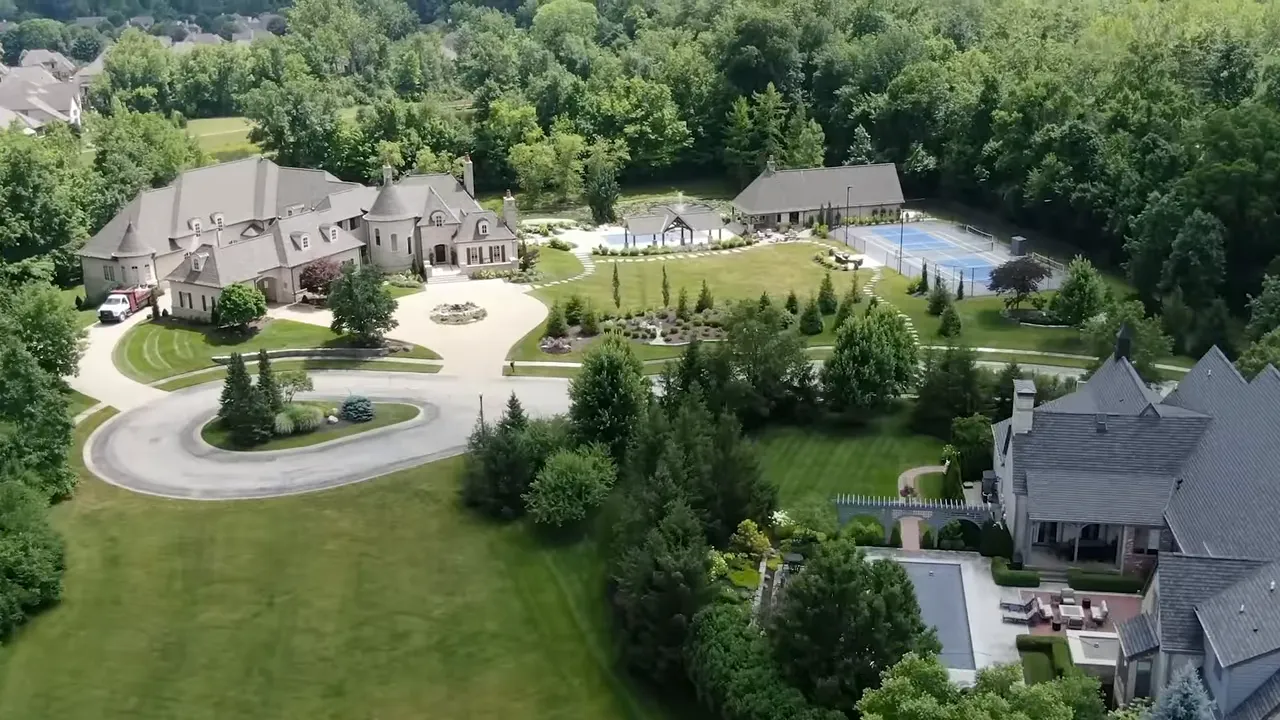
Inside the city limits, the real “legacy” wealth map is tighter, older, and far more specific. The places that hold their value long-term do not just look expensive. They feel established. They preserve their identity. And once you know what to look for, you can avoid overpaying for a neighborhood that has prestige on the sign but not the staying power behind the scenes.
Below are the key clusters and the practical signals that separate true legacy from newer prestige, including how the streetscape, lot design, and inventory patterns work in each area.
VIEW HOMES FOR SALE IN INDIANAPOLIS
Area #1 - Meridian Hills: Indianapolis' Historic Luxury Neighborhood
Meridian Hills is not a generic “north side neighborhood.” It functions like its own town. It was established in 1937, and it has a wooded, mature, residential character that you feel the second you drive in.
Why Meridian Hills reads old money
- Land-first design: This is not a grid layout where you can easily measure the neighborhood from the street. The setting does the work. Trees, curving drives, and visual separation create the privacy.
- Country club geography: Meridian Hills Country Club opened in 1923, and being adjacent to an established, historic club is a classic old money signal.
- Hard to see from the main road: If you are just driving north or south on Meridian Street, it can be surprisingly difficult to see the homes. The neighborhood hides its best features behind mature canopy and interior streets.
Where it is
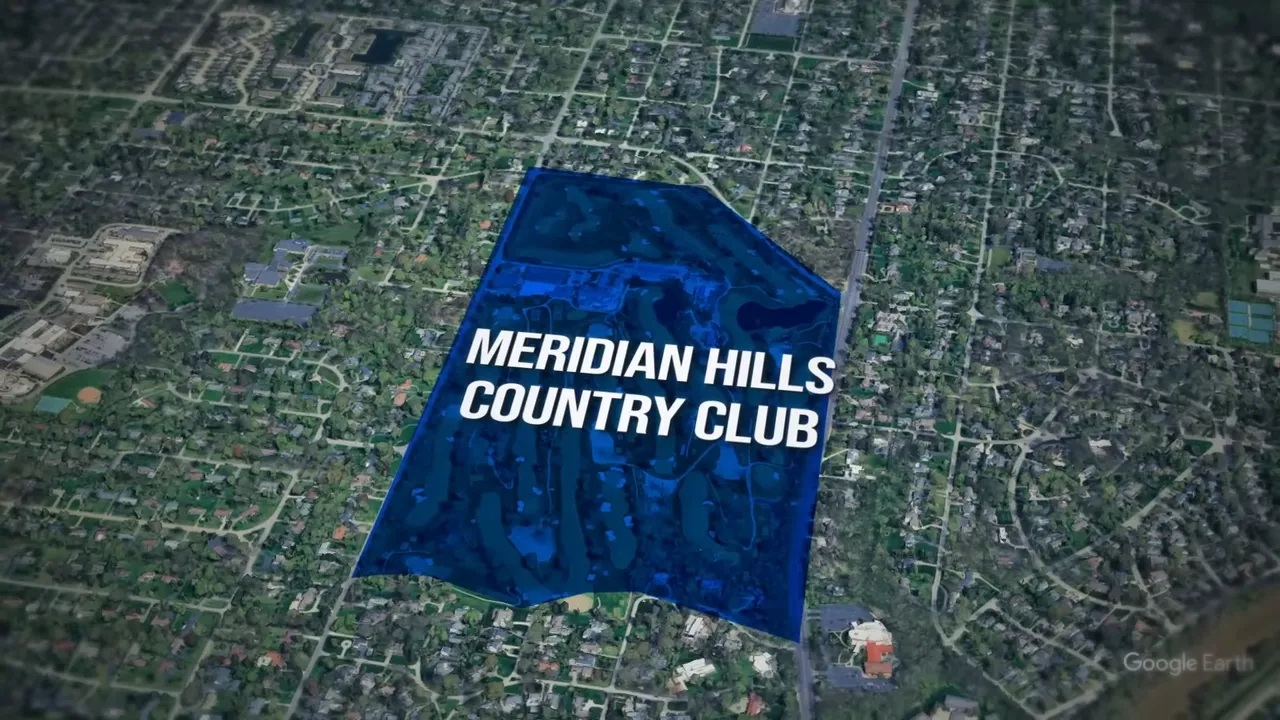
Picture it roughly bordered by Spring Mill Road, College Avenue, and the White River, with Meridian Street running through the middle.
What the buyer reality looks like
Meridian Hills is not where you go hunting for the least expensive homes. Prices can be well above typical “entry luxury,” and listings tend to reflect the privacy, exclusivity, and mature lot values that are hard to reproduce elsewhere in Indianapolis.
In other words, you are not only buying a house. You are buying mature land, privacy, and an established residential feel.
There are other pockets in Indianapolis that can deliver similar maturity and privacy, but if you want the classic “legacy lane” experience, Meridian Hills is one of the clearest examples.
Area #2 - Williams Creek: The Hidden Gem of Indianapolis
From Meridian Hills, the lane tightens even more. Williams Creek was originally planned as an exclusive community for wealthy buyers in 1925 and incorporated into a town in 1932.
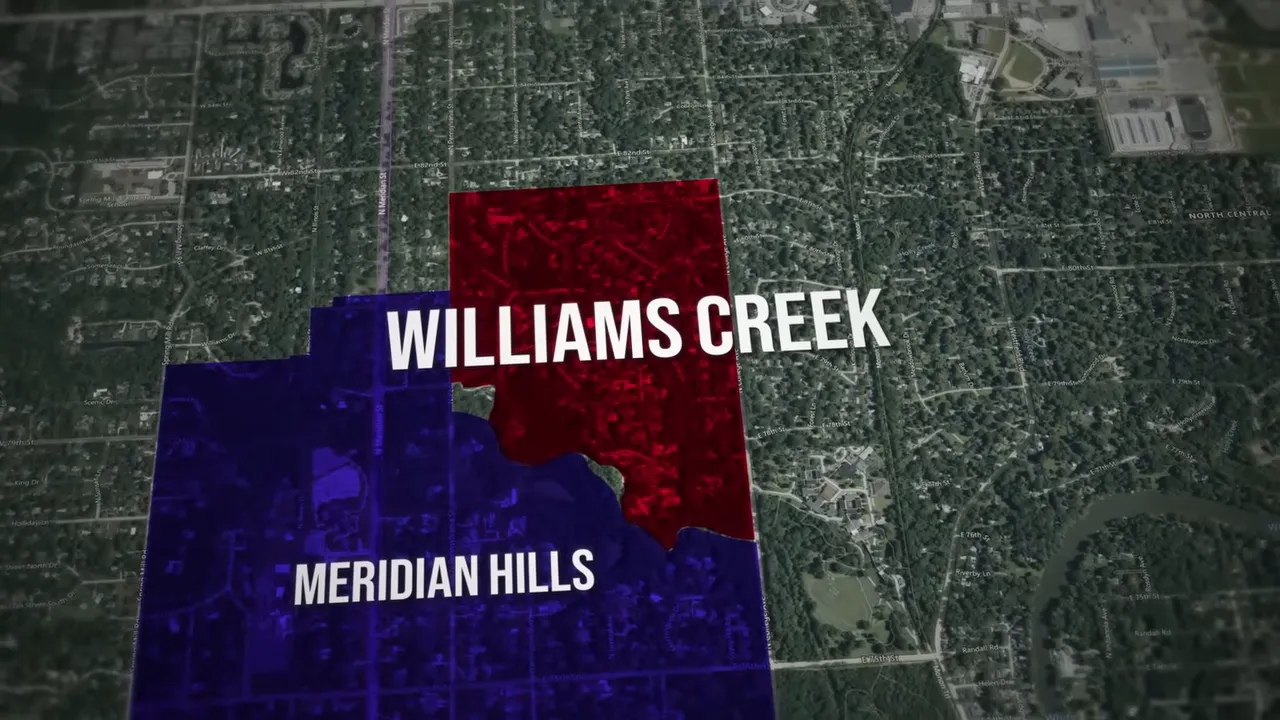
One of the most telling parts is how subtle it is. If you drive by, you often do not even realize you are passing through Williams Creek.
Why Williams Creek reads old money
- Designed to be a prestige address: Large, individually designed homes plus spacious lots are the baseline.
- Not a grid: The streets are winding and irregular. You cannot just “scan” the neighborhood from the perimeter roads.
- It is built for privacy: It is extremely wooded and hard to see from the road, which is exactly the point.
What you get on the inside
Williams Creek has some of the more expensive properties you will see within Indianapolis city limits. The key is that the neighborhood offers a very specific combination:
- wide streets
- big lots
- dense tree coverage
- homes that feel individually placed, not “mass produced” into a subdivision
Inventory reality
The inventory is usually thin. The total neighborhood is about 163 homes, which means you are typically shopping a narrow pool of available opportunities.
That matters because thin inventory is often how old money behaves. It does not mean nothing sells. It means the market does not get to see everything all the time.
Area #3 North Meridian Street Historic District
Now we move to the corridor everyone recognizes, but most people shop it the wrong way.
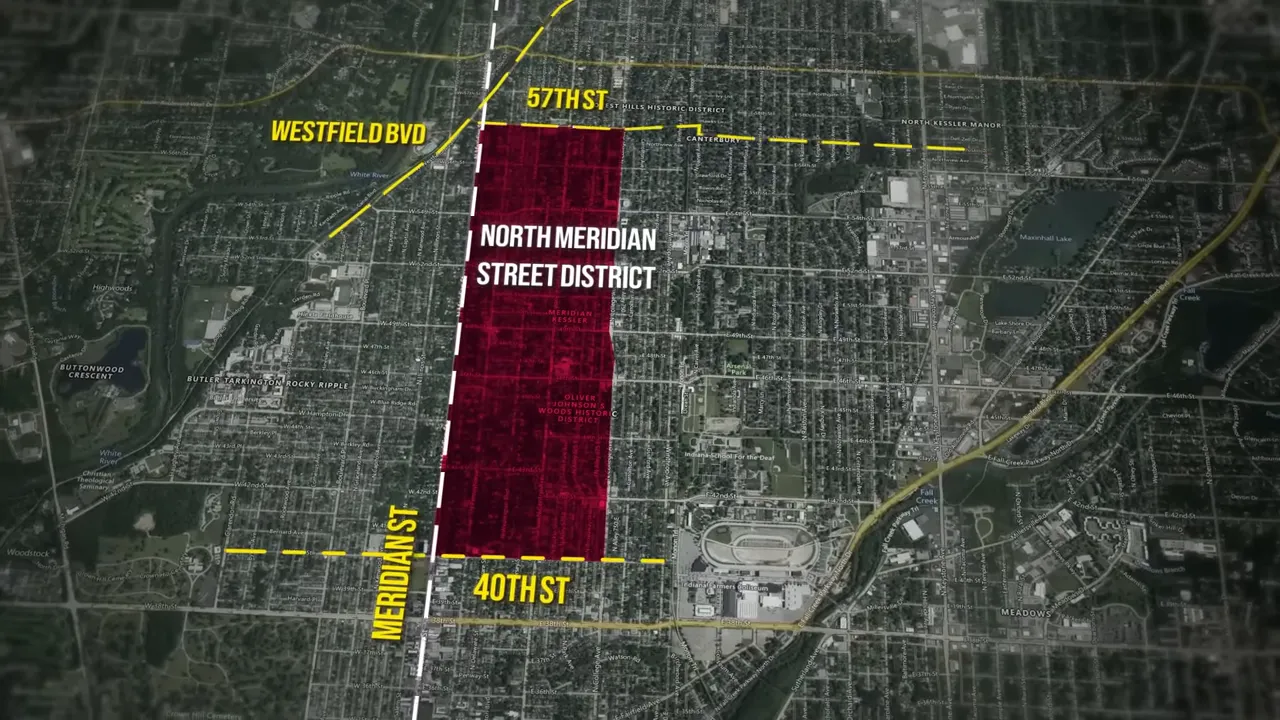
The focus here is the North Meridian Street Historic District, running roughly from 40th Street to 57th Street, near where Meridian Street and Westfield Boulevard intersect. The district sits around the area you cross the canal.
Why this lane reads old money
- It is on display: Unlike Meridian Hills and Williams Creek, these homes are not hidden. Meridian Street is busy, and the properties present themselves. Driveways, setback rhythm, and architectural presence are part of the value.
- Historic preservation: This section was listed on the National Register of Historic Places in 1986.
- Architectural consistency: Development occurred roughly between 1900 and 1936 with high-style architecture in mind such as Tudor, Colonial, and Classical Revival.
- Cultural weight: Notable residents included Booth Tarkington, tying the area’s legacy to the identity of the blocks themselves.
What buyers should compare here
This is where people get tripped up. In a legacy corridor like North Meridian, you are not just comparing bedrooms and bathrooms. You are comparing:
- architecture and style integrity
- history of the property
- block feel and street rhythm
- setbacks and traffic patterns
- how the street presents to the public
Meridian Hills versus North Meridian
Meridian Hills and Williams Creek often sell you on privacy and maturity. North Meridian sells you on a different kind of legacy. It is the “street that shows you what it is” version of old money.
Area #4 - Golden Hill: A Legacy Neighborhood with Historic Charm
If you want old money that is both historic and niche, Golden Hill is one of the most interesting areas around.
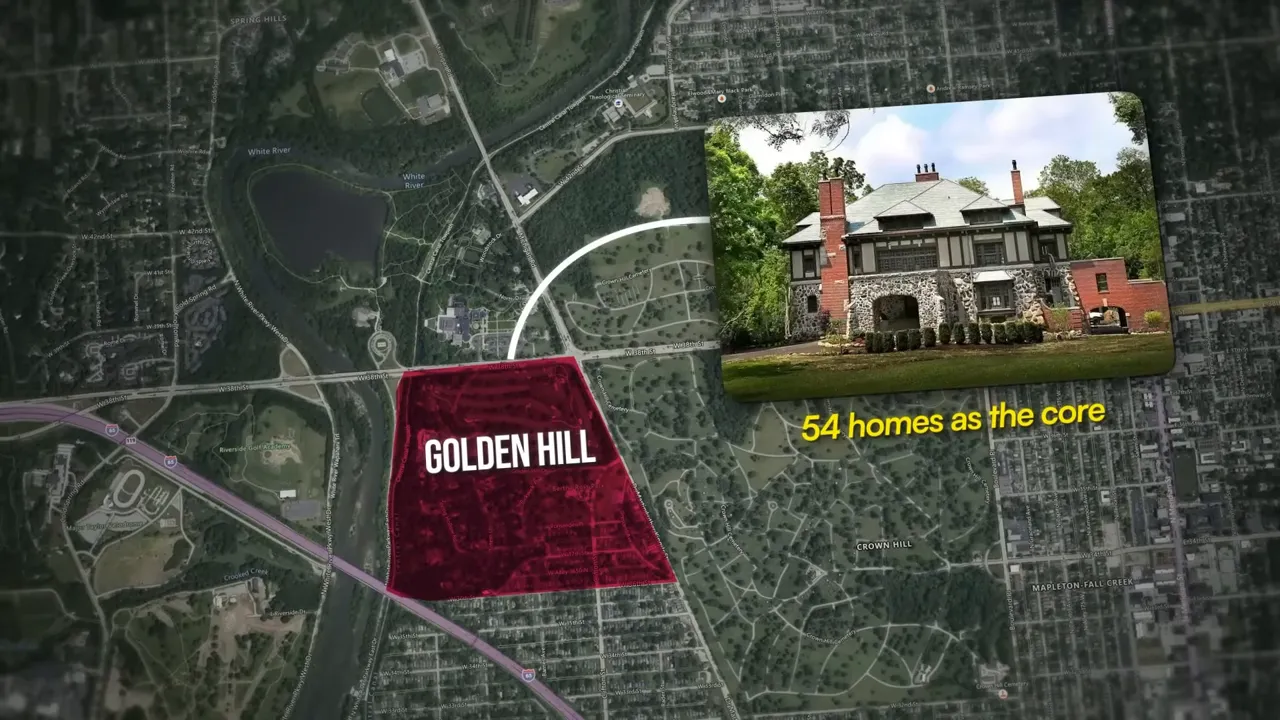
Golden Hill is a National Register of Historic Places district added in 1991. It is known for estate homes and a super tight planned community with only 54 homes as the core, most built between 1915 and 1940.
Why Golden Hill reads old money
- Elite lane behavior: It became an elite address by the 1920s, and some family ownership patterns limited open-market turnover.
- Scarcity over time: There have been long periods where very few homes hit the open market, which is a classic legacy pattern.
- It is tucked away: The neighborhood is squirreled back and difficult to see from the road, which gives it that protected feel.
What makes the location special
Golden Hill sits right next to Woodstock Country Club, which is an old money anchor by itself. Woodstock is the oldest country club in Indianapolis. Its golf course was designed in 1899, and it remains in the same location.
Just north of that is New Fields and the Art Museum, so you get access to a cultural scene without needing to sacrifice the quiet residential feel Golden Hill is built around.
One important tradeoff
Interstate I-65 runs through the broader area, and some homes can hear traffic. That is not ideal, but the point is that the neighborhood existed before that infrastructure became what it is today.
Inventory reality
Because Golden Hill is small and open-market turnover is limited, many homes are sold through relationships and insider knowledge. In practical terms: you usually have to know someone, or be prepared to move quickly when something does surface.
Area #5 - Lockerbie Square: Preserving Indianapolis' Heritage
When people talk about old money, they often focus on land and privacy. Lockerbie Square proves that you can have a completely different kind of legacy based on history, preservation, and walkability.
Lockerbie Square is another National Historic District. It was originally platted between 1847 and 1850 and added to the National Register of Historic Places in 1973.

Why Lockerbie Square reads old money
- Heritage value: Federal, Italianate, and Queen Anne architecture shows up throughout.
- Indy’s oldest intact residential neighborhood: This is not “old houses scattered around.” This is an actual historical neighborhood with preservation at the center.
- Walkability: You get a true city-core lifestyle, with easy access to places downtown including Massachusetts Avenue.
- Less land, more identity: Unlike the northside tree canopy lanes, Lockerbie’s value comes more from preservation and streetscape character than from lot size.
Home variety, but still legacy
Lockerbie Square has a mix of homes. You can find newer construction from later decades alongside older properties built in the 1800s. That is part of why it can feel more accessible than some other legacy neighborhoods, while still keeping the “old Indy” DNA.
In practical terms, historic renovations can require more planning. But the streetscape and preservation culture tend to keep the neighborhood feeling consistent.
Inventory reality
Lockerbie Square does not flood the market. At most points you might see only a handful of listings across a year, and often fewer. If you are targeting a single-family home here, you need to expect block-by-block shopping because one street can feel completely different than the next.
How to Buy in Indianapolis' Wealthy Neighborhoods
This is the part that keeps buyers from overpaying.
In Indianapolis, the “wealthiest neighborhoods” list is not just a price list. Old money is a pattern. If you treat it like a spreadsheet, you will eventually pay more for the wrong reasons.
Legacy lane signals
Legacy neighborhoods tend to keep their identity through three things:
- History and preservation
- Architectural or streetscape consistency
- How the setting feels day-to-day
If you drive North Meridian Street, you can see the concept clearly: the streets, canopy, separation, and the established block feel are part of the value. You are not buying “potential.” You are buying an already formed identity.
This is also why Meridian Hills, Golden Hill, and Williams Creek feel different. Development happened over decades, not in a short build-out timeline. Less churn usually follows.
Newer prestige signals
Newer prestige neighborhoods can still be expensive, but the engine is different.
Newer prestige is usually driven by:
- newer build cycles
- school appeal
- planned community consistency
- neighborhood amenities and “lifestyle planning”
These are often north metro suburban patterns where the value is real, but the mechanism is more about how the community is managed and positioned than about scarcity created by history and preservation.
Practical takeaway
In Indianapolis, “old money” is rarely just a price point. It is a set of conditions that creates long-term stability:
- scarce pockets
- setting and legacy doing most of the work
- lower turnover because identity is not easily replaced
If you are trying to figure out which part of Indianapolis fits your commute, lifestyle, and budget, the right approach is to compare neighborhoods by their behavior, not just their price tags.
THINKING OF BUILDING YOUR NEXT HOME? HERE'S A LOCAL GUIDE TO BUILDERS AND PITFALLS
FAQs About Indianapolis' Legacy Neighborhoods
What are some of the wealthiest neighborhoods in Indianapolis?
Some of the most legacy-focused wealthiest neighborhoods in Indianapolis include Meridian Hills, Williams Creek, the North Meridian Street Historic District, Golden Hill, and Lockerbie Square, each with a distinct “old money” identity tied to trees, historic architecture, preservation, or walkability.
How can I tell if a neighborhood is true legacy old money or newer prestige?
Look for preservation and streetscape consistency, mature canopy, privacy created by land-first design, and long-term low turnover patterns. Newer prestige usually relies more on newer build cycles, school demand, and planned community layout rather than historic identity.
Why does inventory tend to be thinner in old money neighborhoods?
Legacy neighborhoods often have ownership patterns that limit open-market listings. When homes are kept within families or sold through relationships, the open inventory stays tight, which affects pricing and negotiating dynamics.
Is North Meridian Street still considered legacy if it is a busy corridor?
Yes. The corridor’s value is tied to visibility and consistent architectural presence. Busy traffic does not automatically negate legacy; instead, it can become part of how the street displays the neighborhood’s history and design.
What makes Lockerbie Square different from other old money areas?
Lockerbie Square’s legacy is more about heritage, historic preservation, and walkability downtown than about large lots or heavy tree privacy. It is also Indy’s oldest intact residential neighborhood.
Final Thoughts on Indianapolis' Wealthiest Areas
Navigating Indianapolis' wealthiest neighborhoods can be tricky, but knowing the difference between legacy wealth and newer prestige can help you make an informed decision. Whether you're drawn to the historic charm of Meridian Hills or the exclusivity of Williams Creek, understanding the unique qualities of each area ensures you invest in the right place for your lifestyle.
If you're ready to explore these prestigious neighborhoods and find your perfect home, give me a call at 317-932-8620. I’m here to help you find a community that aligns with your vision of legacy living in Indianapolis. Let’s make your real estate journey a successful one!
READ MORE: Indianapolis 2026 Development Projects: Key Developments and Their Impact on Real Estate