Data Centers and Indianapolis Real Estate: What Buyers and Sellers Need to Know
One building in Lebanon is going to use as much electricity as 750,000 homes. Meta is spending over $10 billion on it. It's 1,500 acres, 13 buildings, and that's just one of them. You've got places like Decatur Township, Warren Township, Franklin Township, and Hancock County where these massive data center projects are landing, getting scaled back, or getting killed entirely.
So what does that actually do to your home value if one of these things lands right next door? The headlines will tell you it's all bad news, higher power bills, farmland gone, water gone. The picture is actually a whole lot more mixed than that.
I'm Jason Compton, and my team and I help people buy, sell, and relocate all around Indianapolis. In this article, I'm going to cover what a data center actually is in plain English, the five areas around Indy where these projects are landing, what's approved versus what got scaled back or killed, and what it means if you're buying or selling near one of them. Each township has a completely different situation, and if you're relocating here from out of state, keeping all of this straight on top of Carmel versus Fishers versus Westfield is a hard job. Your brain's a mess just trying to keep it all straight.
Table of Contents
- Lebanon / LEAP Innovation District: Meta's $10 Billion Campus Under Construction
- Franklin Township: Google's Canceled 468-Acre Project
- Warren Township / Thunderbird Commerce Center: Scaled-Back Redevelopment
- Decatur Township: Indianapolis's First Hyperscale Data Center
- Hancock County / Buck Creek Township: New Rules After Failed Mega Site
- Which Area Is Right for You: Comparing the Five Data Center Situations
- Conclusion
Lebanon / LEAP Innovation District: Meta's $10 Billion Campus Under Construction
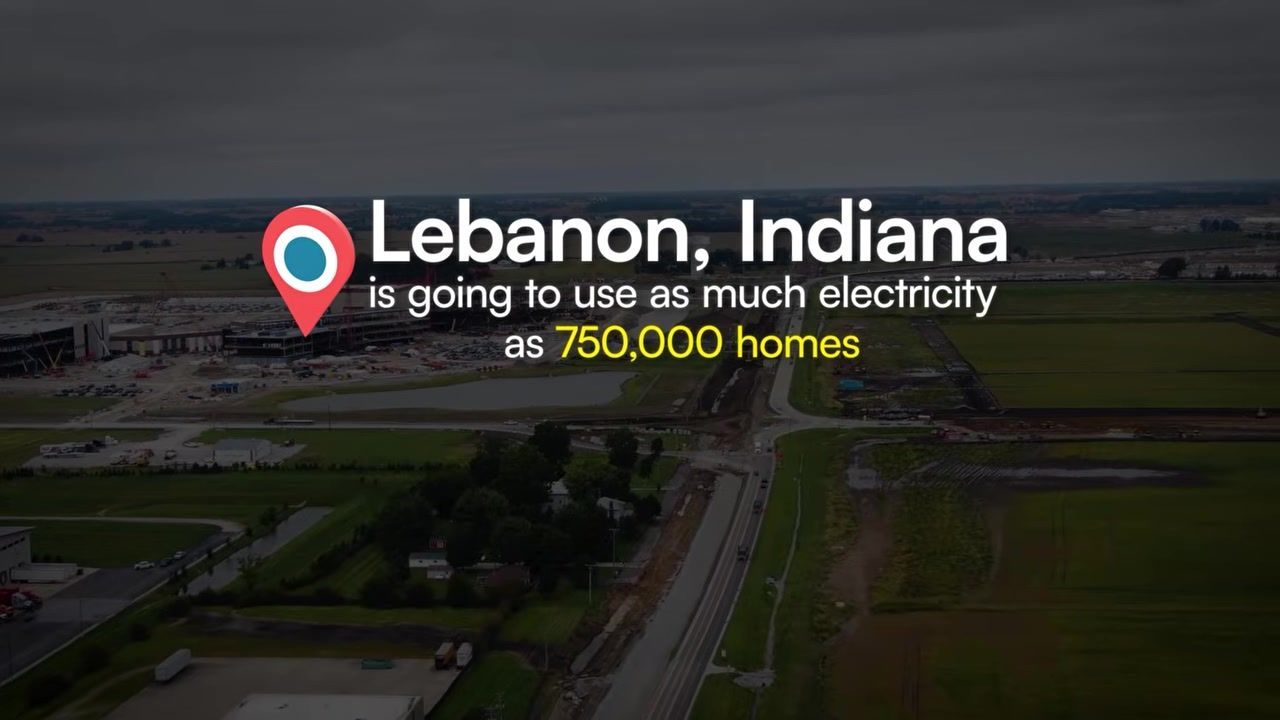
This is easily the biggest capital project in the history of the city of Lebanon. Meta broke ground in February on its data center campus in the LEAP Innovation District. It's not that far from where Lilly has an enormous project going on just northeast of the site. Meta is specifically in the southern part of the district, west of I-65 and split by State Road 32. All 1,500 acres sit to the west, and you can see construction cranes on some of the buildings that have already broken ground and are standing. There's plenty more to be built where they've broken ground, though there's not much to show for right now as far as buildings go off to the west.
Ten of the 13 buildings are data centers. The rest are logistics, warehousing, and support. On jobs, we gotta be realistic about numbers here. More than 4,000 construction jobs during the build, but about 300 permanent operational jobs once it's running. That's a lot of construction work for a few years and really a modest, small permanent employer after that.
But the Lebanon deal's a little different from the other ones, and this next part's really why. Meta's putting roughly $45 million into public road improvements around Lebanon and in Boone County. Meta is paying the full cost of the energy the data center uses as well. So the residents around it, they're not going to be picking up that tab. That's a really specific commitment attached to a specific project, and it doesn't automatically apply to every other project in the state.
On water, the Indiana Capital Chronicle reported in March that Meta committed to restoring 100% of the water the campus consumes back into the local watersheds. They're doing it with an irrigation technology company working with farmers in the entire Upper Wabash River Basin. Right now, that's the model everybody points to when they say these projects can sometimes be a net positive. You get roads, you get utilities covered, and you get water put back like it was found.
What This Means for Housing in Lebanon and Boone County
Lebanon, Whitestown, and the western edge of Boone County are absorbing 4,000 construction workers and a permanent employer at some point in the near future with some pretty deep pockets. That's real demand for rentals and for entry-level homes in an area where you can still actually find them, especially if you're looking for new construction. There's so much new construction in this part of Boone County.
If you're buying anywhere along the I-65 corridor north of Zionsville, this is the single biggest thing shaping that market right now. I don't think most buyers looking out there have really connected those two things yet. The state committed Meta to a 35-year sales tax exemption on this project, and Meta has to invest at least $1 billion in the first six years to keep it. That exemption can stretch to 50 years if they put in another $2.2 billion. So 50 years of sales tax exemptions is definitely quite a magnet.
One building has 1 gigawatt of power capacity. That's roughly enough electricity to power 750,000 homes. One campus. Companies aren't picking Indiana because they love Indiana. They're picking it because the math just works out better here than almost anywhere else. We've got large flat parcels near interstate corridors and transmission lines, and land here costs a fraction of what it costs on either coast. The LEAP District in Lebanon was literally built for this.
Franklin Township: Google's Canceled 468-Acre Project
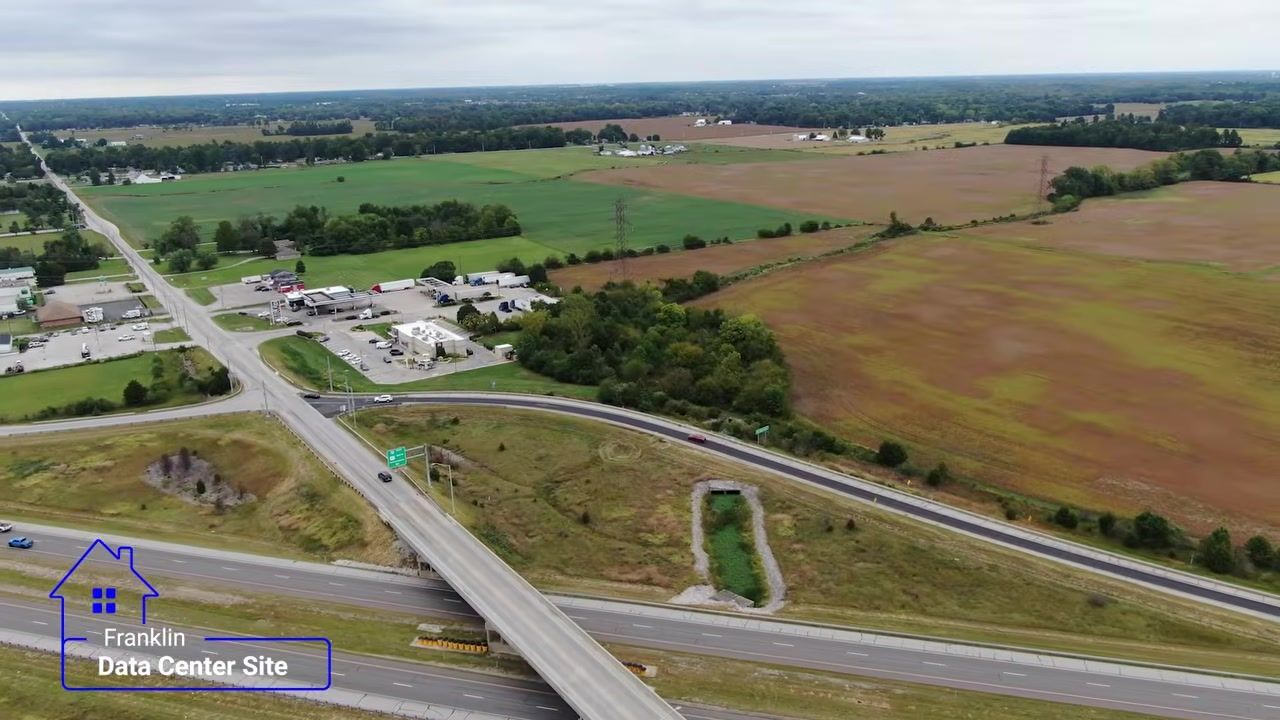
Google wanted 468 acres of farmland on the southeast side of Indianapolis. They filed the petition for their project, and then they eventually walked away from the entire thing. Franklin Township is part of Indy south and east of downtown. It makes up that corner of Marion County. It's out past Southport, so the whole southeast corner of Marion County. It's a lot of newer subdivisions, a lot of families, and it's actually still a lot of open farmland too.
That farmland along with the interstate access is exactly what made it attractive. I'm back over Post Road and I-74 right here. I can see that land beyond this gas station, and it is just a super attractive spot next to interstate. Plus these transmission lines just made it a pretty desirable place really for any project. If you take a look at Indy's reporting for February, Google withdrew its petition after what they described as mass opposition from residents on the south side. People showed up and of course they organized, and a company with essentially unlimited money, I mean, how much money does Google have? they decided that it wasn't worth the fight.
What Didn't Change After Google Left
If you're a buyer in Franklin Township right now, your reality is this: there's no data center coming, at least not on that parcel. But before you get too comfortable, you gotta look at what didn't change. The land itself didn't move. The interstate access didn't move. Transmission lines didn't move either. And they're not going to move, at least in the near future.
Everything that made a hyperscale company look at those 468 acres is still sitting there exactly where it was. What changed was just the political appetite for a project like that at that particular time. Which means if you're buying on the southeast side, the question isn't did a project get canceled? You got to ask what the current zoning is on the big open parcels near the house you're looking at. There are a lot of big open parcels around here. And then ask how the local commission has voted on things like this before.
That's definitely not a question Zillow can answer for you. It's one of the reasons my team and I spend time in some of these county planning documents that most agents are never going to open. The next series shows you what happens when the project doesn't get canceled. It just gets changed in its size. It gets smaller.
Warren Township / Thunderbird Commerce Center: Scaled-Back Redevelopment
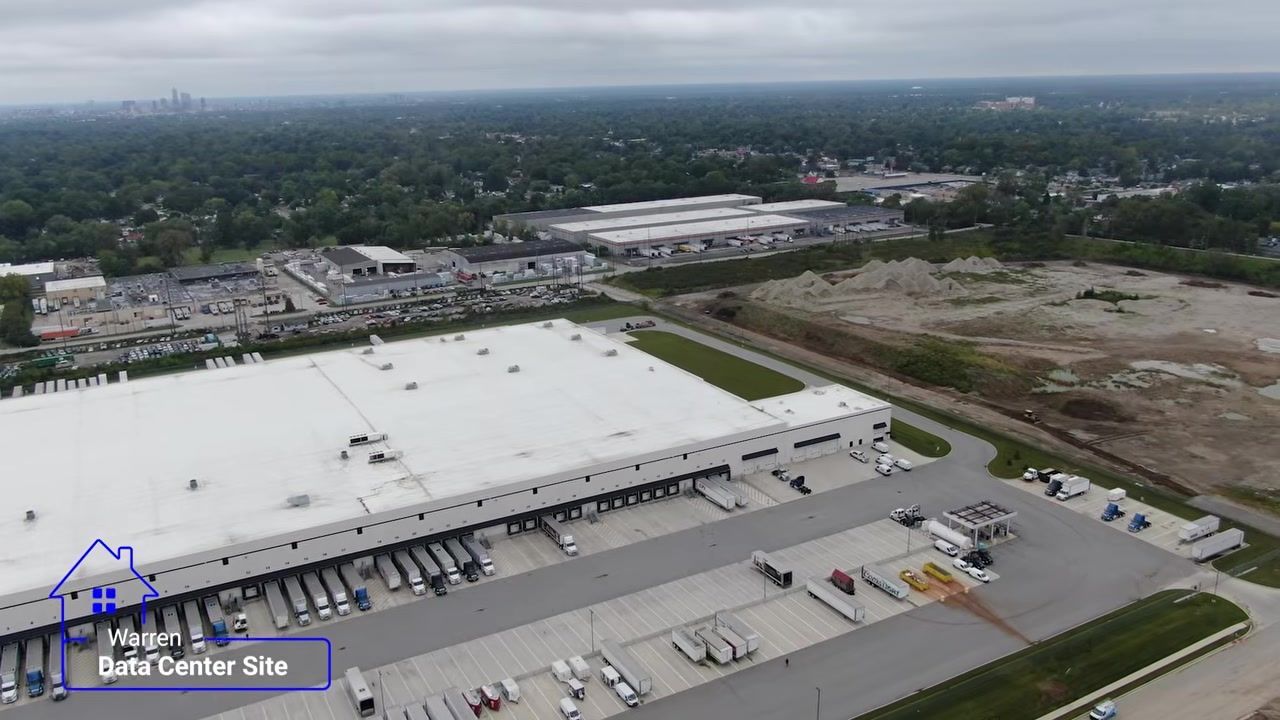
There's a data center going into an old Ford Visteon plant on the east side of Indianapolis, and this one is actually a smaller building today than it was just six months ago. This is the Thunderbird Commerce Center in Warren Township, east side of Indianapolis. It's a redevelopment of a dead manufacturing site, and the developer here is DC Blox. Total construction cost around $800 million, with about $320 million of that just going into the labor. At peak construction, DC Blox has said they're going to have about 600 or so people working on it.
But there's one thing that's pretty important to realize about this entire project. Councilor Michael Paul Hart hosted a community meeting in Warren Township on May 21st, and there were a lot of residents that showed up and raised a lot of concerns. After that meeting, DC Blox actually removed an entire building from the design. They eliminated 25 backup generators and they cut about 28 megawatts of really critical IT load completely out of the plan.
Why the Scaled-Back Design Matters
Those backup generators are the diesel units that fire up when the power goes out. They're absolutely one of the biggest noise and air quality complaints that people have about sites like this. So if you're a buyer on the east side, your reality is a little different than what you'd expect. This is definitely not farmland being just paved over. It's a shuttered auto parts plant that's just getting really repurposed. It's actually getting bowled over.
For a lot of homeowners near that corridor, a modern facility with landscaping requirements and a tax bill attached to it might be a better neighbor than just a vacant industrial building. The real question is this: it's a data center compared to what? An empty former factory doesn't really generate much. It doesn't generate property tax revenue, and it certainly doesn't get maintained.
There was some intense pushback on this project, and really just like about all the others that you hear that are out there and proposed. But in this case here, the commission approved it anyway, 6 to 2. The developer responded to community concerns by reducing scope. That's not something you see in every data center fight.
Decatur Township: Indianapolis's First Hyperscale Data Center
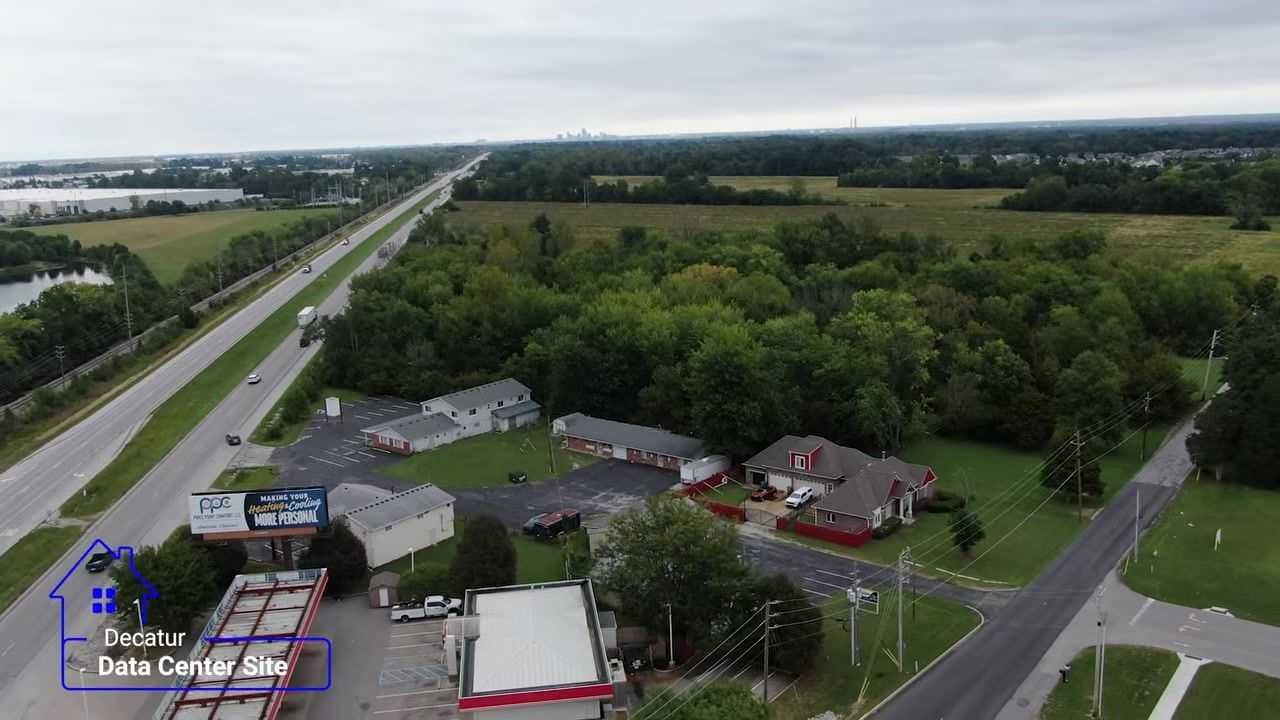
Not every project is a redevelopment of something that was already industrial. This is Decatur Township, and where this is at, it's on the southwest side of Indianapolis, kind of that southwest corner of Marion County. It's towards Camby and Mooresville. Sabie Data Center Properties got approval on March 18th to build a 250-megawatt facility on 130 acres at the northeast corner of Canby Road and Kentucky Avenue. This road right here is Canby Road, generally going west to east, and then Kentucky Avenue is over here diagonally, which is really actually State Road 67, going all the way back up into Indianapolis and connecting with 465.
The total investment is pretty big. It's around $4 billion. When it's built, it'll be the first hyperscale data center inside the city limits of Indianapolis. It'll also be the largest private capital investment in the history of the city of Indianapolis. So it's really quite large. The big change is that this one is very real. It's not a proposal. It's not a rumor. It's an approved project with a zoning variance in hand.
What This Means for Sellers and Buyers in Decatur Township
What does that mean if you own a house out here, or let's say you're looking at one? Well, short term, you're going to have, of course, the usual. You got trucks, you got dust, you've got roadwork, and you're going to have a lot of it for probably a couple of years or so. If you're planning to sell in that window, that's definitely going to be a real factor in how your house shows and also really how fast it moves because you're going to have that period where you just don't have a solid-looking place. It's going to factor in the indecision for some people.
Longer term, it's really more of a mixed bag than the signs at any hearing are going to suggest. Decatur Township hasn't historically had a really large commercial tax base, but a project of this size changes the revenue picture for the township, and that revenue does fund things like roads and services.
But where I'd be careful, of course, is proximity. There's a big difference between living three miles from right here, Canby and Kentucky Avenue, and let's say directly across just the road from it. Everybody, buyers definitely overwhelmingly, they care about what they can see and what they can hear from their backyard. That's definitely the kind of detail that you're not going to find on a listing page very easily.
If you're relocating here from out of state, you've probably never even heard of Decatur Township or Warren Township or any of the townships around Indianapolis, let alone which one has a $4 billion project going on on Kentucky Avenue. And it's not on a listing. Most agents generally don't know that either. So my team and I put together a free relocation guide. It breaks down neighborhoods, school systems, cost of living, and of course commute times across the entire metro, whatever township it is that we're talking about, or city or town even, so you can figure out where you actually want to be before you start looking at houses.
Hancock County / Buck Creek Township: New Rules After Failed Mega Site
There's a new data center proposal on the table in Hancock County to the east, and this one's actually playing by some different rules than the last one. In August 2026, EQT Real Estate filed a letter of intent for a project called the Mount Comfort Technology Campus. It's not small. It's 130 acres in Buck Creek Township, just north of Indianapolis Regional Airport and near a huge Walmart distribution center.
But here's the thing. EQT already knows how this story can go very, very wrong. Back in 2025, a different developer, Surge Development, proposed a 775-acre mega site not far from the same corridor. That project sat right next to Tuttle Orchards, a family orchard that's been operating since 1890. If you've ever taken your kids apple picking on the east side, you know exactly the place I'm talking about. I have been to this place a million times, and I've been on school field trips here as well.
How Hancock County Rewrote the Rules
The orchard owners and a whole lot of residents packed public hearings, and by May 2025, Surge pulled the project completely. So this time, EQT is coming in differently. They're offering $22 million a year in payments in lieu of taxes once the project is fully built out, plus 1,500 construction jobs and up to 150 permanent tech jobs, paying well above what we see here as the county average.
But really, honestly, the bigger story here isn't EQT. It's what the county did in between. After that mega site got pulled, Hancock County didn't just move on. They built an entire rule book. A citizens committee spent months on it. In June 2026, the county passed Ordinance 2026-6E. Data centers are now banned outright from agricultural and commercial zones. They're only allowed in industrial general zones. And the county commissioners now hold final veto power over where any of these projects can go.
If you're buying out in Greenfield to the east, New Palestine, Fortville, or McCordsville, this definitely matters. Those are all places in Hancock County. These rules are going to shape what gets built out in that area for the next couple of decades. And they're already on the books. I love these east side communities. They're some of the most overlooked places around this entire metro for the money. But if you're out house hunting in that direction, then you need to know both halves of the story, not just the one everybody's already heard about.
EQT learned from the previous developer's mistakes. They're not proposing a site next to a historic family orchard. They're targeting industrial land near the airport and distribution centers. The citizens committee spent months developing the new rule book, and it shows. Hancock County commissioners hold final veto power, which means even if a project fits the new zoning, it's not automatic.
Which Area Is Right for You: Comparing the Five Data Center Situations
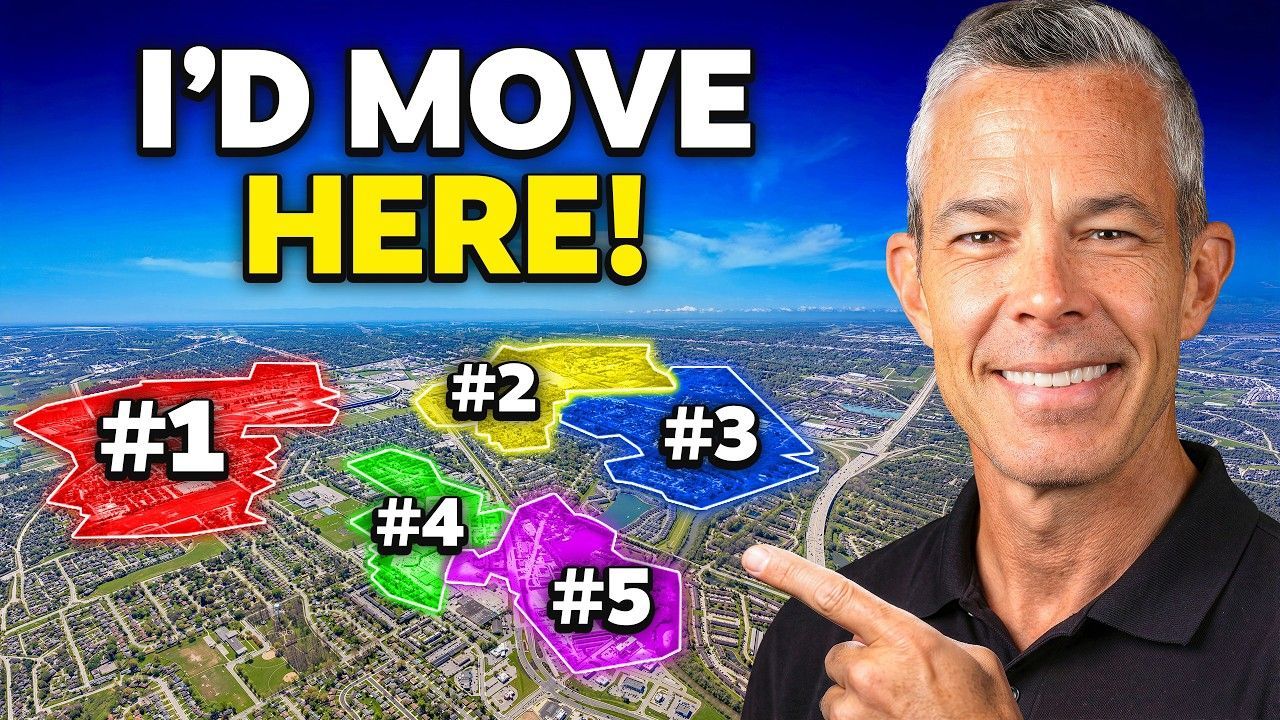
That's five areas, five completely different situations. Lebanon's under construction. Decatur's approved. Warren got smaller. Hancock County is still writing the rules. And Franklin Township is dead for at least now. If you're moving here from California or Chicago or the East Coast or anywhere, keeping all of that straight on top of Carmel versus Fishers versus Westfield versus Zionsville versus Greenwood versus Greenfield is really a hard job. Indianapolis can feel really a whole lot bigger than you ever imagined if you don't know all that much about it.
When you're relocating here, people can burn their one scouting trip driving to a lot of places that really aren't a fit for them. So we built a neighborhood match quiz. You answer a few quick questions just about things like your budget, your commute, home style you want, the lifestyle you want. Then it gives you a personalized shortlist of communities around the metro that actually fit. I've taken it and it's matched me very well to where I already live, so I feel pretty good about the accuracy of it.
Power, Water, and Land: The Three Big Concerns
Three things people actually feel when one of these places shows up: power bills, water, and land. Let's take them one at a time because the answer is a little bit different in each spot. Power first. This is the number one thing that people ask me. The honest answer is that it entirely depends on how the deal is really structured. In Lebanon, Meta is paying the full cost of the energy that the campus uses. That's a really specific commitment attached to a specific project, and it doesn't automatically apply to every other project in the state. Anyone who tells you all data centers are free money or all of them raise your bill the opposite is really guessing.
Water's next. We all know data centers use water for cooling, and it's a legitimate concern in farm country. Lebanon has the specific commitment from Meta that it's going to restore 100% of what it consumes back into the local watersheds. But for other projects, that's the question I'd certainly be asking the county before I bought anything remotely close to these.
Then of course you have the land. This is definitely the one that changes how a place feels. You can look at the difference in scale as well as some of these projects. Warren Township is a redevelopment of a dead Ford Visteon plant, so nothing green is really being lost there. Decatur is 130 acres on an industrial corner. Franklin Township would've been 460 acres of farmland and it was killed. Hancock County would've been 775 acres next to an orchard that's been there since 1890.
Practical Advice for Sellers and Buyers
If you're a seller near a project, then your reality is that timing matters more than usual. Selling during active construction is a totally different experience. If you're a buyer, here's some practical advice for you. You don't wanna ask if there's a data center near this house. You need to ask oftentimes what the zoning is on the large open parcels within a couple of miles that you see that might be around you and whether the county has an overlay district in progress for those. Those two answers are going to tell you what could get built there in the next 10 years, not just what's there today.
Here's what worries me for out-of-state buyers. You fly in for a weekend and fall in love with a house on, let's say, the southwest side or out east towards Greenfield. Nobody mentions a petition sitting with the Plan Commission. Two years later, you're trying to sell a house across the road from active construction. It could be one of these projects like this. It may not be, it may be a residential construction project as well, but either way, it's probably going to cost you some money or you're at the risk of it costing you some money.
Conclusion
Data centers are reshaping parts of the Indianapolis area real estate market in ways most buyers and sellers don't see coming. Lebanon's $10 billion Meta campus is already under construction with road improvements and water restoration commitments. Decatur Township has an approved $4 billion facility that's the largest private capital investment in Indianapolis history. Warren Township scaled back a project after community input. Franklin Township killed Google's 468-acre proposal. Hancock County built an entire rule book after a failed mega site.
Each situation is completely different. The power bill impact depends entirely on deal structure. Water usage is a legitimate concern in farm country, but Lebanon has a 100% restoration commitment. Land impact varies from redevelopment of a dead plant to 130 acres on an industrial corner to proposals that got killed because they sat next to farmland or a historic orchard.
If you're looking at a specific house or a specific neighborhood or just a specific area, and you wanna know what's actually proposed there, what's approved or maybe paused near it, then give us a call or a text or book a time with me directly. I'll pull the filings for that area and I'll walk you through it. My team and I help people buy, sell, and relocate all around Indianapolis, and we spend time in county planning documents that most agents are never going to open. That's how you avoid flying in for a weekend, falling in love with a house, and finding out two years later there's a petition you never heard about.
FAQ
What is a data center and why are they coming to Indiana?
A data center is a big windowless warehouse-looking building packed with rows of computer servers. Every time you stream a movie or back up a photo or ask ChatGPT a question, there's a physical machine somewhere doing the work. That machine sits in a building like a data center and it runs 24 hours a day. Indiana has large flat parcels near interstate corridors and transmission lines, and land costs a fraction of what it costs on either coast. The state also committed Meta to a 35-year sales tax exemption that can stretch to 50 years.
Will a data center near my house raise my power bill?
It entirely depends on how the deal is structured. In Lebanon, Meta is paying the full cost of the energy the campus uses, so residents aren't picking up that tab. That's a specific commitment attached to a specific project, and it doesn't automatically apply to every other project in the state. Anyone who tells you all data centers are free money or all of them raise your bill is guessing.
How do data centers affect home values in the area?
Short term, if you're selling during active construction, you're going to have trucks, dust, and roadwork for a couple of years. That's a real factor in how your house shows and how fast it moves. Longer term, it's a mixed bag. A project changes the revenue picture for the township, and that revenue funds roads and services. But proximity matters significantly. There's a big difference between living three miles from a site and directly across the road from it.
What should I ask before buying a house near a potential data center site?
Don't ask if there's a data center near this house. Ask what the zoning is on the large open parcels within a couple of miles and whether the county has an overlay district in progress. Those two answers will tell you what could get built there in the next 10 years, not just what's there today. That's not a question Zillow can answer for you.
Which Indianapolis-area data center projects are actually happening?
Lebanon's Meta campus is under construction as of February. Decatur Township's Sabie project is approved with a zoning variance in hand. Warren Township's DC Blox project is approved and scaled back after community input. Hancock County's EQT proposal is filed but subject to new rules passed in June 2026. Franklin Township's Google project was withdrawn in February after mass opposition.
Are data centers always bad for nearby neighborhoods?
Not always. Warren Township's project is a redevelopment of a dead Ford Visteon plant, so nothing green is being lost and a modern facility with landscaping requirements might be a better neighbor than a vacant industrial building. Lebanon's Meta campus comes with $45 million in public road improvements and a 100% water restoration commitment. But proximity matters, and selling during active construction is a totally different experience than living three miles away from a finished facility.
jason compton
A former teacher turned full-time real estate agent serving Greater Indianapolis. I help buyers, sellers, and relocation clients make informed moves—especially those coming from out of state. From neighborhood insights to home tours, my goal is to simplify the process and help you feel confident in every step.

Stay Informed
Insights, Tips & Life in Indianapolis
Your go-to resource for all things real estate and Indy living. Whether you're buying, selling, relocating, or just curious about the local market, our blog is packed with helpful articles, expert advice, and community highlights to keep you informed and inspired.