Indianapolis Real Estate Map Explained: Where to Buy, Invest, and Avoid
Have you ever tried to pick a neighborhood in a city you've never actually visited? Every suburb looks practically the same at first glance. Every listing photo looks fantastic. So how do you actually tell Carmel apart from Fishers, or Plainfield from Greenfield, or Fortville from McCordsville?
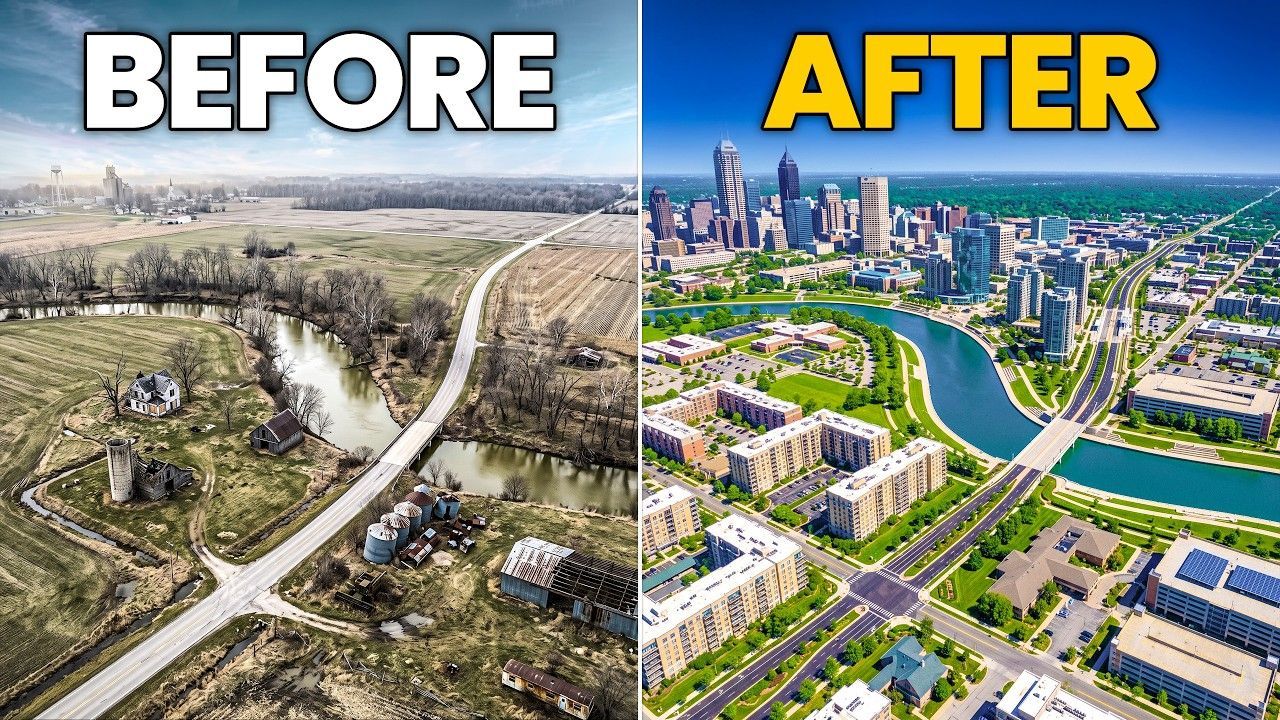
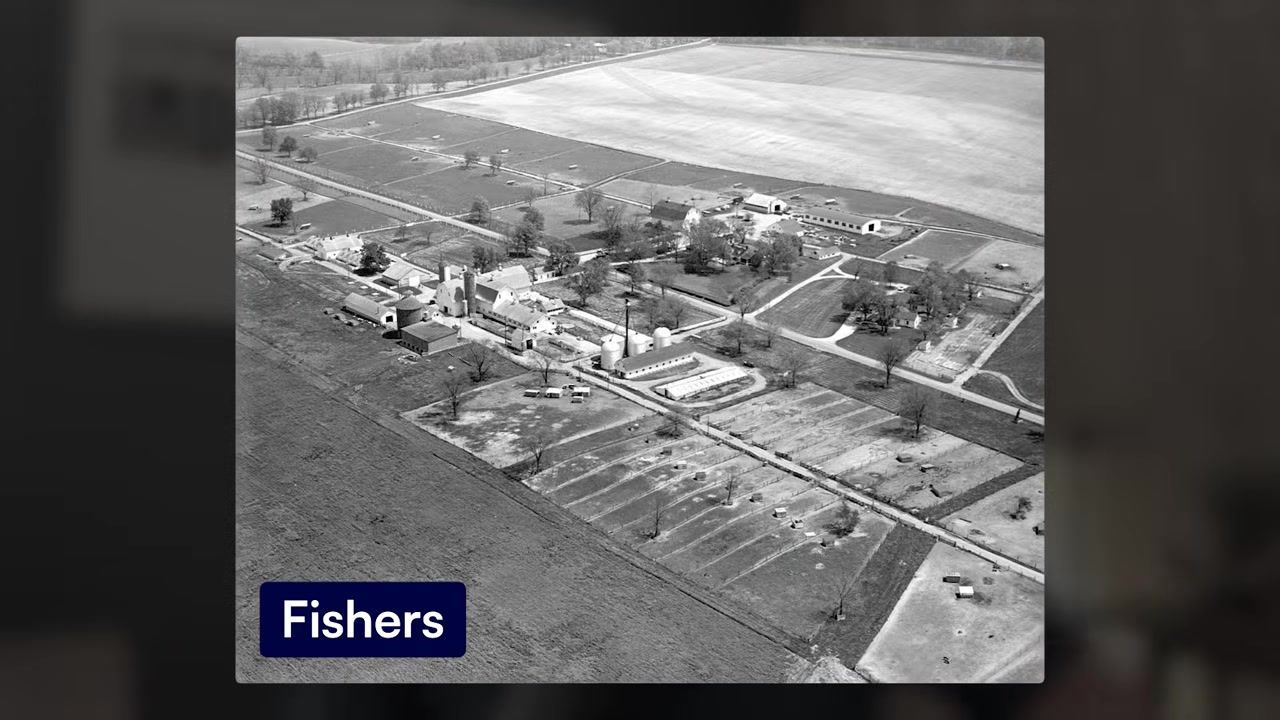
The Indianapolis metro added over 22,000 people between 2024 and 2025, according to Axios Indianapolis. That's double the national growth rate, and that one number explains almost everything about this map. When I first got here, a lot of what people call the northern suburbs was corn or soybeans depending on the year. That's not a metaphor, it was actual farmland. Westfield had a stoplight and a Dairy Queen type of vibe. Fishers was a town people drove through just to get somewhere else.
Now Fishers has its own downtown with an incredible amphitheater and public gathering space. It's a destination. Westfield has Graham Park, one of the largest youth sports campuses in the entire country, attracting millions of visitors a year. Greenwood on the south side is triple the size it was when I moved to Indianapolis. What changed? Companies and employers moved in and spread out in a lot of directions. Interstates were added, roads got widened. Then the people followed the roads and the builders followed them. Now you've got rooftops sitting where soybeans and corn were just 20 years ago.
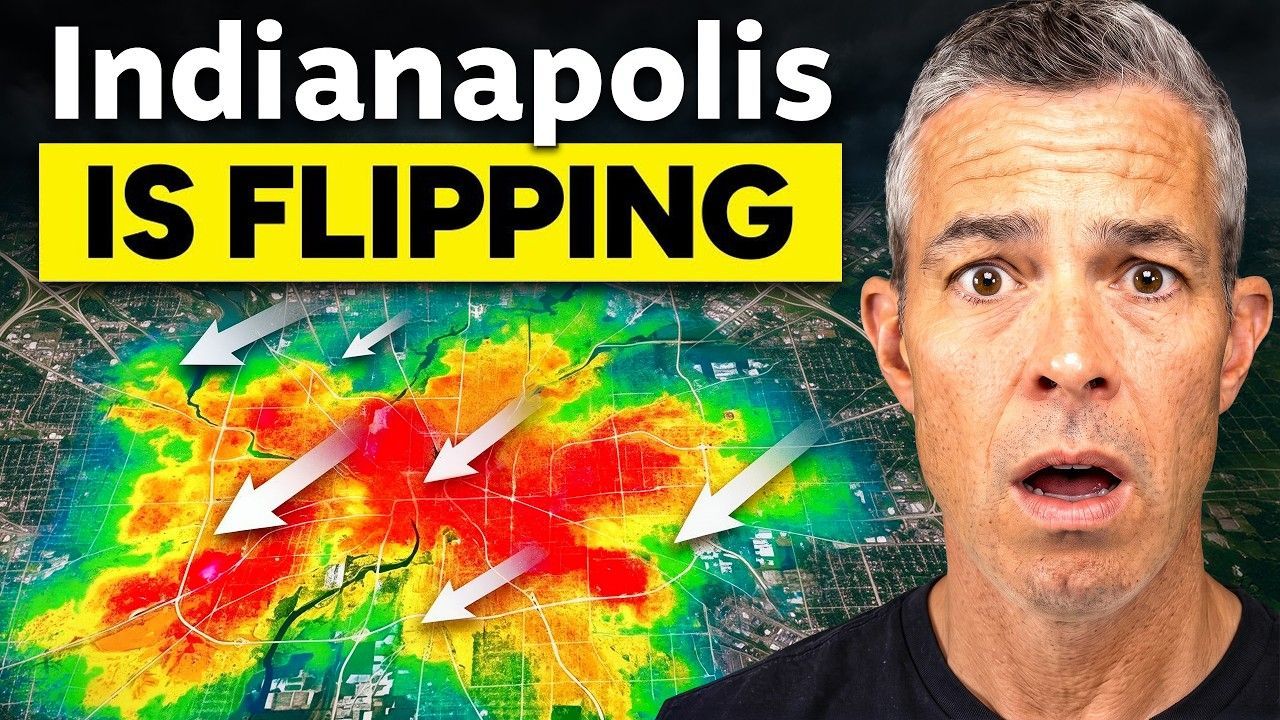
Here's what this means for you as a buyer: this isn't a static map. If you look at a housing market article from 2019 and try to make a decision off it, you're going to be wrong about probably half the metro. Prices have absolutely moved. Whole downtowns have been built from almost scratch, and towns that used to be an afterthought are now the ones with waiting lists sometimes on new construction. All of that growth followed the same handful of roads, and that's where we have to start.
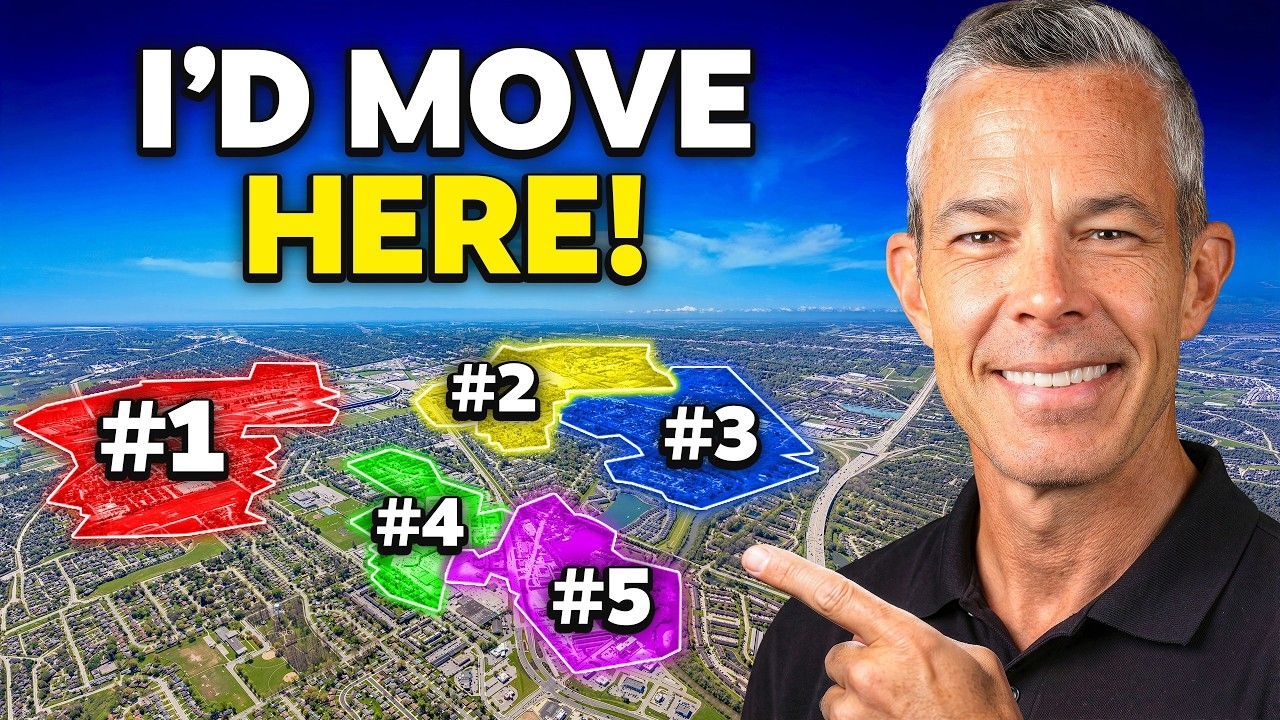
I'm going to break down the entire Indianapolis metro into zones, Indianapolis itself, the northern suburbs (Carmel, Fishers, Westfield, Noblesville), Zionsville , the western suburbs (Brownsburg, Avon, Plainfield, Danville), the eastern suburbs (Fortville, McCordsville, Greenfield, New Palestine), and the southern suburbs (Greenwood, Bargersville, Whiteland, New Whiteland, Franklin). Each zone has its own character, commute, and trade-offs. If you pick wrong, you don't just have a house you don't love, you've got a commute you hate every day, or you're in the wrong school district, or you're far away from the church you want to go to or your kids' activities. Moving again two years later costs real money and is a total pain.
Table of Contents
- Indianapolis: The Urban Core and Hidden Neighborhoods
- Northern Suburbs (Carmel, Fishers, Westfield, Noblesville): The Big 4 That Get All the Attention
- Zionsville: The North Side Outlier
- Western Suburbs (Brownsburg, Avon, Plainfield, Danville): Affordable and Well Connected
- Eastern Suburbs (Fortville, McCordsville, Greenfield, New Palestine): Closest to Ground Floor Opportunity
- Southern Suburbs (Greenwood, Bargersville, Whiteland, New Whiteland, Franklin): Dense, Affordable, and Investor-Friendly
- Which Zone Fits Your Lifestyle?
- Conclusion
Indianapolis: The Urban Core and Hidden Neighborhoods
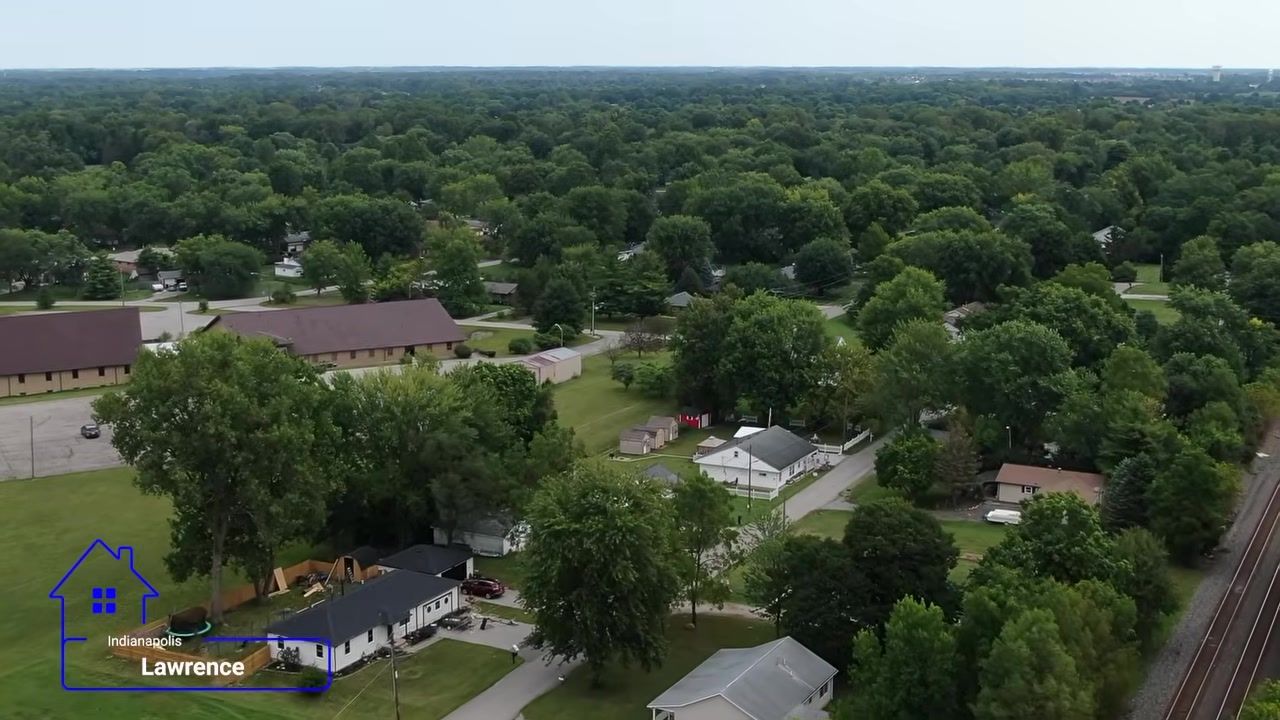
Indianapolis is the biggest city around here, with over 900,000 people. It's really larger than what people realize. I-465 circles most of the city, but the borders of Indianapolis actually extend pretty far outside of I-465, especially to the southwest and east. A lot of people don't know that. They feel like I-465 is the border of Indianapolis, and across the north side it's close to that, but it's definitely not that at all when you're looking at the southwest or east part of it.
Knowing inside the loop and outside the loop, that's some terminology a lot of people around here will use. Indianapolis is called the Indianapolis metro because it's the biggest city around here, and it's well connected by major interstates. I-70 goes right through Indianapolis and you can get all the way over to St. Louis or take it all the way to the East Coast. I-65 goes all the way down to Louisville and all the way up to Chicago, about 2.5 hours to the northwest. If you're trying to get somewhere specific inside of Chicago, it's probably going to take you really closer to 3 hours. I-74 will take you down to Cincinnati, and that's literally under 2 hours away. I-69 goes up to Fort Wayne, which is a good 2.5 hours away or so, and I-69 down to the south goes all the way to Evansville, Indiana, in the southwest part of the state.
Some of the well-known neighborhoods you've probably heard of include Williams Creek , Meridian Hills , and Nora on the north side. This is a huge area. As you travel down to the south, you have Broad Ripple , and then you get into southern Broad Ripple and Meridian-Kessler , which is actually a big swath through this area. Over here you have Butler-Tarkington , which is where Butler University is, really, really cool area, not as big as Meridian-Kessler. Meridian-Kessler is actually quite large.
As you continue to travel down Meridian Street, which is US 31, you get into some other popular ones like Fall Creek Place , Herron-Morton , and Old Northside . When you get inside the split here, you can get into places like Chatham Arch where Mass Ave is. This is one of my favorite places in the whole city. In fact, just the other day we went to Bodhi, this restaurant, unbelievably good. Livery is another incredible one right here on College that we really like to go to. Super cool area, very urban through there.
You've heard of Lockerbie Square maybe. It's the oldest neighborhood in Indianapolis. It has some very, very old homes in there and just an awesome location too. As you get further south, others that have made a name for themselves include Fletcher Place , Fountain Square just on the southeast side of all of this interstate complex, and Bates Hendricks , which is a nice, very cool up-and-coming neighborhood.
Does that mean those are the only places to live? All of those places have something about them that can be pretty positive, places that people want to go, maybe destinations. If you live there, then you're already living at the destination. But getting outside of that, you still have a tremendous number of choices.
Lawrence Township up on the northeast side has a lot of opportunity for living, for housing and affordability, but also investments. That is a big place, very, very dense, very residential. Of course, you've got places in Lawrence that are nicer than others as far as what the quality of the housing is like and how well people have kept it up, but there's a lot of choice in there.
You can get up into the northwest part, which is Pike Township , and there's a lot of really super solid neighborhoods through there and very affordable as well. You can also get all the way over into the southeast side, which is generally Franklin Township . Franklin Township is very, very nice. It's really pretty out through this way, actually. It's very spread out, relatively quiet, and relatively affordable.
Then of course you have Perry Township , which is very, very dense with residential, and you've got some commercial of course going all the way down US 31 and 135. So it's a really convenient place to live, and there's a lot of investment opportunities through there as well. Even over in Decatur Township , it's the same, lots of very affordable places.
Indianapolis is big, more than 900,000 people. It'll be a million at some point one day, but it's pretty much out of space. It can't grow in any direction that you see around it. So it's filling in some of these places within the borders of it a little more thoroughly. One advantage of living in Indianapolis itself is that you're already at the destination. Eagle Creek Park is one of the largest municipal parks in the entire country. It is a really cool place. You've got Mass Ave, Fountain Square, Broad Ripple, and the downtown amphitheater. If you want urban amenities, walkable neighborhoods, destination dining and entertainment, and a variety of established neighborhoods, Indianapolis gives you that.
Northern Suburbs (Carmel, Fishers, Westfield, Noblesville): The Big 4 That Get All the Attention
The northern suburbs are absolutely not a small area. We're talking close to 400,000 people total, so it just can't be ignored. It's super popular. Carmel and Fishers up here on the north side have been in so many media publications about being great to live in, and they've actually been number 1 and number 2 recently, best places to live in the country. Nearby you also have Westfield , which is a prominent city as well, and then Noblesville . We really call these the Big 4, but there's a lot of people here.
That's another reason why we talk about it so much, it's popular but also it's populated. So it makes up a really large percentage of the entire Indianapolis metro. Carmel, Westfield, Noblesville, and Fishers are all in Hamilton County. When you're in these 4, you're extremely connected from one to the other.
You've got some borders, like the border between where Carmel is and where Fishers is. You have the White River , and so you can only cross the White River in certain places, like 96th Street. You can cross at 116th. You cannot at 106th, you can see that it dead ends there. And it dead ends at 126th. Can't do it there. But 116th Street certainly can, and then when you come up to 146th Street, you can cross it as well. Can you feel and see that? Yeah, you can. But it's not as crazy a border as you think.
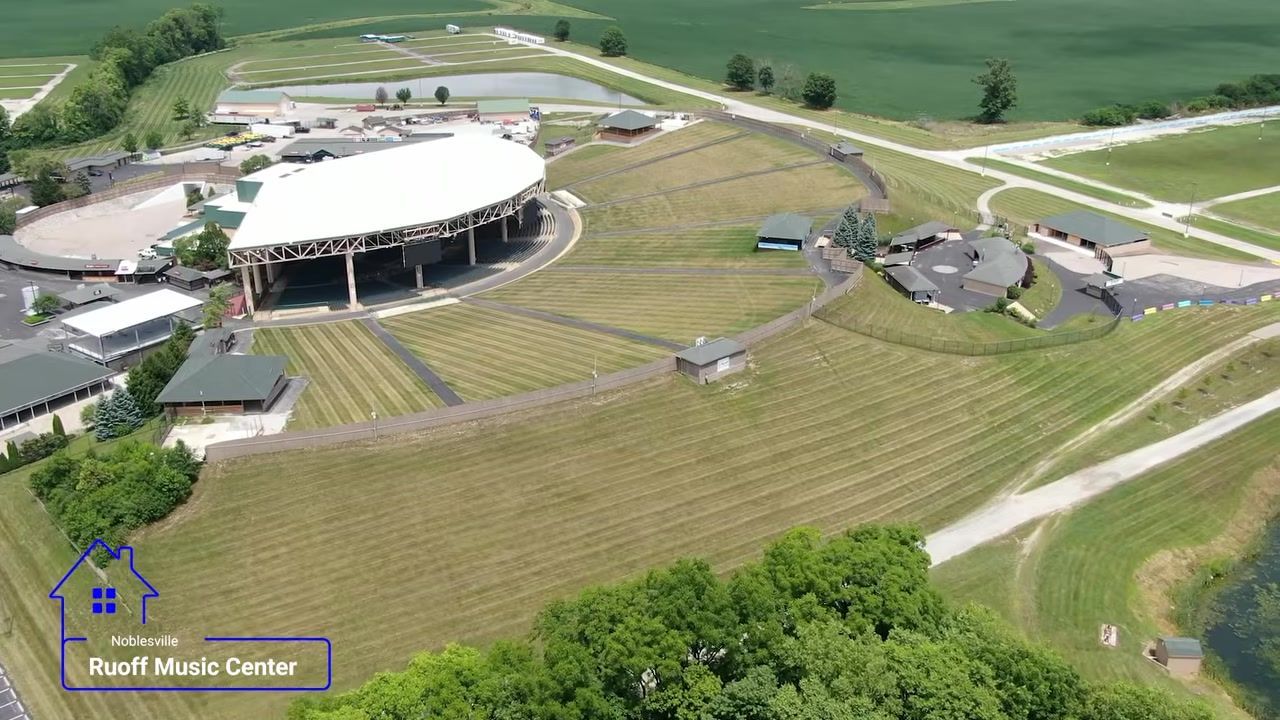
You can live in one of these and pretty easily get to the other city to enjoy whatever it has to offer. Fishers has probably the best outdoor amphitheater of any of these cities, except if you're talking about Ruoff Music Center right here in Noblesville. This is where all the big names go. You're talking 25,000 people outdoor, huge, huge concerts. You think you can't go from Westfield to Fishers? You absolutely can, and it might only be a 20-minute drive depending on where you are in Westfield. Way up near Graham Park or a little north, it's probably going to be more of a 30-minute drive, but you're in your zone up here.
Ninety percent of your time is probably going to be spent in the zone that you live in. That means if you live here on the north side, you have the opportunity to enjoy pretty reasonably and easily what all these other cities have to offer. You've got those major roads going through here, US 31 (Meridian), US 421 (Michigan), Keystone , State Road 37/I-69 , plus 19, 38, and State Road 32. You're going to get to know those because they will affect your day-to-day quite often.
People definitely know the names by now: Carmel, Fishers, Westfield, Noblesville. The northern suburbs get all the attention and media coverage. They're highly rated in national media, well connected to each other, and they have strong amenities. Fishers was a pass-through town, now it's a destination with its own downtown. Westfield had one stoplight and a Dairy Queen vibe, now it's a major destination. All four cities are very connected, and it's easy to enjoy what each offers.
Zionsville: The North Side Outlier
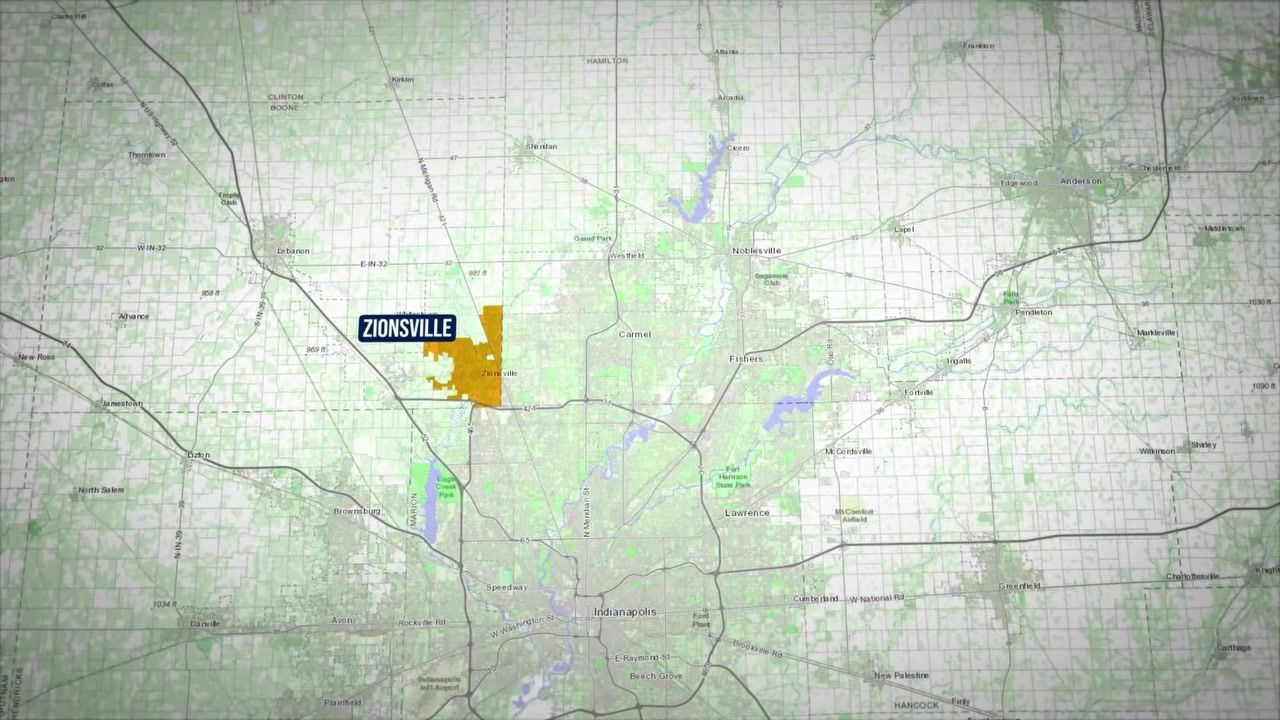
Zionsville is over in Boone County, not Hamilton County like the Big 4. While it's connected to Carmel and borders Carmel, it doesn't feel as connected. US 421/Michigan makes up the border with Carmel. It almost feels like there's a little more separation over here, even though Zionsville and Carmel share a border.
Zionsville is still considered the north side, but being in a whole other county makes a difference. It's a little less connected to the Big 4 even though it's right there. If you're looking at the northern suburbs and you want that same feel, Zionsville can deliver, but just know it's in its own county and it doesn't feel quite as woven into the fabric of Carmel, Fishers, Westfield, and Noblesville.
Western Suburbs (Brownsburg, Avon, Plainfield, Danville): Affordable and Well Connected
North and northwest get all the attention. A lot of people never even look at really more than half of the Indy metro, which is too bad because there are other zones with just as many positives as the northern suburbs. But the other zones have one big advantage over the north: they're all more affordable on average.
The suburbs to the west are generally Hendricks County . In Hendricks County, you've got Brownsburg , Danville , Avon , and Plainfield , and of course you've got a few other little towns in here too, but that makes up a majority of it. We're pushing 200,000 people in this county, so it's not something that you can just ignore and say it's a really small part of the entire metro. It's relatively large.
If you live in Brownsburg , you're going to have everything that Brownsburg has to offer, plus you've got US 136 through here that you can use, you've got I-74 . It is really well connected to Indianapolis. So if you live in Brownsburg, you can still get into Indy pretty easily, but will you very often? Goes back to being in that zone. Probably not.
One advantage of living in Brownsburg is that you are close to Eagle Creek Park though. Going into Indianapolis to see that, visit that, maybe have a pass to get into it, Eagle Creek Park is one of the largest municipal parks in the entire country. It is a really cool place. So that could be one of your spontaneous things that you do. But are you going to go to Carmel or Fishers very often? No, you're just not. It's going to take a lot more planning than that. You can easily though stay in this zone and you can hit Avon and US 36 .
This road is just commercial, commercial, commercial. Do I love this road? I mean, I like that it has a lot on it, but I don't like the stoplights one after the other all the way through here. It's not the most difficult road in the world to travel, but I'll tell you that a lot of people travel it and there is a lot of starting and stopping. So that can be frustrating. But if you don't have to go from Avon into Indianapolis or vice versa very often, it may not be that big a deal for you. In fact, then that could make Avon a really good opportunity, a good place to live, because most of what you're going to do is in this zone. You could live north of it, you could live south of US 36, and then you can pop in here to whatever it is that you need at any given time. You could also easily come up to Brownsburg if you needed to, let's say you wanted to go to a park like Williams Park or anything in there. Easily done.
Plainfield has one of the coolest traits about it. It has one of the most complete trail systems going through the entire town of Plainfield. You can get to almost anywhere in Plainfield using one of their trails. It doesn't mean it's a glorified trail that's through this canopy of trees. Some of it is. It's still a very car-dependent place, and it has everything that you would ever want commercially in there.
Also, the Indianapolis International Airport is over this direction, and a lot of people think, well, it's too close to the airport. It is close, but it doesn't affect you as much as you might think it does. In fact, the way the international airport is oriented, most of the time you're going to see and hear air traffic all through the east side and actually even all the way up into Fishers. You're going to see air traffic just doing this over and over and over as long as they're using these major runways and they're going to the southwest. If they're flying in from the southwest to the northeast, you still aren't going to really see or hear a tremendous amount. Of course you're going to see some airplanes, but you're going to see airplanes almost everywhere in and around Indianapolis. There are more airports here than just Indianapolis International. You've got a fairly major airport, you've got one at Executive, you've got one at Regional, then you've got Metropolitan Indianapolis Metro which is in Fishers, you've got Eagle Creek. There's a lot of airports. You're always going to see airplanes, but Plainfield just doesn't get affected by the international airport all that much.
This would be that other zone to the west, and you can't forget Danville out here, which is growing as well. If you live in this area, you probably stay in this area most of the time. The western suburbs are more affordable on average than the north side, well connected to Indianapolis, and Plainfield's trail system can get you almost anywhere in town. The honest truth is US 36 has many stoplights and lots of starting and stopping, but if you're not commuting on it every day, it's not a dealbreaker.
Eastern Suburbs (Fortville, McCordsville, Greenfield, New Palestine): Closest to Ground Floor Opportunity
When people want to know where the most opportunity is, this is where I would tell them to look. If there's an area around this metro that's very close still to that ground floor, this would be it, to the east.
When you get over east of Indianapolis, this gets into Hancock County . Hancock County has less than 100,000 people in the entire county. This is just completely bonkers. It's crazy. There's 2.2 million people in and around Indianapolis, but less than 100,000 in this part, the closest to the ground floor of anywhere around the entire metro. In places that have a trajectory that's growing, it is Hancock County.
McCordsville especially has been popping up on a lot of people's radar. Is it very big? Absolutely not. It's more than 10,000 people, so it's not just a tiny blip, but it's getting bigger and more connected. Fortville is definitely on the up and up, growing, and it has just one of the coolest little Main Street downtown areas that you're going to find around the whole metro. Just really, really neat.
Over in Greenfield , Greenfield looks like it's way out here to the east, but it isn't. It's going to share a border with Indianapolis in some places. So you can literally go across the street and you leave Hancock County, you get into Marion County, you've also left Greenfield and you get into Indianapolis. So it has a bigger spread than what you're seeing on the map. In fact, Mount Comfort , where there's an exit of I-70, Indianapolis Regional Airport , this has a Greenfield address. J.C. Phelps Athletic Center , the Olympian gymnast J.C. Phelps, she's from Greenfield, Indiana, from the '90s, gold medalist, has a huge gymnastics facility right there. That's a Greenfield address. So when you look on the map, that's pretty deceiving. Greenfield's all the way back over, so this is all just a little bit more open than what some of this is. It's filling in with all kinds of things, businesses, and that could be commercial logistics, things like that, but it's also residential.
As you get down to the south, it's a little more open, and this is where a lot of new construction outside of McCordsville is beginning to take shape. New Palestine is just over 5,000 people, but it's an area that's very well connected to Greenfield, really well connected to Indianapolis. If you like that smaller town, quieter feel, right now you're getting that through here. But in the next 20 years, of course it's going to get busier. A lot of the growth is headed out this way.
This is another one of those zones. If you live in this area, then you're probably going to stay for the most part in that area. So you need to make sure that it has at least what you want. If you're up in Fortville and McCordsville, you're on the border, so you can get into Fishers and probably enjoy a little bit more what Fishers has a little more often than somebody that lives in Greenfield or New Palestine. But if you live in McCordsville and you need to get into Indianapolis, it could be a little bit tougher than somebody who lives in Greenfield who can just jump right on I-70 and get down in there.
Just as an example, we live in Greenfield and we can get right into downtown Indy. Let's say Victory Field, to see the Indians play, we can get there in about 27 minutes. So that's kind of surprising to people. Major roads through here include US 40 (Washington Street through Indy), US 52 , US 36 (Pendleton Pike), and State Road 37 . This zone out here, if you live there, you probably need to make sure that what you want and what you're after is there because you're going to spend most of your time there. The eastern suburbs are the closest to ground floor opportunity in the entire metro, with a growing trajectory, and Fortville has a cool Main Street downtown.
Southern Suburbs (Greenwood, Bargersville, Whiteland, New Whiteland, Franklin): Dense, Affordable, and Investor-Friendly
The suburbs to the south, where there's probably the most investment opportunity outside of Indianapolis because of the density here, which translates into the number of choices and the affordability.
The south, as far as the suburbs go, what most people focus in on and know is Greenwood , and that's because it's easily the biggest down here. We're talking close to 70,000 people, so it has quite a spread through this area. If you're going from Indianapolis into Greenwood or vice versa, this is so dense through here that you really don't even know that you're doing it. You have to see a sign that you're leaving Indianapolis and leaving Marion County and you're getting down into Johnson County where Greenwood is. So it's hard to know unless you just know where to look.
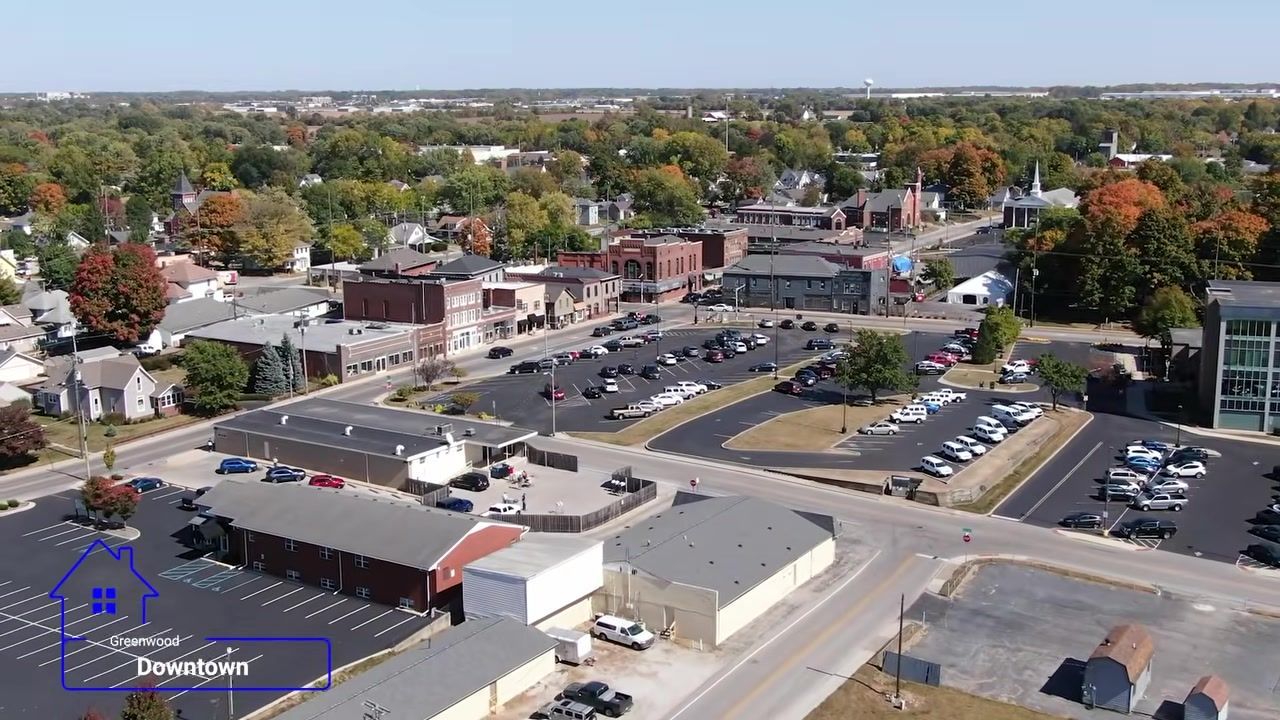
This is probably the spot for affordability where you've got a lot more opportunity. You've got homes that are definitely more affordable through there, but you also have a lot of homes. When it's that populated, it just gives you more opportunity. Investors as well looking for single-family homes to hold on to for a long time, let's say, and just kind of ride the appreciation wave as 5, 10, 15, 20 years goes by, there's a lot of opportunity through here because of that density, just more choice.
In Greenwood, you actually have multiple school districts here too. The schools are highly rated, especially Center Grove , which you can live in the Center Grove School District and have a Greenwood address, but you can also have a Bargersville address. Greenwood all the way down into Whiteland and New Whiteland , big difference between the two? Not huge. Not huge at all.
You can also get down to Franklin, Indiana , which is just the neatest little town and the neatest little downtown. It might be the coolest downtown in the entire metro. Franklin, you have to visit it to really see what I'm talking about. It is a super, super neat place. But if you live in Franklin, you're probably going to live in Franklin. You could come to Indianapolis and use I-65 to do that. You probably won't use US 31 as much, it's got a lot of stoplights. But I-65, you can breeze into, let's say, the airport or downtown Indy in maybe 30 minutes or so.
Greenwood, over in the western part of Greenwood, and if you get over into the eastern part of Greenwood or anywhere in here, it's just the same as any other place. If you live on the south side, you will not go all the way to Carmel unless you absolutely have to. You've got an appointment, you've got a concert to go to or something. It's never going to be spontaneous. Just getting there, the mileage, even if you went completely unobstructed around 465, up 65, and into Carmel, it's still going to take you 40 minutes minimum. And that's just the mileage. You just can't get around that. But usually you're going to run into a little bit of traffic. It delays you by a few minutes, 5, 10 sometimes, and now it turns into a 45-minute or more drive.
The southern suburbs have the most investment opportunity outside Indianapolis due to density and affordability. Greenwood tripled in size since I moved to Indianapolis. Density means more single-family home choices for buyers and investors. Center Grove district includes Greenwood and Bargersville addresses. Franklin has the coolest downtown in the entire metro, you have to visit. From Greenwood to downtown Indy or the airport, it's about 30 minutes via I-65.
Which Zone Fits Your Lifestyle?
Most agents in this metro sell in 1 or 2 of these zones and point everybody to the same 3 suburbs because that's what they know. That's how somebody from California ends up in a brand new build 40 minutes from the office when the house they actually wanted and needed was inside the Loop for less money.
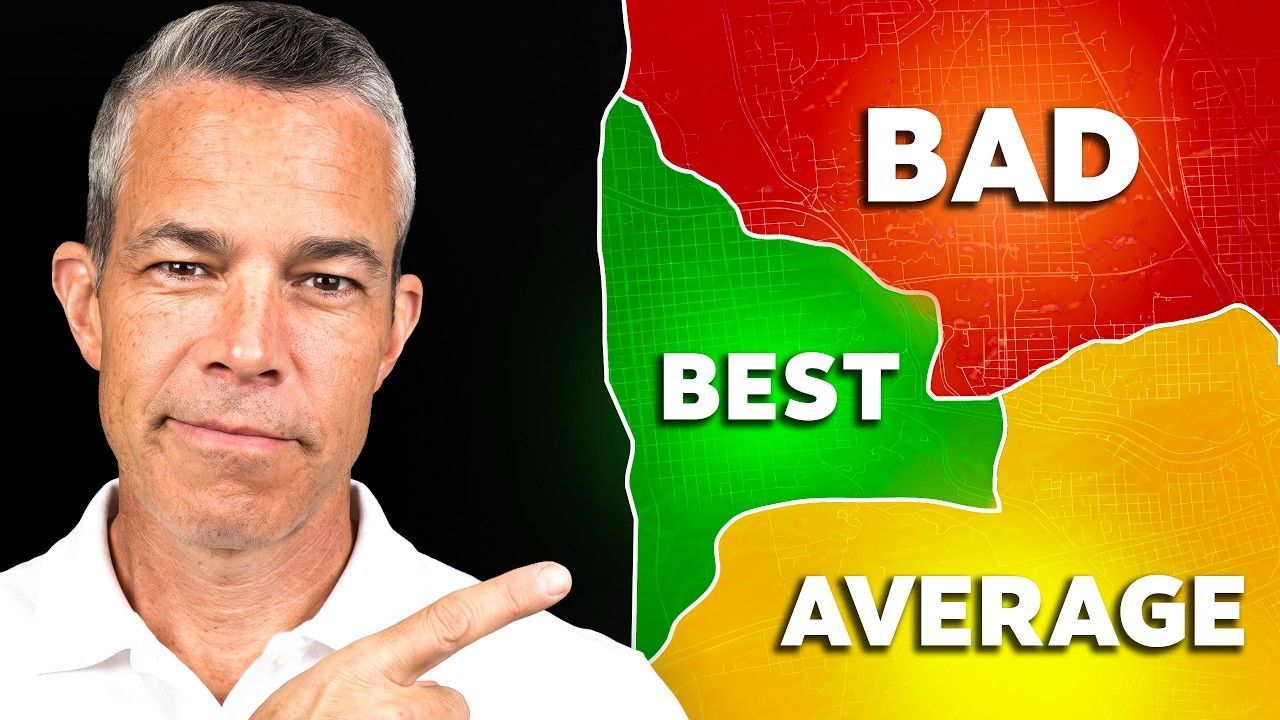
Here's the honest truth: living in your zone means 90% of time spent there. Spontaneous trips across metro are rare. North to south trips, Greenwood to Carmel, for example, take 40+ minutes minimum, never spontaneous. The northern suburbs get all the attention and media coverage, but other zones are more affordable on average. The eastern suburbs (Hancock County) are closest to ground floor opportunity in entire metro. The southern suburbs have most investment opportunity outside Indianapolis due to density and affordability. The western suburbs are more affordable than the north and well connected to Indianapolis.
- Choose the northern suburbs if you want highly rated national media coverage, strong amenities, and easy access to what all four cities (Carmel, Fishers, Westfield, Noblesville) have to offer. You'll pay more on average, but you're in the zone that gets the most attention.
- Choose Zionsville if you want the north side feel but don't mind being in a separate county and feeling a little less connected to the Big 4.
- Choose the western suburbs if you want more affordability than the north, good connection to Indianapolis, and proximity to Eagle Creek Park. Just know US 36 has many stoplights.
- Choose the eastern suburbs if you're looking for ground floor opportunity, growth trajectory, and you like a smaller town feel that's still well connected to Greenfield and Indy. New construction is filling in fast.
- Choose the southern suburbs if you want density, affordability, more single-family home choices, investment opportunity, and local schools like Center Grove. Franklin has the coolest downtown in the metro.
The whole metro added 22,000+ people in 2024-25, double the national growth rate. Roads, employers, and builders followed each other outward over the past 20 years. The market is not static, using 2019 articles will be wrong about half the metro. Indianapolis itself is out of room to expand and is filling in within its borders.
Conclusion
That's a relatively quick overview of the map, but a map only gets you so far. I've lived in a lot of places around Indy, and I've spent years filming and walking these streets myself, including the ones nobody puts on a relocation list, especially a short list.
If you're moving here and you want somebody to tell you which area actually fits your budget, your commute, and your school situation, call or text me, or you can book a 30-minute call with me. My team and I will help you map it out and what fits you the best.
FAQ
What are the major interstates in the Indianapolis metro?
I-465 circles most of Indianapolis but not all of it, the borders extend beyond the loop especially southwest and east. I-65 goes to Chicago (2.5 hours) and Louisville. I-70 goes coast to coast. I-74 goes to Cincinnati (under 2 hours). I-69 goes up to Fort Wayne and down to Evansville.
Which Indianapolis suburbs are the most affordable?
The western suburbs (Brownsburg, Avon, Plainfield, Danville), eastern suburbs (Fortville, McCordsville, Greenfield, New Palestine), and southern suburbs (Greenwood, Bargersville, Whiteland, New Whiteland, Franklin) are all more affordable on average than the northern suburbs. The northern suburbs get all the attention and media coverage, but the other zones offer better value.
Where is the best investment opportunity in the Indianapolis metro?
The eastern suburbs (Hancock County) are closest to ground floor opportunity in the entire metro, with less than 100,000 people and a growing trajectory. The southern suburbs have the most investment opportunity outside Indianapolis due to density, Greenwood is close to 70,000 people, which means more single-family home choices for buy-and-hold investors.
How connected are Carmel, Fishers, Westfield, and Noblesville?
The Big 4 are extremely connected. You can drive from one to the other in 20-30 minutes depending on where you are. Fishers has an outdoor amphitheater, Noblesville has Ruoff Music Center (25,000 capacity), and Westfield has Graham Park (one of the largest youth sports campuses in the country). The White River separates Carmel and Fishers, and you can cross at 96th, 116th, and 146th, but not 106th.
Does living near Indianapolis International Airport mean a lot of airplane noise?
Not as much as you might think. The way the international airport is oriented, most air traffic affects areas to the northeast, not Plainfield or the western suburbs. The runways are oriented so planes fly over the east side and even up into Fishers. Plainfield is close to the airport but not heavily affected by noise.
What is the coolest downtown in the Indianapolis metro?
Franklin has the coolest downtown in the entire metro. It's a super neat place and you have to visit it to really see what I'm talking about. Fortville also has one of the coolest little Main Street downtown areas you're going to find around the whole metro.
jason compton
A former teacher turned full-time real estate agent serving Greater Indianapolis. I help buyers, sellers, and relocation clients make informed moves—especially those coming from out of state. From neighborhood insights to home tours, my goal is to simplify the process and help you feel confident in every step.
Stay Informed
Insights, Tips & Life in Indianapolis
Your go-to resource for all things real estate and Indy living. Whether you're buying, selling, relocating, or just curious about the local market, our blog is packed with helpful articles, expert advice, and community highlights to keep you informed and inspired.