The Indianapolis real estate market is entering a period that is much bigger than the usual “Indy is growing” story. More than $21 billion in committed investment is reshaping the metro between now and 2030, and this is not just a collection of announcements on paper. Construction is underway, major timelines are in place, and the projects are starting to connect.
That matters because the Indianapolis real estate market is already starting from a pretty strong position. The metro is growing faster than the national average, job growth is healthy, and the suburbs are still attracting families who want more space, strong schools, and a reasonable cost of living compared with the places they are leaving.
The real question is not whether Indianapolis will change. It is where the change will hit first, which areas benefit most from it, and what it could mean for buyers and sellers over the next few years.
Key Takeaways
- Indianapolis is growing faster than the national average, with strong wage, GDP, and labor force gains.
- The IU Health Academic Health Center, Blue Line, and downtown redevelopment are key projects through 2028.
- Eli Lilly has committed more than $21 billion in Indiana since 2020, with major expansion centered near Lebanon.
- Carmel, Fishers, Westfield, Zionsville, and Noblesville are positioned to compete for a growing high-income buyer pool.
Table of Contents
- Indianapolis Real Estate Market Today
- Indianapolis Development Projects in 2025 and 2026
- 2027 IU Health Campus and Real Estate Impact
- 2028 Downtown Indianapolis Development
- 2029 Jobs and Indianapolis Suburbs
- 2030 Eli Lilly Investment and Real Estate
- What It Means for Indianapolis Buyers and Sellers
Indianapolis Real Estate Market Today
Before getting into the major Indianapolis development projects, it helps to understand the foundation. The Indy metro has more than 2.2 million people and added over 22,000 residents between 2024 and 2025. That is growth of more than 1% in one year, roughly double the national rate.
Hamilton County continues to be the center of gravity for suburban demand. Carmel, Fishers, Noblesville, and Westfield all sit there, and the county added 7,351 residents in 2025, leading the entire state. Boone County, home to Zionsville and the fast-growing Lebanon area, grew 2.6%, one of Indiana’s fastest growth rates for the third straight year.
The economic picture is just as important. From 2019 through 2023, Indianapolis metro GDP grew 12.5%, compared with 9.7% nationally. Wages paid to Indianapolis workers rose 7.6% from the first quarter of 2024 to the first quarter of 2025, nearly double the national growth rate. The labor force also grew 7.8% from 2019 through 2025.
That growth comes from a pretty diversified foundation:
- Life sciences and pharmaceuticals, led by Eli Lilly and supported by roughly 350 companies and about 29,000 jobs.
- Major healthcare systems including IU Health, Community Health, and regional hospital networks.
- Aerospace and manufacturing employers such as Allison Transmission, Rolls-Royce, and Cummins.
- Large logistics operations, including Amazon with more than 9,000 employees and FedEx with around 5,800 employees at its Indianapolis hub.
Housing remains relatively attainable in the city proper, where the median home price is around $255,000, about 42% below the national average. But the suburban numbers are a different story. Hamilton County reached a $500,000 median sale price in May 2026, with homes averaging about 25 days on market.
Carmel sits around $550,000, Fishers around $410,000, Westfield around $431,000, and Noblesville around $358,000. Inventory has improved from the extremely tight years of 2022 and 2023, but Hamilton County supply remains just over one month. Demand still very easily outpaces available homes in many of these areas.
Indianapolis Development Projects in 2025 and 2026
The first phase is not necessarily the glamorous phase, but it is the part that makes everything else work. Roads, stormwater systems, transit connections, and walkability all determine which neighborhoods become easier to live in, where traffic flows, and where businesses eventually want to locate.
Indianapolis committed $1 billion to infrastructure through the city’s five-year plan. Of that, $268 million is targeted for 2025 alone, including $200 million in transportation improvements and $68 million for stormwater work.
Fishers is also putting $12.4 million into its 2026 road reconstruction season. That work is designed to support growth in northeast Fishers and improve traffic flow between Fishers, Noblesville, and the broader Hamilton County corridor. If you are buying in that part of Fishers now, you are buying while those improvements are still being built and before the full convenience may be reflected in pricing.
The Blue Line Changes Connectivity
IndyGo’s Blue Line rapid transit project broke ground in 2025 and is expected to be completed in 2028. It will connect Cumberland on the east side through downtown and west to Indianapolis International Airport. Combined with the existing Red Line and Purple Line, Indianapolis is building a genuine bus rapid transit network instead of relying on a single route.
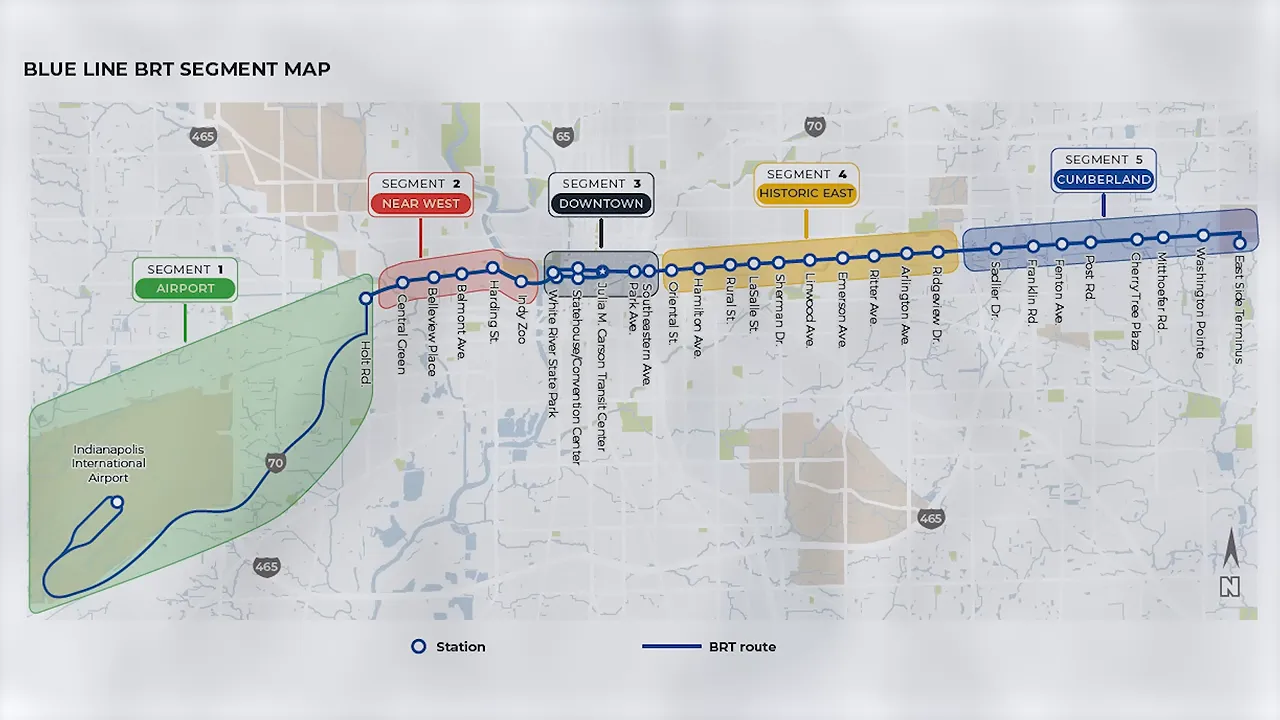
For daily commuters, airport employees, frequent business travelers, and people who want easier access to downtown without being right in the middle of it, transit changes the practical map of the city. Accessibility tends to create demand, especially in neighborhoods that are already positioned well but have not fully caught up in price yet.
16 Tech and Downtown Hospitality Build Momentum
Another important part of the foundation is 16 Tech, a 50-acre urban innovation district northwest of downtown built around life sciences, technology, research, and entrepreneurship. Its signature pedestrian bridge opened in spring 2025, physically connecting researchers and entrepreneurs with the hospital and university ecosystem.
That may sound like a small detail, but it is not. Connections create foot traffic. Foot traffic brings businesses. Businesses attract residents. This is how an area starts to develop a real daily rhythm beyond just office hours.
Downtown is also gaining major hospitality and convention assets. The 38-story, 800-room Signia by Hilton next to the convention center is expected to open in December 2026. The convention center itself is receiving a 143,500-square-foot expansion, including a 50,000-square-foot ballroom.
2027 IU Health Campus and Real Estate Impact
If there is one project anchoring the entire Indianapolis real estate market transformation, it is the new IU Health Academic Health Center downtown. With a $4.3 billion price tag, it is one of the largest construction projects in Indiana history and among the largest hospital projects underway in the country.
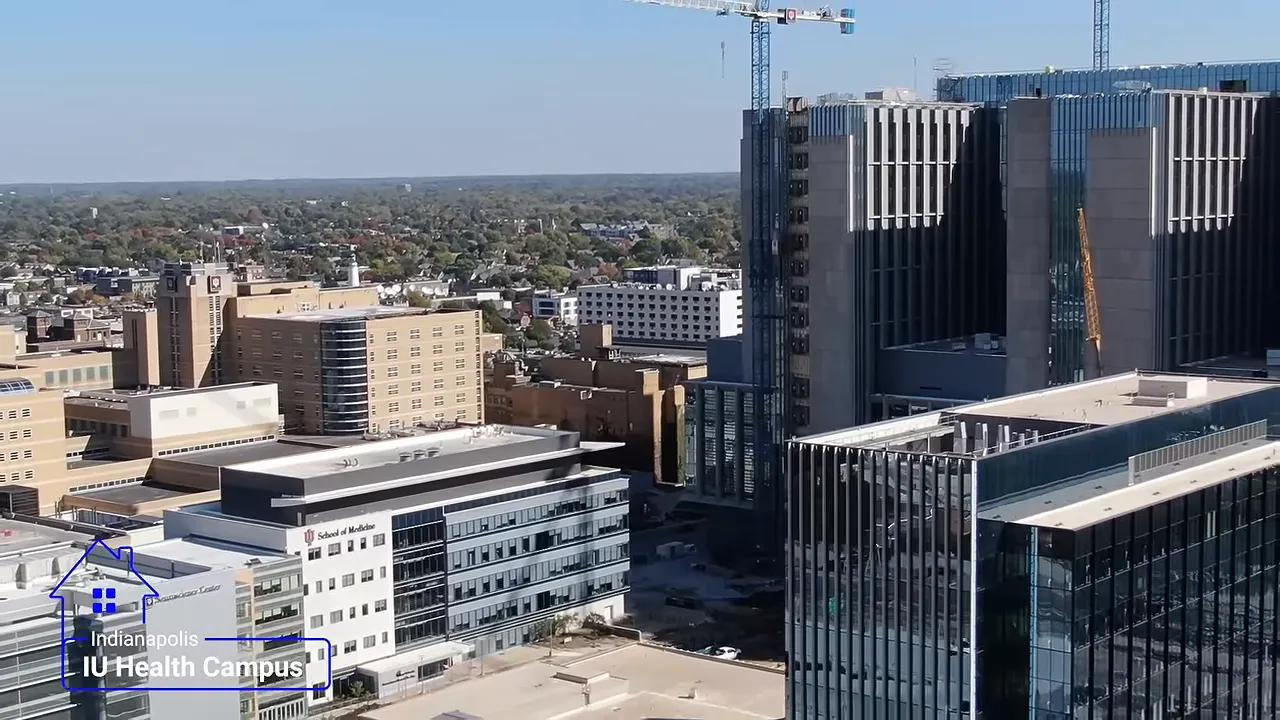
The project consolidates Methodist Hospital and University Hospital into a single 44-acre campus near West 16th Street and North Capitol Avenue. The new facility is planned for 864 patient beds and 50 operating rooms, with a target opening in late 2027.
This is not simply a hospital expansion. A world-class academic health campus pulls in physicians, researchers, medical staff, faculty, support businesses, and professionals tied to the broader medical ecosystem. Many of those people have higher incomes and specific expectations around commute, housing, restaurants, and neighborhood amenities.
That puts the near north side, northwest side, and areas south of the campus worth paying attention to. The effect is not limited to the blocks next door. Demand typically ripples outward as people find the right balance between commute time, home type, budget, and lifestyle.
IU Health is also expanding its Fishers presence, with Saxony Hospital renamed IU Health Fishers. So the health system footprint is growing in the suburbs at the same time the major downtown campus is being built.
Late 2027 also brings the Westin Indianapolis International Airport Hotel, directly connected to the terminal garage. It is another piece of the puzzle that improves how incoming professionals, corporate travelers, and relocating families experience Indianapolis from day one.
|
2028 Downtown Indianapolis Development
By 2028, the changes are going to be much harder to ignore. The Blue Line is expected to be complete, creating a direct rapid transit connection from the airport through downtown and out to Cumberland. Alongside the Red and Purple lines, that makes the downtown transit story much more real.
But downtown’s bigger change may be what happens around Circle Centre Mall. The old enclosed mall model is being replaced with Traction Yards, an open-air mixed-use district designed around pedestrian-focused retail, dining, and public gathering spaces.
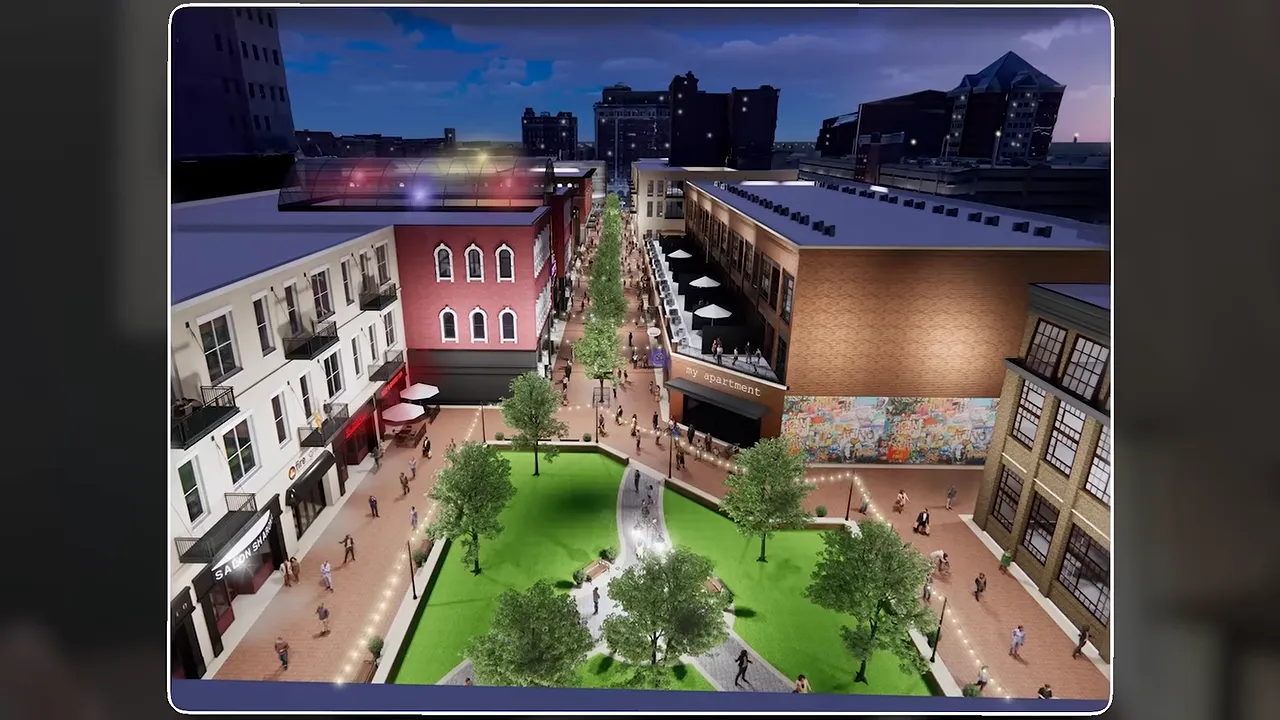
Georgia Street is also being reshaped into a pedestrian-first spine linking the convention center, Lucas Oil Stadium, and Gainbridge Fieldhouse. That is important because car-free event areas change how people move through downtown. Activity spills farther into surrounding blocks, people walk more, and businesses along Illinois Street and Capitol Avenue get a stronger shot at weekend and game-night traffic.
For anyone considering downtown living or a neighborhood within walking distance of the core, these Indianapolis development projects are about more than a nicer streetscape. They change the quality of life, the convenience of events and dining, and the day-to-day energy of the area.
2029 Jobs and Indianapolis Suburbs
By 2029, the question shifts from what is being built to what all of this growth is doing to the market. Professional and technical services employment grew 4.8% between August 2024 and August 2025. Chemical manufacturing, which is heavily pharmaceutical in Indianapolis, grew 6%. Life sciences occupations across the metro grew 17.1% between 2023 and 2024, while architecture and engineering jobs grew 9.3%.
These are meaningful because they are generally higher-income jobs. Biomedical engineers, medical scientists, biological technicians, and similar professionals are often the buyer pool that looks at Carmel, Fishers, Westfield, Zionsville, and Noblesville.
INCOG in Fishers is a good example. The company operates a 21-acre life sciences campus and employs just over 400 people, with plans to approach 1,000 employees by 2030.
Suburban demand is not identical everywhere, though. Each market has its own pull:
- Westfield continues to benefit from Grand Park, new construction, and communities such as Chatham Hills.
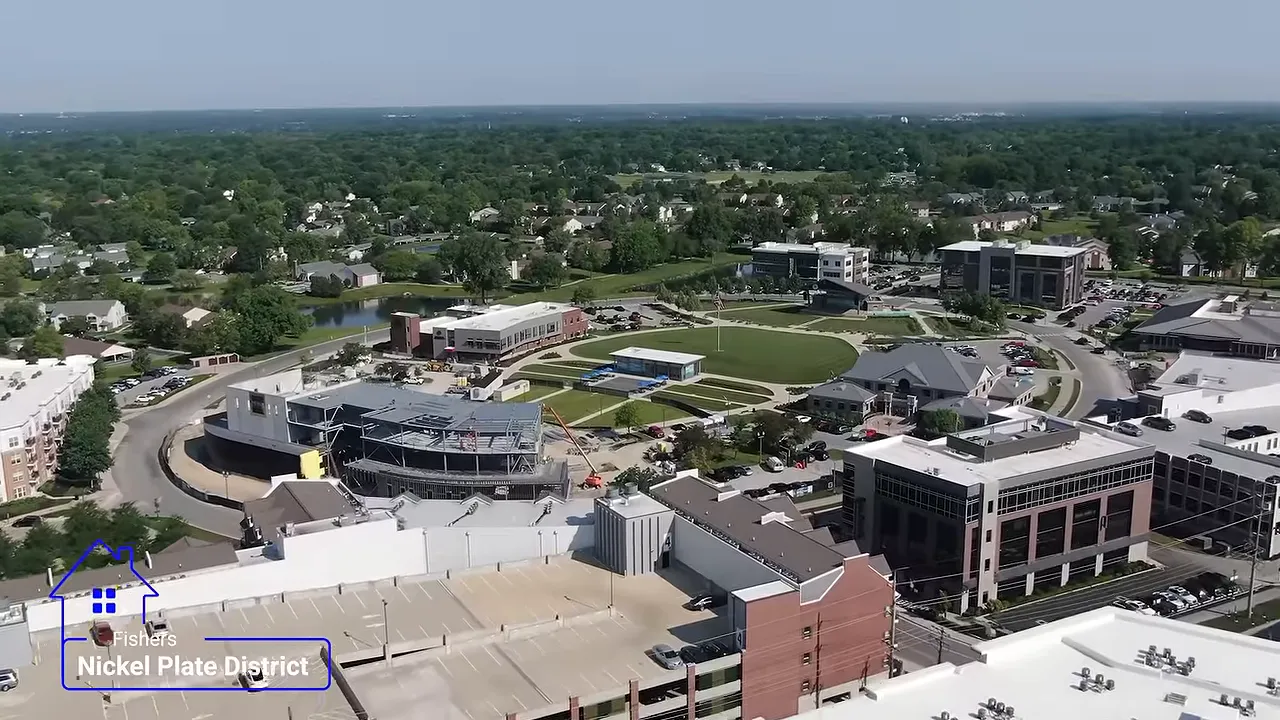
- Fishers has ongoing demand near the Nickel Plate District and Geist Reservoir, alongside its growing life sciences presence.
- Carmel remains one of the metro’s most consistently desirable suburban choices, particularly close to downtown Carmel.
- Zionsville is increasingly relevant because of its position near the Lebanon manufacturing expansion.
2030 Eli Lilly Investment and Real Estate
The single biggest story is Eli Lilly. In May 2026, the company announced an additional $4.5 billion investment across two manufacturing sites in Lebanon, Indiana. That brought Lilly’s total capital commitments in Indiana since 2020 to more than $21 billion.
Just sit with that number for a second. More than $21 billion from one company in one state over a decade. Lilly had previously announced roughly $27 billion in total new U.S. manufacturing investment, so a huge share of that investment is landing in Indiana.
The Lebanon sites sit northwest of Zionsville and Whitestown in Boone County. The expansion is expected to create more than 1,000 jobs by 2027, with hiring continuing through 2030. Lilly has also invested $3.3 billion since 2020 to modernize existing Indianapolis research and manufacturing infrastructure.
These are not just entry-level manufacturing jobs. The growing life sciences workforce includes biomedical engineers, microbiologists, scientists, and other highly trained professionals. That creates a housing demand profile that naturally looks toward communities with schools, amenities, more space, and a manageable commute.
Zionsville is roughly 20 minutes from Lebanon, which makes it a very natural option for professionals who want a walkable downtown, strong schools, and a quieter setting without needing a daily downtown Indianapolis commute. Whitestown, Westfield, Carmel, Fishers, Noblesville, and Zionsville all sit within the broader conversation as the west and north sides of the metro continue to evolve.
What It Means for Indianapolis Buyers and Sellers
The Indianapolis real estate market is not going to move in a straight line. Every neighborhood, price point, and property type will behave differently. But the direction of the major Indianapolis development projects is clear: better infrastructure, more transit, a stronger medical core, a refreshed downtown, and a deepening life sciences economy.
For buyers, the opportunity is in understanding the map before the changes become obvious to everyone. A home near a future job center, improved corridor, growing suburban employment hub, or upgraded downtown amenity can look very different in a few years.
For sellers, the buyer pool for well-positioned homes may continue to strengthen as high-income employment expands. In Hamilton County especially, more competition for a limited supply of homes can make preparation, pricing, and timing matter even more.
The bottom line is simple. By 2030, Indianapolis is expected to have a new academic health campus, a more connected transit network, a revitalized downtown core, expanding life sciences employment, and a massive pharmaceutical manufacturing investment on the western edge of the metro. The Indianapolis real estate market is changing because the city’s economic map is changing right alongside it.
If you're considering new construction homes in Indianapolis, now is the time to understand which communities and growth areas could offer the best fit for your lifestyle and long-term goals. From Carmel and Fishers to Westfield, Zionsville, and the growing areas around Lebanon, we can help you navigate builders, neighborhoods, pricing, and the buying process.
Call or text (317) 932-8620 or book a FREE consultation to get started.
Frequently Asked Questions About the Indianapolis Real Estate Market
What is driving growth in the Indianapolis real estate market?
Population growth, rising wages, life sciences expansion, healthcare investment, logistics, manufacturing, and major infrastructure projects are all contributing to demand across the metro.
What is the biggest Indianapolis development project through 2030?
Eli Lilly’s more than $21 billion in Indiana capital commitments since 2020 is the largest investment story, particularly because of the Lebanon manufacturing expansion northwest of Zionsville and Whitestown.
When will the new IU Health downtown campus open?
The $4.3 billion IU Health Academic Health Center is targeted to open in late 2027. It will consolidate Methodist Hospital and University Hospital into one 44-acre downtown campus.
Which suburbs could benefit from Indianapolis development projects?
Carmel, Fishers, Westfield, Zionsville, Noblesville, and Whitestown are all part of the broader growth conversation. The best fit depends on commute needs, budget, school preferences, desired home type, and lifestyle.
Read More: WHY THE INDIANAPOLIS HOUSING MARKET IS CHANGING FOREVER