The Indianapolis housing market has changed in a real, measurable way. Zillow ranked Indianapolis as the number one buyer-friendly market among the nation’s 50 largest metros for 2026, and that ranking has shifted the conversation for both buyers and sellers.
That does not mean prices are crashing or that the market is broken. Far from it. What we are seeing is a move away from the frantic, no-breathing-room environment of 2022 and early 2023 toward a market that is more balanced. There are more homes to choose from, properties are taking longer to sell, negotiations are back on the table, and buyers can make decisions with a little less panic.
The major force behind this shift is mortgage rates. Rates were expected to decline into the 5% range in 2026. Instead, they dipped early in the year and then climbed again. That has changed buyer behavior across the Indianapolis housing market, and it is showing up differently from Carmel to Fishers, Westfield, Noblesville, and Zionsville.
Table of Contents
- How We Got Here
- How Mortgage Rates Changed the Market
- What’s Different in Indianapolis Now
- What Buyers Should Do With This Opportunity
- What Sellers Need to Know
- Indianapolis Suburbs: A Closer Look
- What to Expect for the Rest of 2026
How We Got Here
To understand the current Indianapolis housing market, we have to remember what the market looked like just a few years ago. In 2022 and early 2023, inventory across Hamilton County was incredibly tight. Carmel, Fishers, Westfield, Noblesville, and nearby Zionsville were often operating with less than one month of housing supply.
In plain English, if no new listings had come up, every available home could have been under contract within weeks. Homes routinely went pending in under 10 days. Some hit the market on Friday, had a packed weekend of showings, and received multiple offers by Monday morning.

Buyers were dealing with a brutal set of conditions:
- Waiving inspections and contingencies to make offers competitive.
- Paying tens of thousands of dollars above list price.
- Losing homes even after offering far above asking price.
- Making major financial decisions in a matter of hours.
At the same time, prices were rising at double-digit year-over-year rates in many areas. The affordability advantage that has historically made Indianapolis attractive was taking a beating. By September 2025, housing costs across the metro were consuming roughly 36% of median household income, near the highest level on record for this market.
That was never going to be a comfortable long-term setup. The shift we see today is not a collapse. It is a correction toward something more normal.
How Mortgage Rates Changed the Market
The biggest factor in the Indianapolis housing market right now is the mortgage-rate environment. At the beginning of 2026, Bankrate’s forecast called for 30-year fixed mortgage rates to fall to around 5.7%. A lot of buyers and sellers were planning around that expectation.
It did not happen. Rates fell to an average of 6.09% in February, then reversed. By June 25, 2026, Freddie Mac put the average 30-year fixed rate at about 6.49%, nearly 40 basis points above the year’s low.
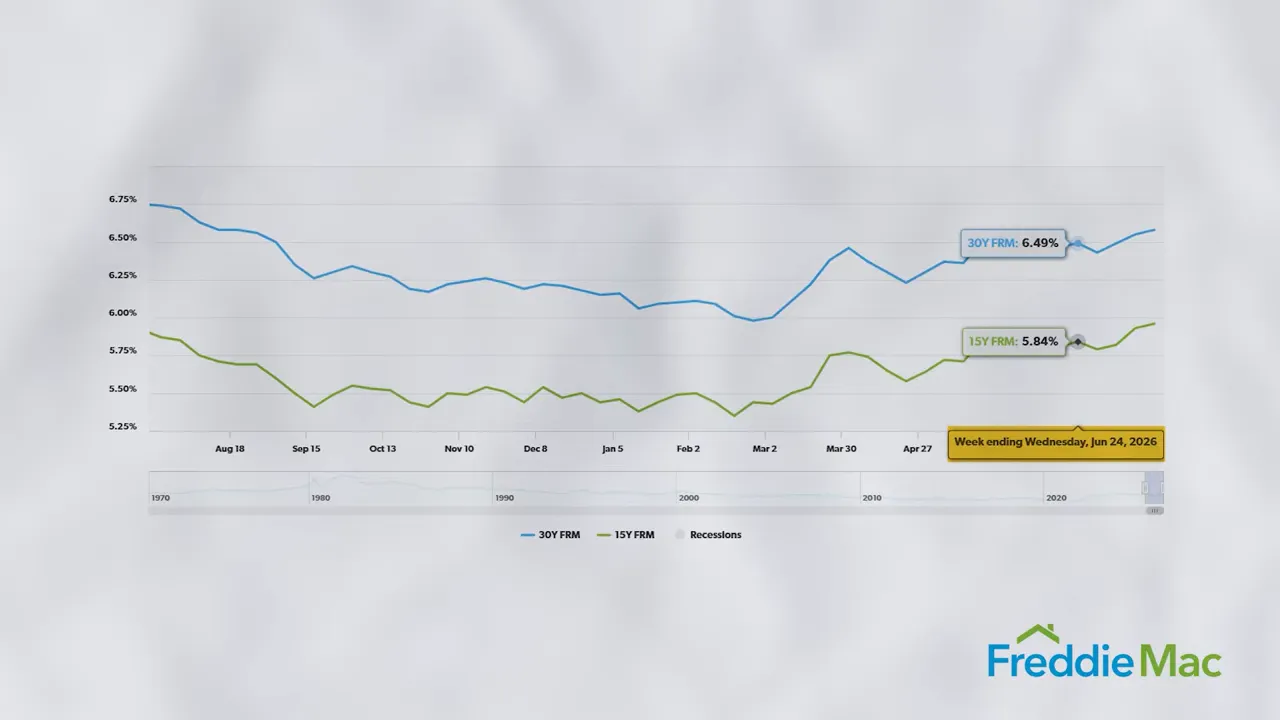
That may not sound like much, but it matters. On a $500,000 home, a rate change of that size can add hundreds of dollars to the monthly payment. With 20% down at a 6.49% rate, principal and interest on a $500,000 purchase is roughly $2,500 per month, a little more depending on the specific loan.
Rates rose as inflation accelerated to 4.2% in May 2026, its highest reading since 2023. Higher oil prices during the Iran conflict also helped push bond yields upward. Mortgage rates tend to follow bond yields, so the effects carried straight into housing affordability.
After the June Federal Reserve meeting, policymakers held rates steady but signaled a more aggressive outlook than markets expected. A majority of Fed members were projecting a later rate hike rather than a cut. Housing economists were no longer projecting a move below 6% anytime soon.
That has left many would-be buyers waiting. And when buyers wait, urgency comes out of the market. Listings stay available longer. Inventory builds. Sellers have to compete harder for the buyers who are ready now.
What’s Different in Indianapolis Now
Five changes stand out across the Indianapolis housing market. Together, they explain why buyers have more leverage than they have had in several years.
1. Inventory is higher
Active inventory across the Indy metro rose roughly 20% to 30% year over year heading into spring 2026. Active single-family inventory reached 5,509 homes in late 2025, up 27% from 4,337 homes the year before.
More inventory does not automatically mean weak demand. It means buyers have choices. When there are more options, there is less pressure to jump at the first home that shows up.
2. Homes are taking longer to sell
Across the broader metro, the average home was spending about 28 days on market, compared with 21 days a year earlier. An extra week may not sound like a huge deal, but it changes the entire negotiating dynamic.
Buyers can often schedule a second showing. They can sleep on a decision. They can include an inspection without automatically losing the home. That was simply not the reality during the intense 2022 run.
3. Price reductions are more common
At the peak of the adjustment in late 2025, more than 55% of active metro listings had reduced their price at some point. As of May 2026, Redfin data showed price drops on 22% of Indiana homes. Only 18.2% of homes were selling above list price.

That does not mean every listing deserves a low offer. Well-priced, well-maintained homes in strong locations can still move quickly. But overpriced listings are getting exposed much faster now than they did a few years ago.
4. Concessions are back in some transactions
Seller-paid closing-cost credits, rate buy-downs, and other incentives are back on the table in certain situations. Builders are especially active with these offers, and resale sellers competing against new construction may need to consider similar tools.
For buyers, it is worth asking about concessions on every offer, especially when a property has been sitting for 45 or 60 days. There may be room for a lower price, a closing-cost credit, a rate buy-down, or a combination of those things.
5. Prices are still moving upward, just more slowly
The Indianapolis housing market is more balanced, but pricing has not reversed broadly. Hamilton County’s median sale price reached $500,000 in May 2026, up 4.2% year over year. Across the broader Indy metro, prices were up 1.9% year over year as of May.
The practical takeaway is simple: more homes, more time, and more negotiating room for buyers, but generally stable to gradually rising prices.
What Buyers Should Do With This Opportunity
For buyers, the current Indianapolis housing market is probably the most favorable environment we have seen in three to five years. Indianapolis remains comparatively affordable, even with mortgage rates in the mid-6% range.
Zillow’s analysis found that a typical Indianapolis mortgage payment takes up about 26.9% of median household income. That compares with 46.7% in Miami. Redfin data also put Indy’s median sale price 42% below the national median, while the overall cost of living is about 10% below the national average.
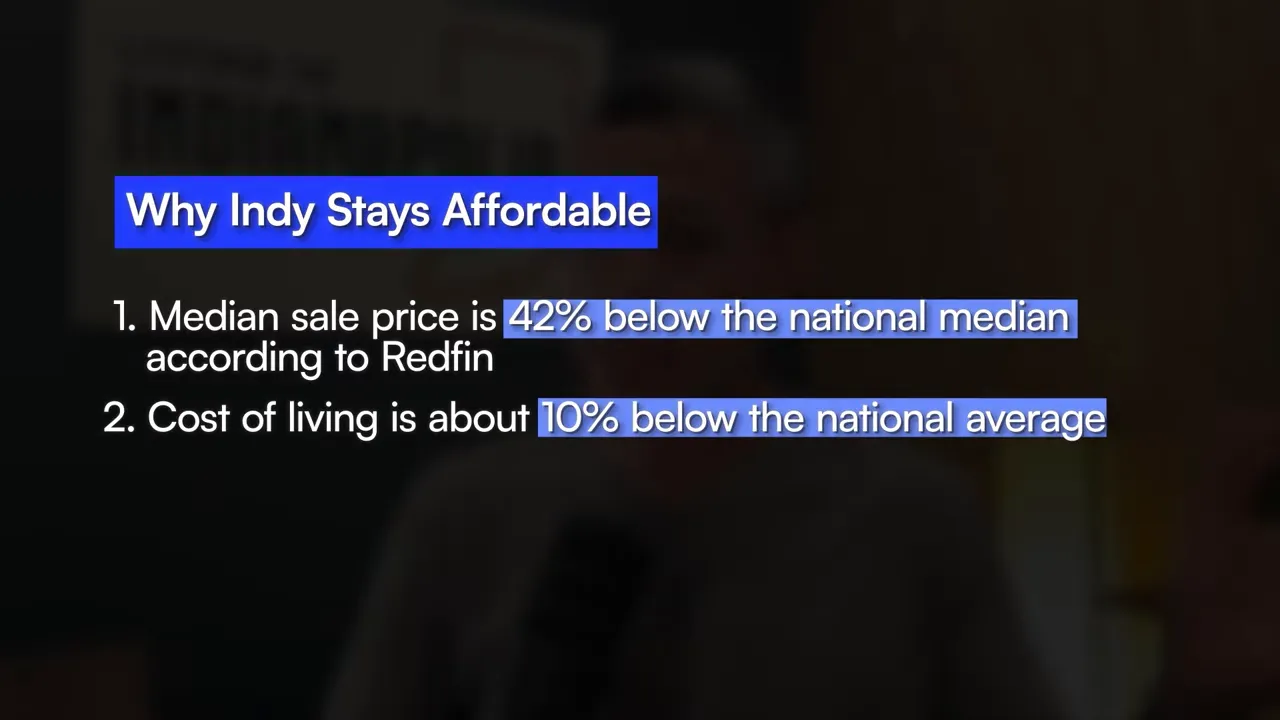
That affordability gap is a big reason demand has held up. Buyers relocating from more expensive parts of the country can still get more home here for a smaller share of their income.
Still, we need to be realistic about rates. Waiting for 5% or 5.5% mortgage rates is not something current data supports. Rates may come down later, or they may not. Meanwhile, values in Hamilton County and other parts of the metro are still generally holding or climbing slowly.
A more practical approach is to focus on the fundamentals:
- Find the right home in the right location at a price that makes sense.
- Use the additional inventory to be selective rather than settling for the first available option.
- Keep inspections and appropriate protections in the offer.
- Ask for price reductions, credits, or rate buy-downs where the situation supports it.
- Consider refinancing later if rates improve and the loan structure allows it.
We cannot control where rates go next. We can control whether the home, location, payment, and terms work for our actual situation today.
What Sellers Need to Know
The easy seller’s market is mostly over for now. Listing on Thursday, receiving 12 offers by Sunday, and selling $40,000 above asking without much effort is no longer the standard experience.
That said, buyers are still out there. Correctly priced homes are still moving. In Hamilton County, average days on market fell from 32 days in April to 25 days in May 2026, which tells us demand remains real.

The difference is pricing discipline. Current listings carried a median list price around $220 per square foot, while homes were actually selling around $185 to $200 per square foot. That gap tells us many sellers are asking beyond where the market is truly transacting.
Those are the homes that sit for 30, 45, 60, or even 90 days. And the longer a property sits, the more likely it is to need a price reduction that leaves the seller with less than they might have earned by pricing accurately from day one.
For sellers in the Indianapolis housing market, the strategy needs to be straightforward:
- Price against recent closed sales, not just active listings.
- Prepare the home so it competes with move-in-ready alternatives.
- Be ready to respond when feedback shows the market is resisting the price.
- Consider concessions if competing against builders or similar homes with incentives.
This matters a lot in Westfield and Noblesville, where new construction is abundant. Builders are often offering rate buy-downs and closing-cost assistance as a normal part of their package. An existing home does not have to copy every builder incentive, but it does have to compete against what buyers can get.
Indianapolis Suburbs: A Closer Look
The Indy metro is not one uniform market. Each suburb has its own supply, price point, buyer pool, and amount of new construction. Here is where buyers and sellers stand in several of the most popular north-side areas.
Carmel: Still the tightest market
Carmel remains the strongest seller position in this group, although it is not nearly as intense as it was. Redfin’s three-month data through April 2026 put the median sale price around $550,000, up about 4.7% year over year. Homes averaged 18 days on market, more than double the eight-day pace from a year earlier.
Supply remains below one month, so buyers have a little more breathing room but should not expect major negotiating leverage on well-priced, turnkey homes. Carmel is still competitive.
Fishers: The most notable slowdownz
Fishers is showing one of the clearest slowdowns on the north side. Redfin put the February 2026 median sale price at $399,000, while Movoto’s June median list price was $459,000. Days on market were running around 45 days, up from 35 days a year earlier.
The Nickel Plate District and Geist Reservoir area continue to carry major lifestyle appeal, but buyers generally have more room to negotiate in Fishers than they did 12 months ago. Sellers need to pay attention to closed-sale data, not simply the list prices around them.
Westfield: New construction is the major variable
Westfield presents a very specific story. Redfin’s February snapshot showed a median around $489,000, while Zillow’s broader home-value index put the typical home closer to $433,000, up less than 1% year over year.
The major point is selling time. Homes were taking an average of 69 days to sell, up from 43 days a year earlier. February sales volume was 77 transactions, down from 106 a year before.
There is plenty of new construction in Westfield. That gives buyers genuine choices and puts resale sellers in direct competition with builders that can offer incentive packages immediately.
Noblesville: The strongest buyer leverage
Noblesville is where buyers have gained the most ground among these suburbs. Through March 2026, Redfin showed a median sale price of $400,000, up just 1.3% year over year. Days on market jumped from 20 days to 57 days, nearly three times as long.
As one of the more affordable entry points into Hamilton County, Noblesville remains attractive. But if a home has been sitting for 40 or 50 days, there is usually a real opportunity for a conversation about terms.
Zionsville: Higher price point, smaller buyer pool
Zionsville operates differently because it has a higher price point and fewer total sales. Zillow’s Home Value Index placed the typical Zionsville home around $571,000, up 4% year over year.
Its smaller transaction volume means individual sales can move the monthly median significantly in either direction. Days on market have been trending longer, but the market is often more deliberate than dramatic. Zionsville attracts buyers seeking a quieter, small-town feel, and that narrower buyer pool tends to take more time.
What to Expect for the Rest of 2026
The next move for the Indianapolis housing market remains closely tied to mortgage rates. Inflation is elevated, oil prices have remained high, and the conditions that would usually push rates lower have not been cooperating.
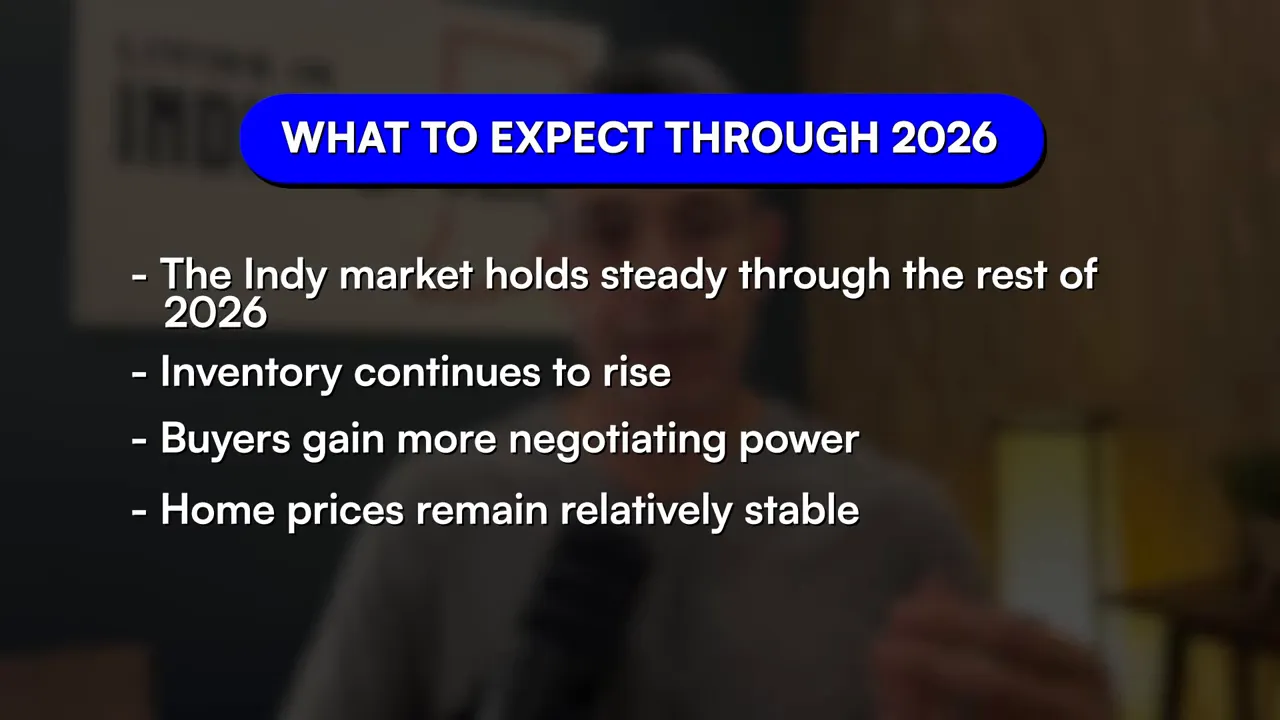
The most likely outcome is that the market holds its current position for the rest of 2026: a little more inventory, more buyer negotiating room, and no widespread significant price drops.
Indianapolis still has structural advantages. Relative affordability remains better than in many major metros. The local job base is solid. People continue relocating from higher-cost markets. Those fundamentals support demand even when rates are not ideal.
The big wild card is new construction. Builders are active across Westfield, Noblesville, parts of Fishers, and other parts of the metro. As new homes hit the market with rate buy-downs and closing-cost incentives, they may pull buyers away from resale homes. That means existing-home sellers need to be sharper on price and preparation.
There is another possibility worth keeping in mind. Zillow’s number one ranking could draw even more interest from people considering a move to a lower-cost market. If incoming demand grows faster than available inventory, today’s buyer-friendly conditions could tighten again.
For now, the Indianapolis housing market is not falling apart. It is simply more balanced. Buyers have a real window to make a thoughtful move without the bidding-war panic of the last few years. Sellers can still get strong results, but only with realistic pricing and a strategy built for today’s conditions rather than yesterday’s market.
Whether you’re buying your first home, looking for new construction homes, or relocating to the Indianapolis area, having the right strategy can make all the difference. Let’s talk about your goals, your budget, and the neighborhoods that fit your lifestyle.
Call or text (317) 932-8620 or book a FREE consultation to get started. Let’s find the right home and make your next move with confidence.
Frequently Asked Questions About the Indianapolis Housing Market
Is the Indianapolis housing market crashing?
No. Inventory is rising and negotiations are becoming more common, but metro-wide prices were still up year over year as of May 2026. This is a move toward a more balanced market, not a broad collapse.
Why is Indianapolis considered buyer friendly in 2026?
Buyers have more listings to choose from, homes are spending more time on market, price reductions are more common, and seller concessions are available in some transactions. Indianapolis also remains relatively affordable compared with many major metros.
Which Indianapolis suburbs give buyers the most negotiating room?
Noblesville and Fishers are giving buyers the most room among the north-side suburbs covered here. Westfield also offers more choices because of significant new-construction inventory.
Should Indianapolis buyers wait for mortgage rates to drop?
Current conditions do not support assuming rates will soon fall into the 5% range. A practical approach is to buy when the right home, location, payment, and terms work, then consider refinancing later if rates improve.
What should Indianapolis sellers do differently in this market?
Sellers should price from recent closed sales, prepare the home well, react quickly to market feedback, and consider concessions when competing with new construction or similar properties offering incentives.
Read More: INDIANAPOLIS IS BOOMING, BUT HERE’S WHAT NOBODY TELLS YOU