Whitestown and McCordsville, IN: Indianapolis Suburbs to Watch in 2027
Most people searching for homes in Indianapolis start with the same five suburbs everyone already knows: Carmel, Fishers, Westfield, and Zionsville. But there are two other areas about to boom that aren't on most people's radar yet. New construction is going up, road improvements are underway, families are showing up from out of state. The early signs are all there if you know what to look for.
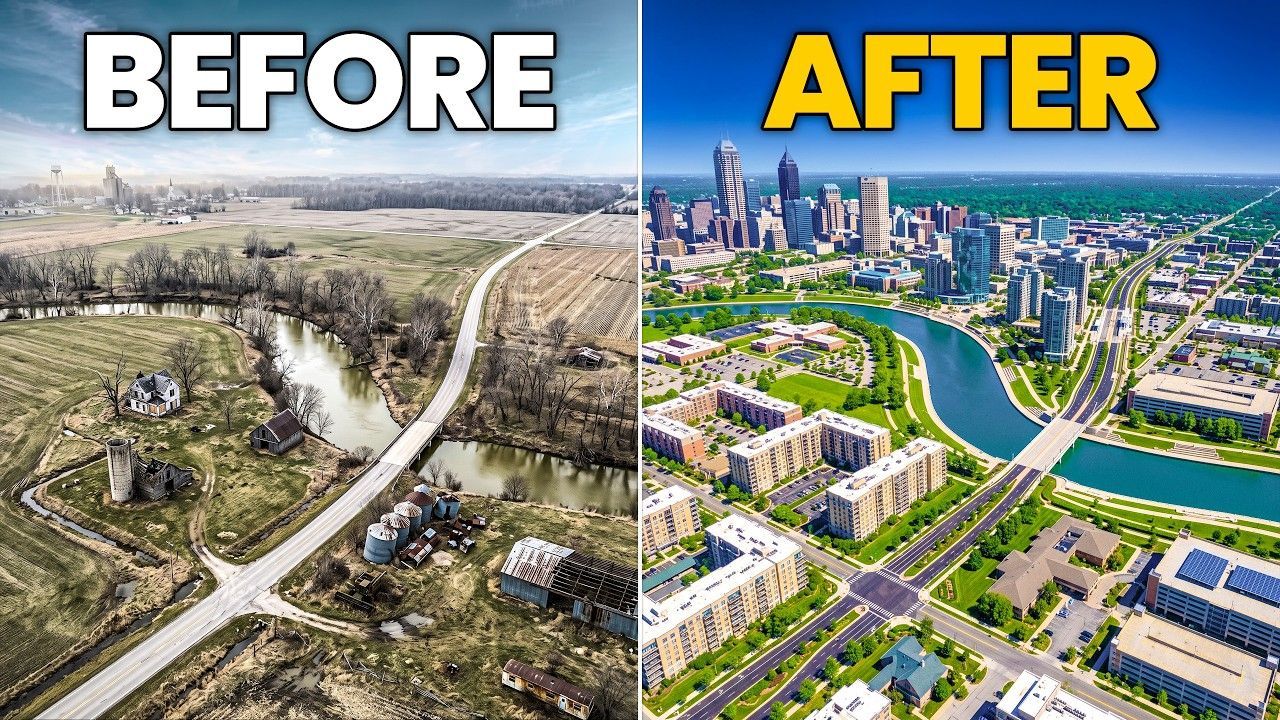
I'm Jason Compton, and my team and I help families buy and relocate all around the Indianapolis metro. I've been living and working here my entire adult life, and I can tell you these windows don't stay open very long. Before the year 2000, Whitestown had fewer than 500 people. I drove through it with the golf team at Westfield a number of times every year. It was a ghost town. Today that number is north of 13,000, the kind of jump you almost never see in a market like ours.
On the complete other side of the metro, McCordsville is doing something very similar. It had just over 1,000 people around the year 2000, and today it's pushing past 11,000. Both towns are in a genuine rapid growth phase right now, and both are in the middle of building the thing that usually turns a commuter town into a place people actually want to stay. Here's what you need to know: the specific areas to watch in 2027, what's being built and what's driving people there, and what homes are actually selling for right now before those prices eventually catch up.
Table of Contents
Whitestown: Northwest Growth Along the I-65 Corridor
Whitestown sits in the northwest Indianapolis metro along I-65, and the growth numbers are honestly hard to believe unless you've watched it happen. Before 2000, fewer than 500 people lived here. Today that number is over 13,000. When my team and I pulled the growth numbers together for our website, the projection we found was that Whitestown could actually be more than double that to somewhere around 30,000 people or even over that inside the next 10 years.
If you drive out there today on Whitestown Parkway, you're going to see a lot of open ground. Around that, you'll see some newer neighborhoods, a lot of new construction, and then a lot of distribution and logistics right along I-65. It's a great spot for that kind of stuff. But honestly, it's not really a ton of what most people would call a downtown or anything culturally rich about it. That's the piece that's going to change, at least a little.
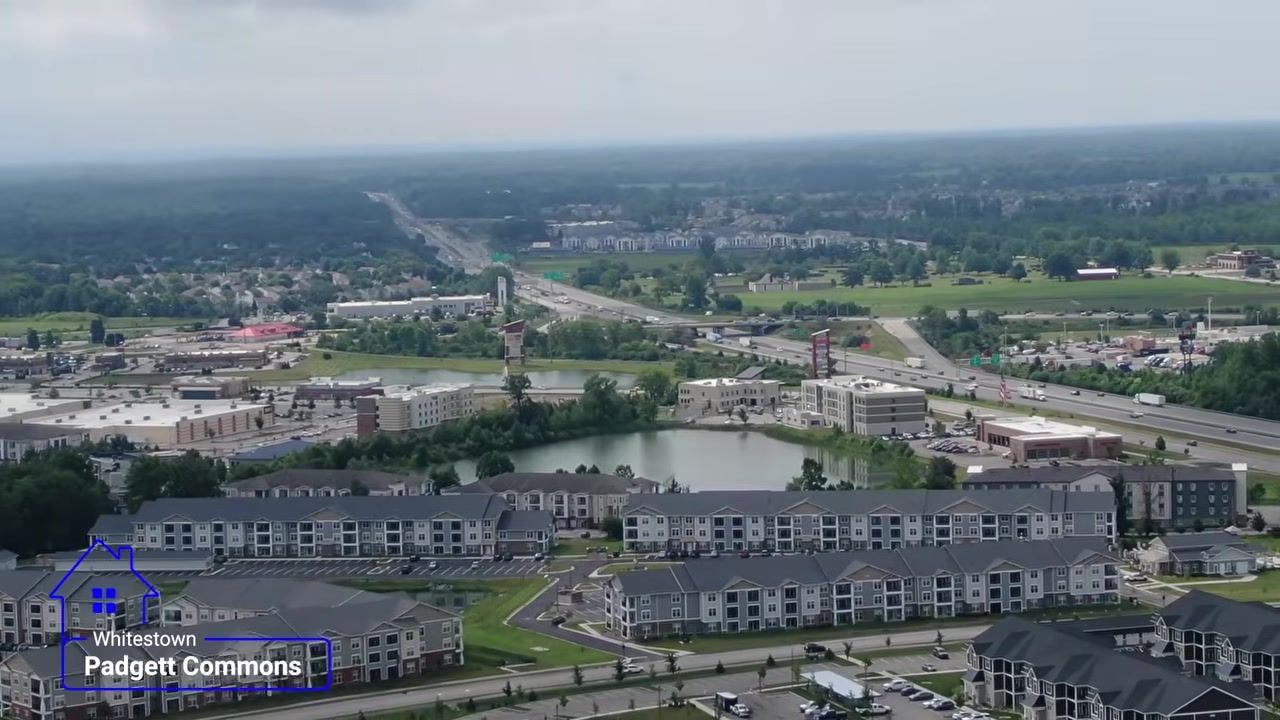
There's a project called Padgett Commons , roughly 40 acres planned just a little north of Whitestown Parkway. Right now it's under construction. It's going to bring some apartments, senior living, some more retail, but also some trails, some green space, and an amphitheater. The bigger driver sitting right next door is the Leap Project up in Lebanon. It's about a 10,000-acre industrial and commercial development along that same I-65 corridor, with Eli Lilly and Meta expanding into it in a very large way. You've got a massive employment center going in, and Whitestown sits right between that and Indianapolis, Carmel, and Zionsville with direct interstate access the entire way.
What Homes Cost in Whitestown
I want to be straight with you about the data here because the most recent Whitestown-specific median that we're able to verify is from back in 2025. It was just under $390,000. That number is almost certainly higher today because there's definitely more inventory out there. You want to treat that number as a floor rather than a current price. If you want the live number for a specific neighborhood or specific part of Whitestown, especially in the new construction realm, just reach out and we'll pull it for you.
But even if you move that figure up in a meaningful way, you're still well under Carmel and Zionsville. And you're in a town with direct I-65 access and a 10,000-acre employment project just up the road. For the buyers we work with coming out of California or the East Coast, the reaction is really common. A budget in that $400,000 to $600,000 range here buys you a much newer 4-bedroom house with a 2 or 3-car attached garage and a yard that you can actually use. That's not a starter home in this market. That is the house.
The Trade-Offs in Whitestown
The thing about buying early in a developing corridor is that you're buying before the amenity, before the thing. It also means you're living through a lot of what that takes to get there. Some construction dust, probably a couple of years where the roads are busier than the infrastructure would really like. If you're a buyer here, your reality looks like this: you'll likely get more house for your money than you would in places like Carmel or Fishers. You'll trade possibly some drive time for it, maybe depending on your day-to-day, and you might be earlier than the crowd on the amenities.
If you're a seller who already owns in places like this, my honest read would be that patience tends to pay in towns like this because the value story gets clearer over time once places like Padgett Commons get completely built out and everything that is supposed to come actually comes and is built. And then the things that come on top of that that aren't even planned yet.
McCordsville: Northeast Expansion Near Fishers
McCordsville sits just to the northeast of Indianapolis and a little south of Fishers. It's crazy, but McCordsville had just over 1,000 people around the year 2000, and today it's pushing close to 11,000. In fact, it's a little past 11,000, which is a similar curve to Whitestown. And McCordsville has the same kind of identity problem that Whitestown does. It grew really fast without ever really building a true town center.
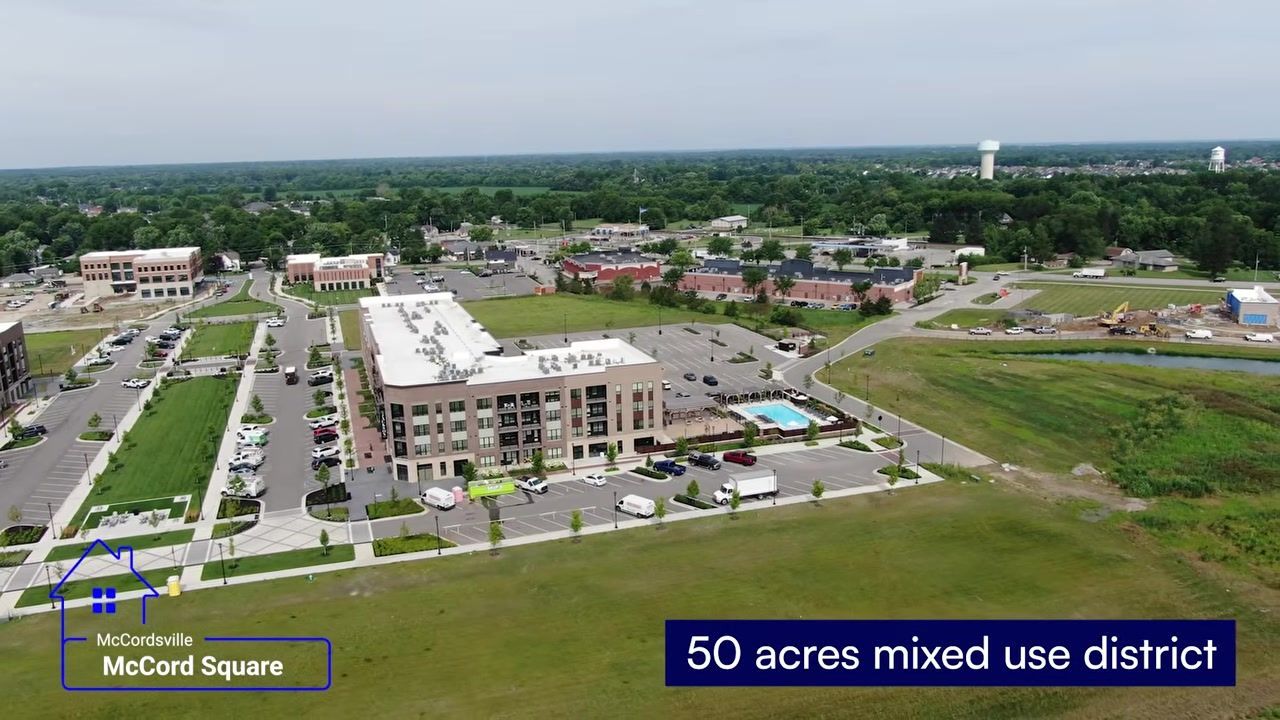
Their answer to that is a project called McCord Square . It's roughly 50 acres. It's going to be mixed use, and it already is mixed use, but it's not finished yet. They've got more to build, including an amphitheater, more retail, more restaurants, and just space for things like farmers markets, community events. So it's a place where the community can actually gather.
McCordsville's Pull: Fishers Amenities at a Smaller Scale
McCordsville's pull is a little bit different, and this is the part I want to slow down on. You're right on the edge of Fishers, I mean just barely south of it, share a border with it. So you do get Fishers things like Fishers restaurants, Fishers shopping, Geist nearby, and really all of it for the most part within 10 or 15 minutes. But the scale of the place is completely different when you get home.
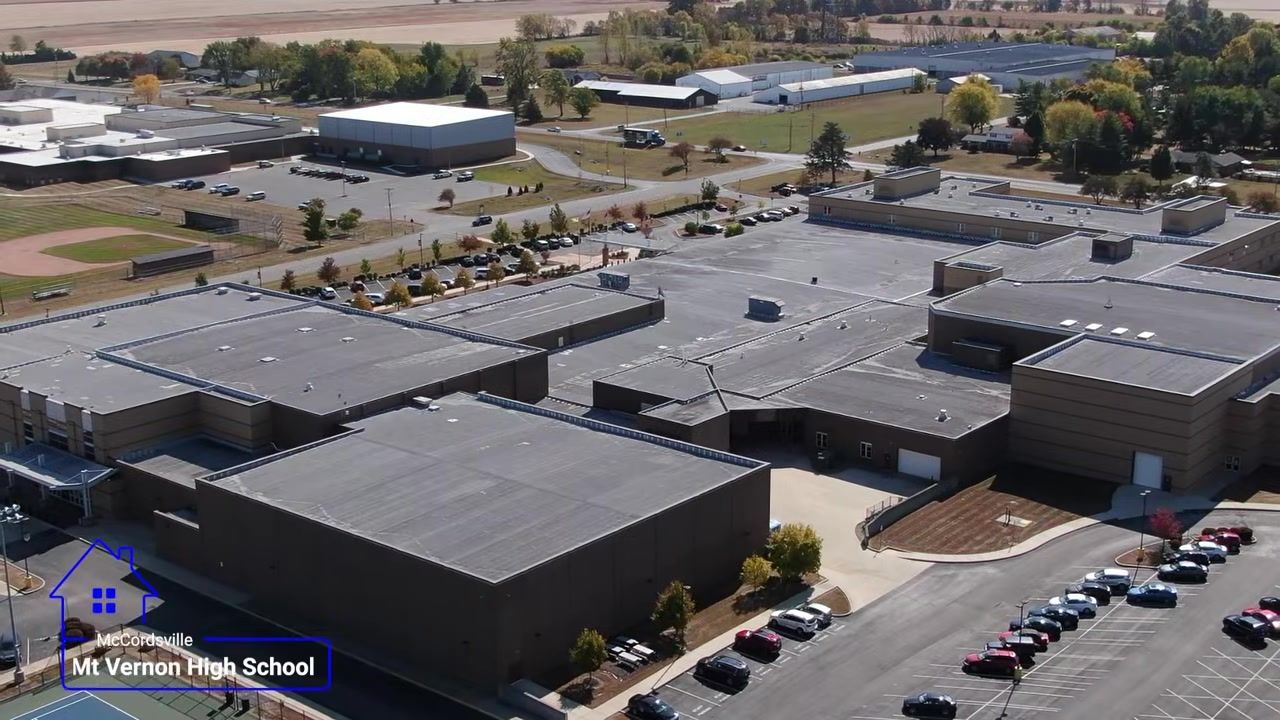
Here's a concrete example of what I mean. Fishers High School , Hamilton Southeastern High School, is sitting right around 3,400 kids or so. That's a lot. And then when you get to Mount Vernon High School , which serves McCordsville for the most part, you're right at about 1,500 students or so. Dramatically smaller. Now, 1,500, it's not a tiny rural school. I certainly want to be clear about that. It's not in the middle of nowhere. But it's less than half the size. And for a lot of the families we work with, that difference in scale is a genuine deciding factor. And it's something that they'd never find out from a listing site.
What Homes Cost in McCordsville
You can absolutely find higher-priced homes in McCordsville, but there are also a lot of homes under $500,000, and there's still some homes under $400,000. And I'm including relatively new construction in that. So you compare that to Zionsville at roughly $610,000, and you're looking at a gap that, depending on the house, could be well over $150,000 for something that might be 15 minutes further from some of the same restaurants and the same places that you usually would go.
For context, as of this year, Carmel's median home price is running right around $550,000. Fishers is around $475,000, and Zionsville is up near $610,000. Those are at least three of the names that most out-of-state buyers have already typed into Google or ChatGPT before they even call us. That price gap is exactly what tends to close over a period of time, which is the part that actually decides whether this is a good move for you or not.
Who's Moving to Whitestown and Why
For the most part, it's two groups. The first group is people relocating in from a higher cost market. California, Chicago, anywhere along the East Coast, Texas. They're coming here with a budget that would have gotten them almost nothing back home, or certainly not what they needed. And they want newer construction, they want more square footage, they want a yard that maybe they've never had before, or a larger one compared to what they have had in the past.
The second group is local buyers who've maybe been shopping places like Carmel, Fishers, or Zionsville for months, sometimes longer than that, and they just keep getting outbid. Or maybe they're coming up short on budget because the prices just keep going up. And eventually they realize, or somebody tells them, hey, maybe you should go look 15 minutes further out.
In Whitestown's case, the pull is the jobs. When you put a 10,000-acre development like the Leap Innovation District just up the road in Lebanon, and I-65 is right there, you can work up in Lebanon, or you can head into Zionsville, Carmel, or even downtown Indianapolis using I-65 and still be at home at a reasonable hour. Whitestown sits right between that massive employment center and Indianapolis, Carmel, and Zionsville with direct interstate access the entire way.
What the Growth Outlook Means for Whitestown Buyers
The backdrop is this: the broader Indianapolis metro outlook that we've been working from points to modest price growth, 3.2% to 4.5% over 12 months. That's the entire metro. Areas in a rapid growth phase like Whitestown could see stronger movement than what you're going to see in that metro average because you've got new amenities coming online. You've got a real town center being built. It's not gigantic, but it's certainly a start for that. You've also got employment growth feeding the entire west side corridor in particular.
I want to hedge this properly because nobody can promise you what a market is going to do. But if you're a buyer, here's how to think about that. These areas in a rapid growth phase could see stronger movement because new amenities are coming online, a real town center is being built, and employment growth is feeding the corridor. The thing about buying early in a developing corridor is that you're buying before the amenity. It also means you're living through a lot of what that takes to get there.
Who's Moving to McCordsville and Why
The same two groups are moving to McCordsville : relocating buyers from higher-cost markets and local buyers priced out of Carmel, Fishers, or Zionsville. But McCordsville's pull is different. You're right on the edge of Fishers, share a border with it. So you get Fishers restaurants, Fishers shopping, Geist nearby, all of it within 10 or 15 minutes. But the scale of the place is completely different when you get home.
That difference in school scale is a genuine deciding factor for a lot of families. Mount Vernon High School serves McCordsville at about 1,500 students. Hamilton Southeastern High School in Fishers is sitting right around 3,400 kids. It's less than half the size. And that's honestly what my team and I spend most of our time on: helping relocating families find the right fit across the Indianapolis metro. That means the schools, the neighborhoods, and whether the day-to-day lifestyle actually lines up how you want to live, not just finding you a house.
What the Growth Outlook Means for McCordsville Buyers
McCordsville is one of the areas specifically named as a stronger buyer opportunity right now in the metro outlook. That's along places like Fortville, Noblesville, Brownsburg, Avon, Plainfield, Greenwood, New Palestine, and Greenfield. Areas in a rapid growth phase like McCordsville could see stronger movement than the metro average because you've got new amenities coming online. You've got a real town center being built at McCord Square. And the thing about buying early is that you're buying before the amenity. It also means you're living through construction dust, probably a couple of years where the roads are busier than the infrastructure would really like. Right here, Road 600, which is Olio going north into Fishers, has gotten busier and busier and busier. This is a pretty good example of a place that infrastructure is not quite there just yet.
If you're a seller who already owns in places like this, my honest read would be that patience tends to pay in towns like this because the value story gets clearer over time once places like McCord Square get completely built out and everything that is supposed to come actually comes and is built. And then the things that come on top of that that aren't even planned yet.
Comparing Whitestown and McCordsville: Which Suburb Fits Your Commute and Lifestyle
I've given you two towns here, but Whitestown and McCordsville sit on opposite sides of a very big metro, larger than what most people think. And only one of them is going to make sense for your commute and your lifestyle. Guessing wrong is how people end up selling and moving way faster than they want to, maybe just a couple of years later once you really settle in and figure out what things look like around you.
Most people make this decision backwards. They pick a town because the name sounds familiar, they've got some notoriety with it, or because somebody they know or a coworker just mentioned it and said, yeah, that's a pretty good place. And then they spend the whole house hunt trying to force their life into that town instead of starting with what actually matters to them.
Here's how to think about the trade-offs:
- Choose Whitestown if your commute is northwest toward Lebanon, Zionsville, Carmel, or you can use I-65 to get downtown. You want direct interstate access and you're comfortable buying before the town center is fully built. You want more house for your money and you're willing to live through some construction dust and infrastructure catch-up.
- Choose McCordsville if your commute is northeast or you want to be close to Fishers amenities without the Fishers price tag or school scale. You want access to Geist, Fishers restaurants, and Fishers shopping within 10 or 15 minutes, but you want your kids in a high school that's less than half the size of Hamilton Southeastern. You're comfortable buying before McCord Square is fully built and you're willing to live through roads that are busier than the infrastructure can handle right now.
Both towns offer a budget in that $400,000 to $600,000 range that buys you a much newer 4-bedroom house with a 2 or 3-car attached garage and a yard you can actually use. That's not a starter home in this market. That is the house. And that price gap is exactly what tends to close over a period of time.
The buyers who get burned out here in Whitestown, McCordsville, or places like this are almost never the ones who bought the wrong town. They're the ones who bought the wrong street, maybe in the right town, without anybody local telling them what the difference might be. We know which pockets in places like Whitestown and McCordsville are ahead of the growth, and which ones are still waiting on it.
Conclusion
You've got two opposite towns on opposite sides of Indianapolis, and both in a genuine rapid growth phase right now. I mean, they are really moving quickly. And both of them are in the middle of building the thing that usually turns a commuter town into a place that people actually want to stay. That's the question we get from relocating clients almost every single week.
If you're trying to figure out what you can actually afford, especially at today's rates, rates have definitely gone up this entire year, the best first step is always going to be a conversation with a lender before you fall in love with a neighborhood. We've worked with Mac Hall of First Community Mortgage for more than 10 years. There are very good reasons for that. Please consult Mac or a licensed mortgage or real estate professional for precise figures that are tailored to your situation. It's surprising how many differences your situation can be unique compared to somebody else's.
If you want somebody who's actually walked these two corridors to tell you which one fits your commute, your budget, and all the other things that you need, give us a call or text us, or you can grab a time on the calendar so you and I can have a chat. Reach out any way that you know how.
FAQ
How fast is Whitestown growing compared to other Indianapolis suburbs?
Whitestown had fewer than 500 people before the year 2000. Today that number is over 13,000. Projections show Whitestown could reach 30,000 people or more inside the next 10 years. That's the kind of jump you almost never see in a market like ours, and it's a similar growth curve to McCordsville on the opposite side of the metro.
What is the Leap Project and why does it matter for Whitestown?
The Leap Project is a 10,000-acre industrial and commercial development in Lebanon along the I-65 corridor. Eli Lilly and Meta are expanding into it in a very large way. Whitestown sits right between that massive employment center and Indianapolis, Carmel, and Zionsville with direct interstate access the entire way. That's a huge driver for people choosing Whitestown.
How much do homes cost in McCordsville compared to Fishers?
Fishers median home price is around $475,000. In McCordsville, you can find a lot of homes under $500,000, and there's still some homes under $400,000, including relatively new construction. You compare that to Zionsville at roughly $610,000, and you're looking at a gap that could be well over $150,000 for something that might be 15 minutes further from some of the same places.
What is the school size difference between McCordsville and Fishers?
Mount Vernon High School serves McCordsville and has about 1,500 students. Hamilton Southeastern High School in Fishers has around 3,400 students. That's less than half the size. For a lot of the families we work with, that difference in scale is a genuine deciding factor, and it's something they'd never find out from a listing site.
What are the downsides of buying in Whitestown or McCordsville right now?
The thing about buying early in a developing corridor is that you're buying before the amenity. It also means you're living through construction dust, probably a couple of years where the roads are busier than the infrastructure would really like. Infrastructure is not quite there just yet in either town. But you'll likely get more house for your money than you would in places like Carmel or Fishers.
Which Indianapolis suburbs are considered stronger buyer opportunities right now?
McCordsville is one of the areas specifically named as a stronger buyer opportunity in the metro outlook. That's along places like Fortville, Noblesville, Brownsburg, Avon, Plainfield, Greenwood, New Palestine, and Greenfield. The broader Indianapolis metro outlook points to modest price growth of 3.2% to 4.5% over 12 months, but areas in a rapid growth phase could see stronger movement than that metro average.
jason compton
A former teacher turned full-time real estate agent serving Greater Indianapolis. I help buyers, sellers, and relocation clients make informed moves—especially those coming from out of state. From neighborhood insights to home tours, my goal is to simplify the process and help you feel confident in every step.

Stay Informed
Insights, Tips & Life in Indianapolis
Your go-to resource for all things real estate and Indy living. Whether you're buying, selling, relocating, or just curious about the local market, our blog is packed with helpful articles, expert advice, and community highlights to keep you informed and inspired.