5 Reasons Indianapolis Will Explode in the Next 5 Years
Indianapolis is on its way to looking very different in five years. Five smaller changes are stacking up on top of each other right now, and that's going to have a big impact on the real estate market here. I'm Jason Compton, a top 1% realtor right here in Indianapolis, and my team and I work with relocating families across this entire metro every single week. More than 75% of the people we work with are coming from out of state, and that shapes how we look at this market. We're not watching Indianapolis the way a local buyer does, comparing this year to last year. We're watching it the way somebody does who has to explain the whole metro to a family flying in for maybe just 72 hours and has to make a serious decision.
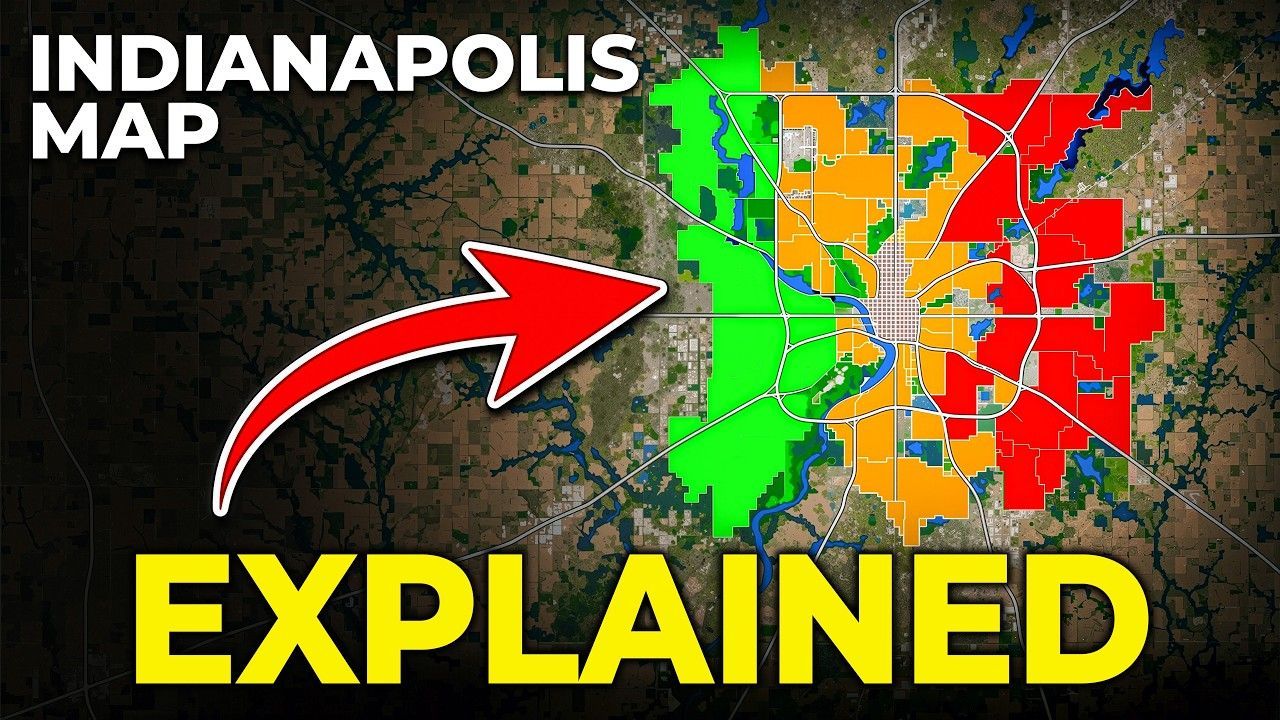
The old assumption around the entire metro was that the growth story stops at the Hamilton County line, Carmel, Fishers, Westfield, Noblesville. But that's not what's happening anymore. The corridor running northwest along I-65 out towards Whitestown and Zionsville and Lebanon is filling in very fast, and it's pulling the whole center of gravity of the Indy metro with it. I remember driving west on State Road 32 and along 146th Street, and if you take it straight east over into Carmel and into Fishers, over here to Main Street in the old heart of Whitestown, it was so quiet it looked like a total ghost town. But today, especially when you go south towards Whitestown Parkway, there's stores, restaurants, new subdivisions filling in one after another, and a really large logistics footprint that just wasn't here before. And it's the reason the next five years probably won't look like the last five.
Nearly half of the active listings in Indianapolis had a price cut this past August, and that really looks and sounds a lot like the opposite of a city that's about to boom. The sale-to-list ratio has softened some to right around 97.8%, and it was sitting at close to 100% just a year ago. But here's the thing: Zillow ranked Indianapolis the number one buyer-friendly market among the 50 largest metros in the entire country for 2026. So number one out of 50. And a market doesn't stay number one buyer-friendly forever. The amount of private investment going in and the softening of prices are pulling in opposite directions, but eventually one of them is going to win that tug of war. What a soft market with really strong fundamentals actually means is a window, a negotiating leverage right now that buyers in other places, maybe like Nashville or Raleigh or Columbus, would probably love to have. If you're sitting on the fence waiting for prices to drop before you move, understand that you're already in the part of the cycle where you have the most room to negotiate.
In this article, I'm breaking down the five reasons Indianapolis is about to blow up, which suburbs are going to change the most, and what that means for anyone buying or selling anywhere in the metro. We'll cover Hamilton County, Whitestown, Zionsville, Hendricks County, Johnson County, Hancock County, and the LEAP District, the 10,000-acre industrial and commercial development that's reshaping the northwest corridor. Let's get into it.
Table of Contents
- Hamilton County: The Established Growth Benchmark
- Whitestown: From Ghost Town to Growth Engine
- Zionsville: Part of the Northwest Corridor Shift
- Hendricks County: Solid Alternative at a Lower Price Point
- Johnson County: Affordable Access South of the Metro
- Hancock County: Fast Growth to the East
- LEAP District: $13 Billion in Private Investment
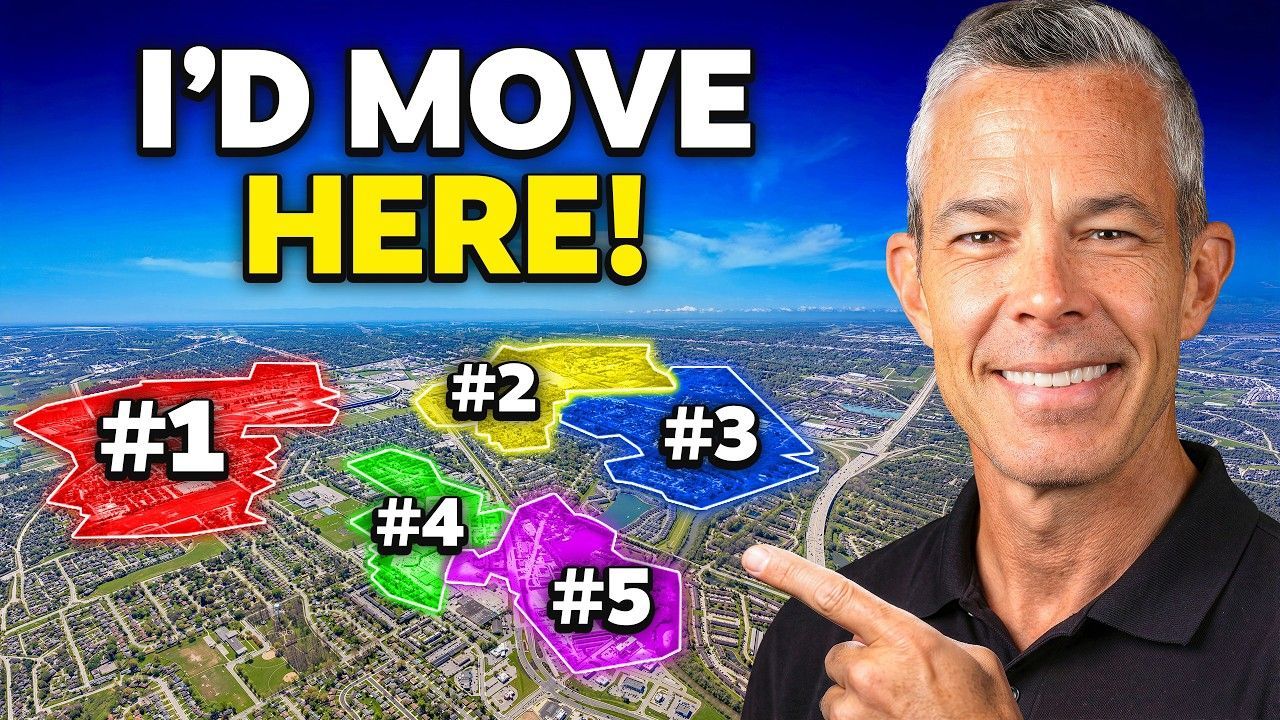
- Which Area Is Right for You?
- Conclusion
Hamilton County: The Established Growth Benchmark
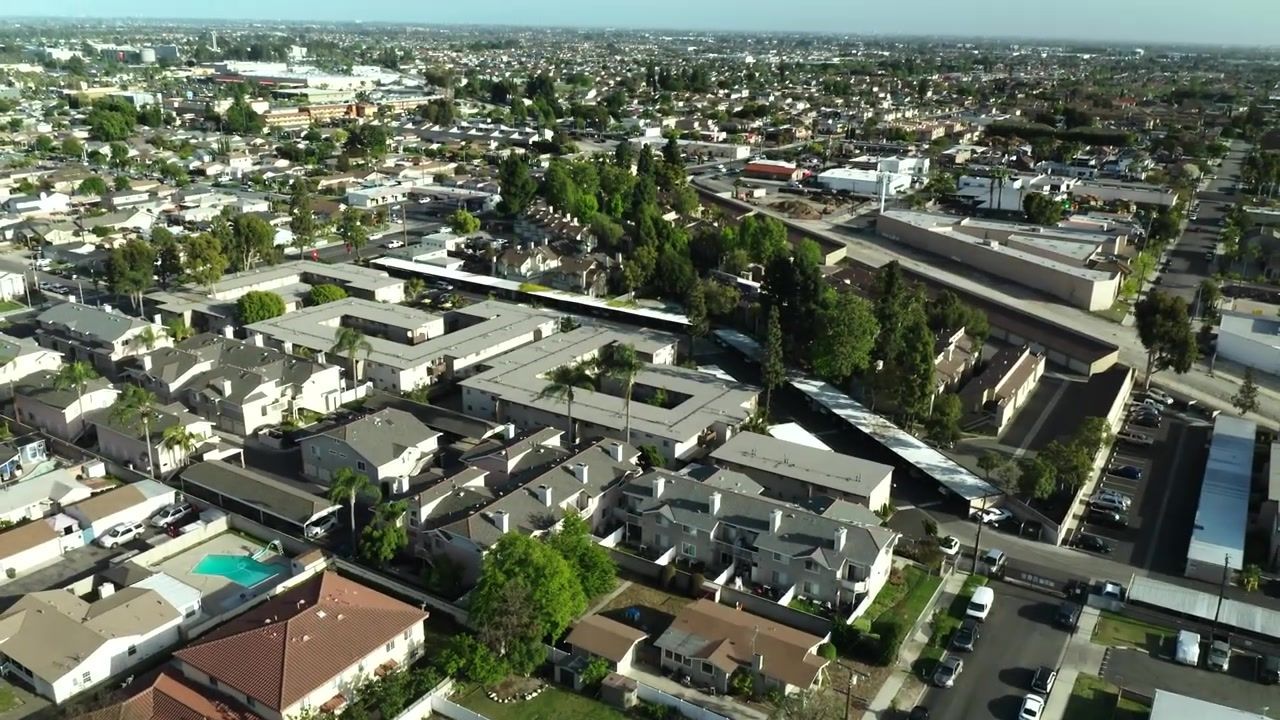
If you consider one of the most expensive places to live around here, Hamilton County is where Carmel, Fishers, Westfield, and Noblesville all sit. They had a median listing price of $464,950 in August of 2023, according to FRED. Now, if you're local, it might actually sound like a lot, but I have this exact conversation almost every single week with somebody calling in from California, the East Coast, someplace like that, and their reaction is almost always the same. They just can't believe the comparisons with what you get for the price, because that number in a lot of metros that people are leaving gets you a 2-bedroom condo, sometimes 40 minutes from anything at all.
But in places like Hamilton County, you get so much more. You get a 4-bedroom home a lot of times. You might get a basement. You certainly get a yard, and you get a 2- or 3-car garage. But in addition to that, in places like Carmel and Fishers and Noblesville, you get a downtown, a place that has a little personality and it has a cultural heart to it. A family making $150,000 or $200,000 here truly lives a fundamentally different day-to-day than a family making the same money in a coastal metro. And remote work has made that comparison very possible for a lot more people than it certainly used to be beyond 2020.
Historically, Hamilton County was seen as the growth boundary. The assumption was that if you wanted strong schools, established downtowns with personality, and cultural amenities, you stayed inside Hamilton County. But that's not the whole story anymore. The northwest corridor along I-65 is pulling biotech and executive households from the LEAP District jobs, and those households are settling in Zionsville, Westfield, Carmel, and Whitestown, not just the traditional Hamilton County core. The old boundary is shifting, and the center of gravity is moving with it.
The misconception is that cheaper automatically means some kind of compromise, that you're going to give up amenities and restaurants and just generally things to do. And I'd say that was a fair criticism maybe 15 or 20 years ago for some places. It's an argument that's much harder to make in places like Carmel or Fishers or Noblesville today. They're big. So if you're running that comparison right now, you need to run it honestly. You need to look at the total monthly number, not just the price.
Whitestown: From Ghost Town to Growth Engine
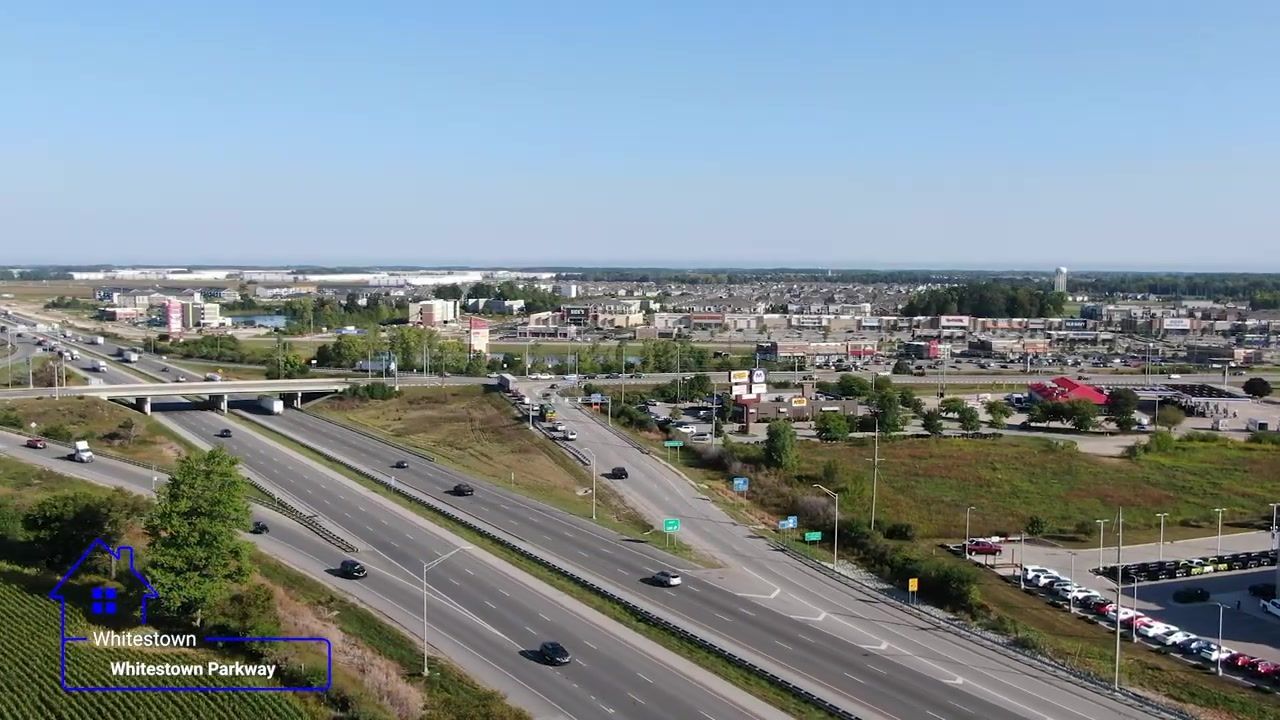
Whitestown sits in Boone County, northwest of Indianapolis, along I-65. And it's been one of the fastest growing towns in the entire state for a lot of years running now. I remember driving through here and it was so quiet, it looked like a total ghost town. But today, the same stretch, especially when you go south towards Whitestown Parkway, there's stores, restaurants, new subdivisions just filling in one after another, and a really large logistics footprint that just wasn't here before.
That kind of growth pulls a lot of things. It pulls infrastructure, it pulls retail, it pulls schools right along with it, which is exactly what's happening between Zionsville and Lebanon. The growth is not happening in some isolated pocket that's 45 minutes away from absolutely everything. It's happening in a direction the metro was already going, where it was already expanding. The gap between Whitestown and Lebanon is closing rapidly, and that's filling in the space along the I-65 corridor.
Whitestown benefits from LEAP District proximity. The 10,000-acre industrial and commercial development running right along I-65 up towards Lebanon is landing thousands of construction jobs and more than 1,000 permanent biotech and executive positions. Those high-income households typically settle in Zionsville, Westfield, Carmel, and Whitestown for schools and housing. The investment lands in Boone County, but the housing pressure shows up in a specific handful of zip codes, and Whitestown is right in the middle of that.
What's remarkable about Whitestown is that it's still reasonably priced compared to the rest of the metro. You're getting the benefit of rapid growth, new infrastructure, and proximity to major employers, but you're not paying Hamilton County prices yet. That window won't last forever, especially as the LEAP District continues to bring in high-income households who need somewhere to live.
Zionsville: Part of the Northwest Corridor Shift
Zionsville sits in the northwest Indianapolis metro, and it's part of the northwest corridor growth along I-65. The town attracts biotech and executive households from the LEAP District, and it has established housing stock and schools that appeal to families relocating from out of state. Zionsville has always had a reputation for charm and quality of life, and that's not changing. What is changing is the volume of demand coming from the LEAP District expansion.
The thing people get wrong when they look at a map is that they see Lebanon sitting way out there and that it has nothing to do with places like Carmel or Zionsville or where they'd actually want to live. But that gap is closing, and it's closing through places like Zionsville but also Whitestown. You're just filling in all of that space right now. The northwest corridor is becoming the new center of gravity, not just Hamilton County anymore.
Zionsville is one of the towns that benefits from being close enough to the LEAP District to attract the executive households but far enough established that it already has the schools, the housing stock, and the amenities those households are looking for. It's not a brand-new community trying to build infrastructure from scratch. It's an established town absorbing new demand, and that's a very different dynamic.
Hendricks County: Solid Alternative at a Lower Price Point
Hendricks County sits west of Indianapolis and includes Brownsburg, Avon, and Plainfield. It's more affordable than Hamilton County, and it's a solid alternative for buyers who want strong schools and good housing stock without paying Hamilton County prices. One family we worked with started out absolutely convinced they wanted Carmel because that's the name everyone outside of Indianapolis has actually heard of. But once they ran the quiz, it turned out Brownsburg actually matched their budget and their kids' school priorities a lot better, and they ended up thrilled with Brownsburg. It's a town that they hadn't even considered before.
Hendricks County is not the flashy name, but it's the practical choice for a lot of relocating families. You get a 4-bedroom home with a yard and a garage, you get solid schools, and you get access to the metro without the premium price tag. Avon and Plainfield have grown significantly over the past decade, and Brownsburg is filling in fast. The infrastructure is there, the retail is there, and the schools are competitive.
The misconception is that Hendricks County is a compromise, that you're giving up something to save money. But that's not what I see when I work with buyers who choose Brownsburg or Avon. They're getting exactly what they need, local schools, solid housing, reasonable commute times, and they're not stretching their budget to do it. That's not a compromise. That's a smart decision.
Johnson County: Affordable Access South of the Metro
Johnson County sits south of Indianapolis and includes Greenwood and Bargersville. It's more affordable than Hamilton County, and it's another solid alternative for buyers who want local schools and housing stock at a lower price point. Greenwood has grown significantly over the past decade, and Bargersville is one of the faster-growing areas in the metro.
Johnson County appeals to buyers who want a suburban lifestyle without the premium price tag of Hamilton County. You get access to the metro, you get solid schools, and you get housing stock that fits a family budget. The commute to downtown Indianapolis is reasonable, and the infrastructure is well-established. Greenwood has retail, restaurants, and amenities that make it feel like a complete community, not just a bedroom suburb.
The thing about Johnson County is that it's not trying to be Hamilton County. It's not competing on prestige or name recognition. It's competing on value, and for a lot of families, that's exactly what they need. You're getting a 4-bedroom home with a yard and a garage, you're getting solid schools, and you're not stretching your budget to do it. That's a fundamentally different lifestyle than what you'd get in a coastal metro for the same household income.
Hancock County: Fast Growth to the East
Hancock County sits east of Indianapolis and includes McCordsville, Fortville, Greenfield, and New Palestine. Greenfield is one of the fastest growing areas in the entire metro, and it's where my family and I actually live. It's about 45 minutes from the airport, which is arguably one of the furthest points in the metro, but it never takes us more than 45 minutes to get there.
Hancock County is more affordable than Hamilton County, and it's a solid alternative for buyers who want local schools and housing stock at a lower price point. Greenfield has grown significantly over the past decade, and McCordsville and Fortville are filling in fast. The infrastructure is there, the retail is there, and the schools are competitive. New Palestine is a little further out, but it's still part of the metro growth story.
The thing about Hancock County is that it's not on the northwest corridor, so it's not absorbing the same LEAP District pressure that Whitestown and Zionsville are seeing. But it's still growing fast, and it's still attracting buyers who want a suburban lifestyle at a reasonable price. The commute to downtown Indianapolis is manageable, and the airport is accessible even from the furthest points in the county.
I came to Indianapolis just fresh out of college as a 22-year-old for a job, not knowing a single person in the entire metro. I started out as a high school science teacher up in Westfield, and then I've built and had my adult life in a lot of different places around Indianapolis. And now my family and I, we actually live in one of the fastest growing areas around the entire metro to the east in Greenfield. So I know this area well, and I know what it offers for buyers who are relocating here.
LEAP District: $13 Billion in Private Investment
$13 billion. That is just such a big number, but that's the committed private investment tied to the LEAP Innovation District in Boone County. It's probably the single biggest thing in the entire state going on right now, and a big chunk of that is Eli Lilly and their expansion around Lebanon and the LEAP District. It's brought in thousands of construction jobs and more than 1,000 permanent biotech and executive positions as well. Meta is also a really big contributor to the district.
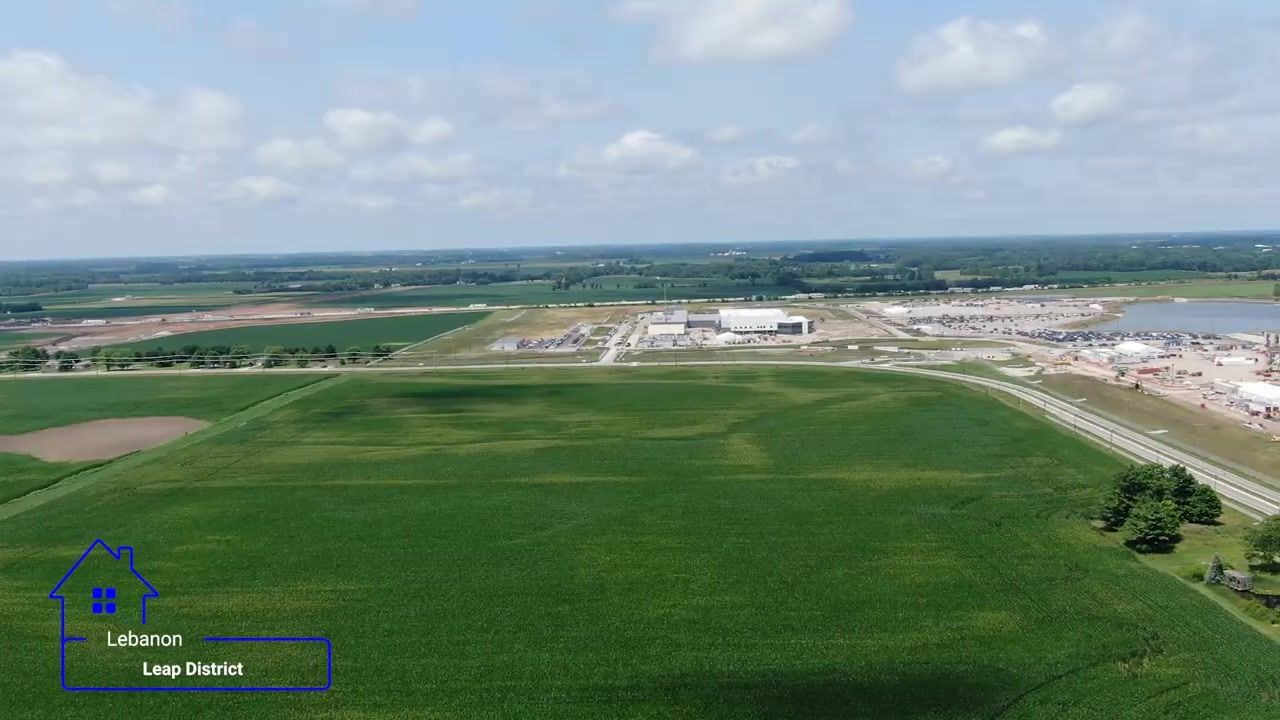
The LEAP District is a 10,000-acre industrial and commercial development running right along I-65 and that whole corridor northwest of the city up towards Lebanon. And that's 10,000 acres. That's not a subdivision. That's really a landmass. That's big. Biotech and executive roles are usually high-income households. They don't typically settle next to the plant either. They settle wherever the schools and the housing stock that they want already exist, which around this area means Zionsville, Westfield, Carmel, and Whitestown and really the whole northwest side of the metro.
So the investment lands in Boone County and the housing pressure shows up in a specific handful of zip codes. I've spent a lot of time doing really detailed on-location breakdowns of a lot of Indianapolis ultra-wealthy old money type neighborhoods. So you look at places like Crow's Nest or Williams Creek or Meridian Hills, Meridian Kessler, just trying to help buyers understand the difference between some of that stealth wealth and some of the newer prestige. And that work taught me something that applies directly here. When serious money arrives in a market, it usually doesn't just distribute itself evenly. It usually concentrates and it concentrates in a lot of patterns that you can see repeat over and over.
Old money in the city, it went where the trees and the established streets all are, and it stayed there for now more than 100 years. Some of that newer executive money coming in behind a company like Eli Lilly, it's making a similar kind of choice right now. So it's easy to stop just really at a headline number and I'm looking at where those 1,000+ households, they're going to want to live. And honestly, some of those pockets are still very reasonably priced when you compare it to the rest of the metro today.
This is the part that I think separates a metro that grows from a metro that just gets more expensive over time. When a city is totally landlocked, the demand shows up almost entirely in the price. But when a city has room, demand can show up in different ways. It can show up in new communities and new roads, new schools, and price growth that's not rapid. It's a lot more gradual. The Indy metro, it has room. And that's a structural advantage that can't move.
Geographic Advantage: The Crossroads of America
Indianapolis International Airport sits about 15 minutes from downtown and it runs more than 50 nonstop destinations. So 15 minutes, if you think about that, that's absolutely a minimal amount of time if you've been flying out of O'Hare or LAX or Newark, because of course that really changes a lot. It changes what a Tuesday morning business trip actually costs you, not in money but in time. And for most destinations around the metro, it's not going to be any more than 40 or 45 minutes at the most from where you live to get here.
But the airport isn't really the point on its own. The point is what it tells you about where Indianapolis sits on the map in the country. So this city, Indianapolis, it's really one of the great crossroads of the entire country, and that's why it became such a major logistics hub. You've got companies like FedEx and Amazon, this giant center right here. Big companies, not just those two, but lots of other companies. They're here for a simple reason, and it's that from Indianapolis you can actually reach an enormous share of the entire American population really efficiently by truck.
Now that's a structural advantage. And the thing about a structural advantage is that it can't move. A company can definitely pull a headquarters out of a city, but nobody can pick up the interstate system and set it down somewhere else. The misconception is that logistics jobs are all warehouse jobs and they don't really move the housing market. And I'd say that's partly true, but not all the way true. Distribution centers, they bring management, they bring engineering, and definitely corporate operations with them as well. And those are households that are shopping in that $400,000 to $600,000 range, which ends up being the bulk of what my team and I actually work with.
If you're an investor asking just what makes demand here more durable instead of just kind of trendy and flashy, then this is really the answer. It's geography. It's solid and it's not going to cool off.
Which Area Is Right for You?
One question I get more than any other one: with this many towns expanding at once, how do you figure out which one is actually right for you? If you're confused about the cities and towns around the Indianapolis metro, this is exactly why we built our neighborhood match quiz. One family we worked with started out absolutely convinced they wanted Carmel because that's the name everyone outside of Indianapolis has actually heard of. But once they ran the quiz, it turned out Brownsburg actually matched their budget and their kids' school priorities a lot better, and they ended up thrilled with Brownsburg. It's a town that they hadn't even considered before.
So go take the quiz with the link in the description. It sorts on your budget, your lifestyle, your priorities, your school preferences, and of course your commute needs too. And I've taken it myself and it matched me right where my family and I actually live. Then comment or send me a message with what neighborhood you got.
Here's how the trade-offs break down based on what the video covered:
- Choose Hamilton County if you want established downtowns with personality, strong schools, and cultural amenities, and you're comfortable with the median price of $464,950.
- Choose Whitestown if you want rapid growth, new infrastructure, proximity to the LEAP District, and a price point that's still reasonable compared to Hamilton County.
- Choose Zionsville if you want established housing stock, strong schools, and you're willing to pay for the charm and quality of life that comes with it.
- Choose Hendricks County (Brownsburg, Avon, Plainfield) if you want a solid alternative to Hamilton County at a lower price point, with local schools and housing stock that fits a family budget.
- Choose Johnson County (Greenwood, Bargersville) if you want affordable access south of the metro, solid schools, and a suburban lifestyle without the premium price tag.
- Choose Hancock County (McCordsville, Fortville, Greenfield, New Palestine) if you want fast growth to the east, local schools, and a price point that's more affordable than Hamilton County.
The LEAP District is absolutely the headline, but the actual decision most people need help with is a lot smaller than that. It's which street, which school district, which 15-minute radius around a job or a park is going to be best for you. We see people try to time this from 1,000 miles away using Zillow and a couple of YouTube videos, and they end up either sitting out the market that gave them the most negotiating leverage in the entire country or paying $50,000 too much for a town that doesn't really fit or vibe.
If you want it all in one place, we've got a free Indianapolis relocation guide that lays out neighborhood breakdowns, school information, cost of living data, commute times, just a lot of really good information. It's built specifically for people making a real long-distance move, not for locals necessarily shopping across town. So go download it, links in the description.
Conclusion
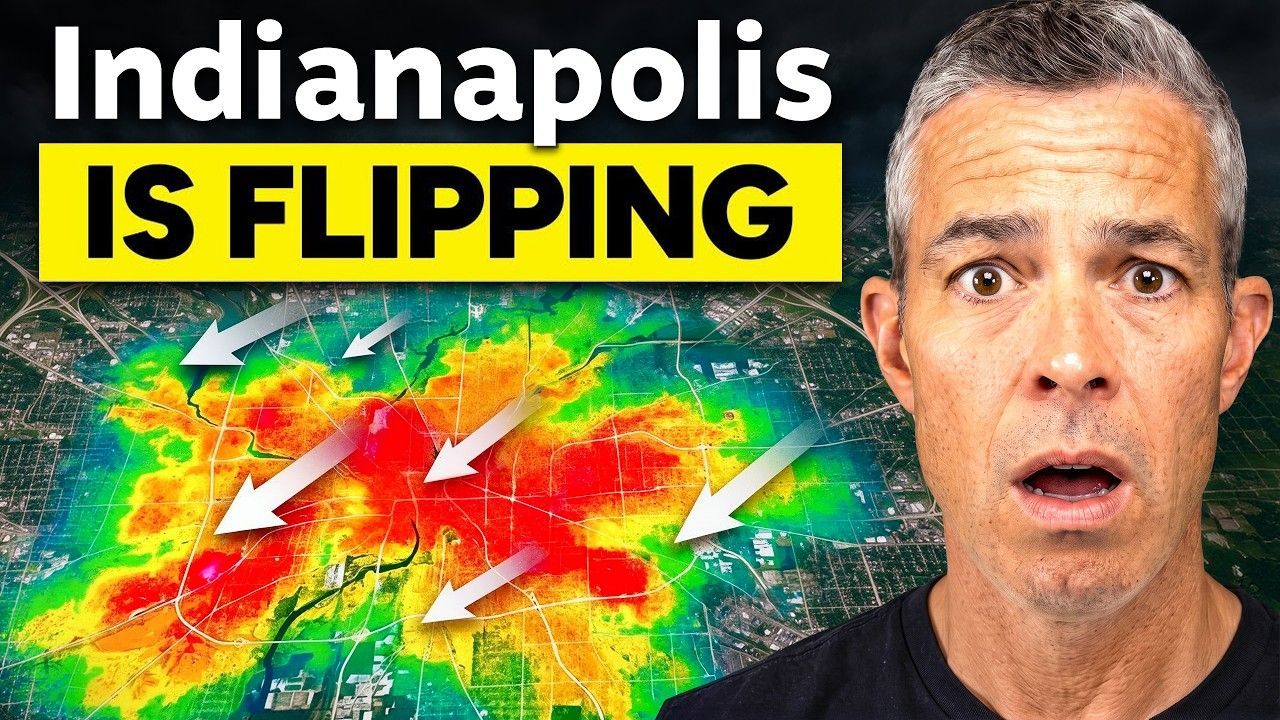
Indianapolis is shifting northwest, and the next five years are going to look different than the last five. The LEAP District is bringing $13 billion in committed private investment, thousands of construction jobs, and more than 1,000 permanent biotech and executive positions. That demand is concentrating in Zionsville, Westfield, Carmel, and Whitestown, and it's pulling the whole center of gravity of the metro with it. The old assumption that growth stops at the Hamilton County line is no longer true.
At the same time, the market is soft enough right now that you have real negotiating leverage. Nearly half of the active listings in Indianapolis had a price cut this past August, and the sale-to-list ratio has softened to 97.8%. Zillow ranked Indianapolis the number one buyer-friendly market among the 50 largest metros in the entire country for 2026. That window won't last forever. The amount of private investment going in and the softening of prices are pulling in opposite directions, but eventually one of them is going to win that tug of war.
If you're relocating to Indianapolis, you need to understand which suburbs are going to change the most, which ones fit your budget and your lifestyle, and which ones give you the best value for your household income. Hamilton County is the established benchmark, but Hendricks County, Johnson County, and Hancock County are solid alternatives at lower price points. Whitestown and Zionsville are absorbing the LEAP District pressure, and they're still reasonably priced compared to what's coming.
Call or text us, reach out any way that you know how. We'll map it out for you. More than 75% of our clients are coming in from out of state, so we're used to doing it over the phone and of course on video too. Let's find the right neighborhood for you before the window closes.
FAQ
What is the LEAP District and why does it matter for Indianapolis real estate?
The LEAP District is a 10,000-acre industrial and commercial development in Boone County along I-65 towards Lebanon. It has $13 billion in committed private investment, with Eli Lilly and Meta as major contributors. It's bringing thousands of construction jobs and more than 1,000 permanent biotech and executive positions. Those high-income households typically settle in Zionsville, Westfield, Carmel, and Whitestown for schools and housing, so the investment lands in Boone County but the housing pressure shows up in specific northwest zip codes.
Is Indianapolis a buyer's market or a seller's market right now?
Indianapolis is in a soft market with strong fundamentals. Nearly half of active listings had a price cut in August, and the sale-to-list ratio softened to 97.8%, down from close to 100% a year prior. Zillow ranked Indianapolis the number one buyer-friendly market among the 50 largest metros in the country for 2026. That means you have real negotiating leverage right now, but it won't last forever as private investment continues to flow in.
How much does a home cost in Hamilton County compared to other Indianapolis suburbs?
Hamilton County had a median listing price of $464,950 in August of 2023. That gets you a 4-bedroom home with a basement, yard, and 2- or 3-car garage in places like Carmel, Fishers, Westfield, or Noblesville. Hendricks County, Johnson County, and Hancock County are more affordable alternatives, with solid schools and housing stock at lower price points. Whitestown is still reasonably priced compared to Hamilton County, even with the LEAP District pressure.
Which Indianapolis suburbs are growing the fastest?
Whitestown has been one of the fastest growing towns in the entire state for years. Greenfield in Hancock County is also one of the fastest growing areas in the metro. The northwest corridor along I-65 (Whitestown, Zionsville, and the area between Zionsville and Lebanon) is filling in rapidly due to the LEAP District expansion. Bargersville in Johnson County and McCordsville in Hancock County are also growing fast.
How far is the Indianapolis airport from most suburbs?
Indianapolis International Airport sits about 15 minutes from downtown and runs more than 50 nonstop destinations. For most destinations around the metro, it's not going to be any more than 40 or 45 minutes at the most from where you live. Greenfield in Hancock County is arguably one of the furthest points in the metro, and it's still only about 45 minutes from the airport.
Why is Indianapolis considered a logistics hub?
Indianapolis is one of the great crossroads of the entire country. From Indianapolis you can reach an enormous share of the entire American population really efficiently by truck. That's a structural advantage that can't move. Companies like FedEx and Amazon have major centers here because of the interstate system and the geographic location. Distribution centers bring management, engineering, and corporate operations, and those are households shopping in the $400,000 to $600,000 range.
jason compton
A former teacher turned full-time real estate agent serving Greater Indianapolis. I help buyers, sellers, and relocation clients make informed moves—especially those coming from out of state. From neighborhood insights to home tours, my goal is to simplify the process and help you feel confident in every step.

Stay Informed
Insights, Tips & Life in Indianapolis
Your go-to resource for all things real estate and Indy living. Whether you're buying, selling, relocating, or just curious about the local market, our blog is packed with helpful articles, expert advice, and community highlights to keep you informed and inspired.