Living in Carmel Indiana can feel straightforward at first. It is a polished, growing city with great-looking neighborhoods, strong amenities, plenty of green space, and very few places that would feel like a bad choice.
But after spending time here, we start to recognize that Carmel is not one single experience. The home styles, tree cover, prices, road patterns, addresses, and even school boundaries can change more than people expect from one part of the city to another.
For anyone considering living in Carmel Indiana, these five local details can provide a much better head start. They help us make sense of the map, narrow down the kind of location that fits, and avoid being surprised after falling in love with a home.
Living in Carmel Indiana: East Carmel vs West Carmel
One of the first things we learn when living in Carmel Indiana is that people naturally talk about East Carmel and West Carmel. We will not find those as official city designations on a map, and there are no hard boundary signs announcing where one ends and the other begins. Still, the distinction is useful and very real in everyday conversation.
As a general rule, the area east of Keystone Parkway is what many people call East Carmel. The area west of U.S. 31, also known as Meridian Street, is commonly called West Carmel. The central stretch between Keystone and U.S. 31 is its own mixed area, even though it does not have a universally recognized name.
That central area contains a lot of commercial activity, downtown Carmel, the Arts and Design District, Midtown, and City Center. Further south, it becomes more residential and more established. It is also an area with some historical address quirks because portions of it were once part of Indianapolis before Carmel annexed them.
This is why a simple online search for East Carmel or West Carmel does not always tell the full story. These are local shorthand terms, not official neighborhood labels. But once we understand them, they give us a quick way to frame the kind of homes, development patterns, and atmosphere we may encounter.
Older Homes in East Carmel vs Newer Neighborhoods in West Carmel
The second major thing to understand about living in Carmel Indiana is the difference in age and maturity across the city. Carmel has grown dramatically and now has around 100,000 residents, but it was much smaller 20, 30, and 40 years ago. Development spread outward over time, particularly to the west and northwest.
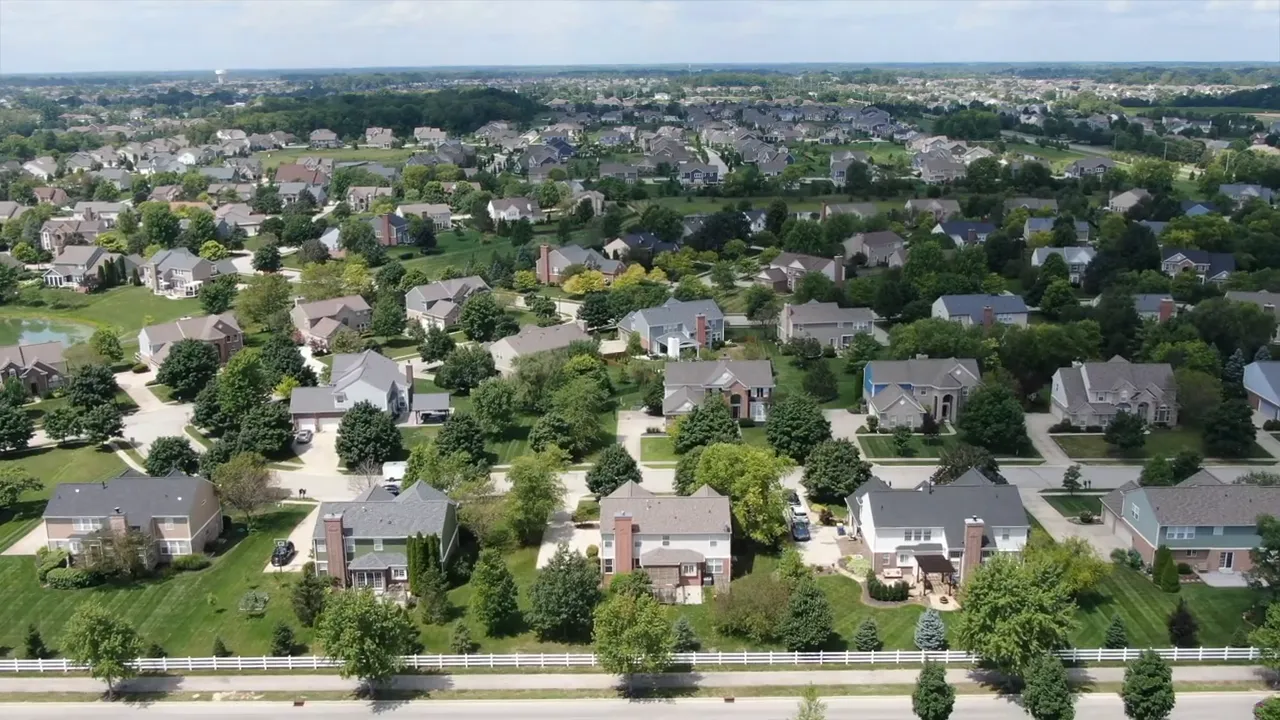
That history shows up clearly in the landscape. East Carmel generally has older neighborhoods, bigger trees, more established streetscapes, and homes built decades ago. West Carmel, especially farther west and northwest, tends to have newer development and less mature tree canopy.
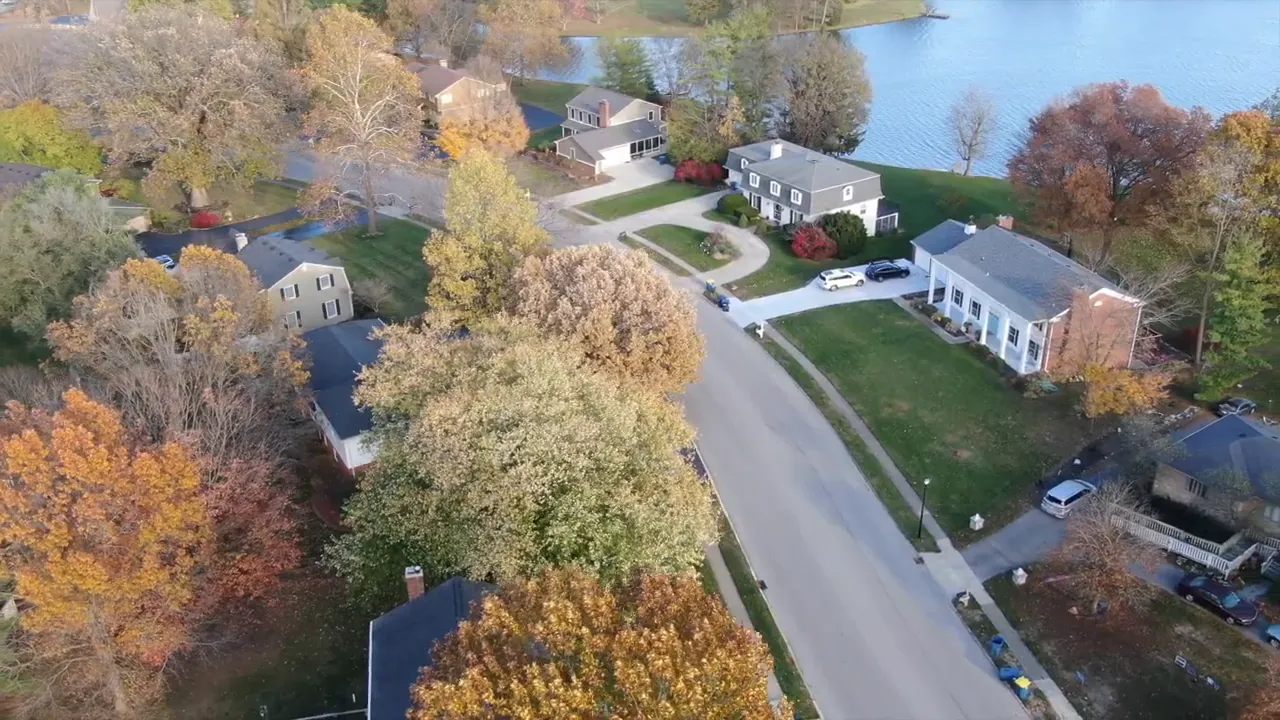
Brookshire Golf Club is a great example of the established feel found in parts of East Carmel. Around it, the tree canopy is dense and the neighborhoods have a mature, green appearance. Woodland Springs is another area where older homes surround a lake, with properties ranging from those needing work to extensively renovated homes.
People are often surprised by how green and lush Carmel and the broader Indianapolis area can be. In the older parts of the city, that greenery becomes a major part of the appeal. Mature neighborhoods can offer an entirely different feeling from a newer subdivision, even when both are only a short drive apart.
That does not mean West Carmel has no mature settings. Areas near 106th Street, Ditch Road, Spring Mill Road, and Crooked Stick Golf Club have beautiful wooded stretches and exceptional properties. Crooked Stick, a Pete Dye design, has hosted major professional golf events and has long been part of the Carmel landscape.
Still, the general pattern holds: newer homes with substantial mature tree cover are harder to find as we travel farther west. East Carmel more often delivers the established setting, while West Carmel more often delivers newer construction.
How Home Prices Vary Across Carmel
Because East Carmel is generally older, it often provides more opportunities for smaller and less expensive single-family homes than West Carmel. Homes built in the 1970s, 1980s, and 1990s were typically smaller than many newer homes. Even renovated older properties can sometimes be more accessible than a newer comparable home farther west.
There are exceptions everywhere, and location can override almost everything. Downtown Carmel is the clearest example. Near the Arts and Design District, City Center, and the Monon Trail, homes, townhomes, condos, and even older apartments may command a premium simply because the location is so desirable.
A newer home close to the Arts and Design District can reach well into the million-dollar range. A renovated home near Carmel High School can also carry a premium because of its proximity to downtown. City Center includes luxury residences at a price point that is unusual across much of Carmel, including high-end penthouses.
At the other end of the spectrum, an older apartment or smaller townhome near downtown may be one of the few ways to access that location at a lower purchase price. But buyers should compare more than the listing price.
Do not overlook the monthly HOA cost
Townhomes, condos, paired homes, and similar attached properties can look less expensive than nearby single-family homes. However, many have monthly HOA fees. Those fees may add a few hundred dollars or more to the monthly housing payment, depending on the property and association.
- Compare the purchase price with the total monthly payment.
- Confirm whether a property is single-family, paired, a townhome, or a condo.
- Consider the yard size and maintenance responsibilities.
- Evaluate location separately from house size and age.
During the period discussed, there were only 91 homes for sale across Carmel, covering all price ranges. Inventory moves constantly, of course, but the point remains important: low inventory can make it difficult to compare several similar options at once.
When living in Carmel Indiana is the goal, we should not assume one side is automatically better or less expensive. East Carmel can offer older homes at lower average prices, while West Carmel generally trends newer and higher. Central Carmel can be a complete mixed bag, with value driven heavily by walkability and proximity to downtown.
Getting Around Carmel and Understanding the City Grid
One of the best practical things about living in Carmel Indiana is that the road system is largely grid-like. Once we learn a handful of roads, it becomes much easier to understand locations, estimate directions, and recognize what a particular intersection tells us about an area.
The numbered streets generally run east and west. That includes 96th Street, 106th Street, 116th Street, 126th Street, 131st Street, 136th Street, 141st Street, and 146th Street. The same pattern continues into Indianapolis to the south.
Generally, 96th Street serves as the southern Carmel boundary, although the actual city line can shift in places. The numbered roads help us understand how far north or south we are. Then we only need to add a few major north-south roads to complete the picture.
Major roads that make the map click
- Shelborne Road
- Town Road
- Ditch Road
- Spring Mill Road
- U.S. 31 or Meridian Street
- Keystone Parkway
- Gray Road
- Hazel Dell Parkway
For example, if someone mentions 146th Street and Shelborne Road, we immediately know they are talking about northwest Carmel. That also suggests a newer part of the city with generally higher prices, although the specific home type still matters.
If we hear 116th Street and U.S. 31, we can picture the area around IU North Hospital and Market District. It has a newer, highly developed feel with shopping and major services close by. This kind of mental map is incredibly helpful when comparing homes across the city.
The grid is not perfectly rigid, and there are small exceptions. But it is consistent enough that it takes much of the mystery out of getting around. For anyone considering living in Carmel Indiana, learning the major numbered streets and north-south corridors is one of the fastest ways to feel oriented.
Carmel Addresses, School Districts, and City Limits Explained
This is probably the detail that deserves the most careful research. Carmel’s borders are not always where people assume they are, and a Carmel mailing address does not automatically mean Carmel schools.
Near the northern edge, 146th Street is generally considered the boundary. But Carmel extends north of 146th Street in certain areas. The Bridgewater Club, for example, is in Carmel, even though nearby locations can fall into Westfield or Noblesville.
In the Village Farms area, some homes north of 146th Street have Carmel addresses but are served by Westfield schools. There is nothing wrong with Westfield schools at all. The point is simply that we should never assume the school assignment based on the city name in a listing.
The western side can be equally confusing. West of Shelborne Road, addresses can shift between Carmel, Westfield, and Zionsville depending on the particular neighborhood. Some people use State Road 421 as a simplified western reference point, but the actual boundaries can be much more irregular than that.
The southern and central parts of Carmel have another wrinkle. In areas annexed from Indianapolis, some properties may still carry Indianapolis addresses while remaining within Carmel schools. If we search only by city name, we can miss homes that meet the school district requirement.
Search by school system when schools are the priority
If school assignment is the top location requirement, searching by school district is usually smarter than searching only for Carmel addresses. Before making decisions, we should verify the assigned school directly for the exact property. Boundaries and enrollment arrangements deserve confirmation, particularly near city edges.
This is not unique to Carmel or Indianapolis. Border and address anomalies occur throughout major metro areas. But in a city where neighborhoods blend into Westfield, Noblesville, Zionsville, and Indianapolis, it matters a great deal during a home search.
Which Area of Carmel Fits Your Lifestyle?
Living in Carmel Indiana is not about finding the one perfect side of town. It is about recognizing what fits our priorities. We may want mature trees and an older neighborhood. We may prefer a newer home in northwest Carmel. We may value downtown access, a large yard, a golf community, lower maintenance, or a particular school assignment.
The strongest approach is to use these five filters together: east versus west, mature versus newer, price versus housing type, the street grid, and the real school boundary. Once we understand those layers, Carmel becomes much easier to navigate and much easier to evaluate on a neighborhood-by-neighborhood basis.
Ready to Make a Move to Carmel, Indiana? Whether you're searching for new construction homes , a charming established neighborhood with mature trees, or the perfect community that fits your lifestyle, I'm here to help. From comparing East Carmel and West Carmel to navigating school districts, neighborhoods, and the latest homes for sale, I'll guide you through every step of the process.
Call or text me today at (317) 932-8620 or book a FREE consultation here . Whether you're relocating to Carmel or exploring new construction homes throughout the area, let's find the right home for you.
FAQs About Living in Carmel Indiana
Is East Carmel or West Carmel better?
Neither is automatically better. East Carmel generally offers older homes, mature trees, and established neighborhoods. West Carmel generally has more newer development and newer home options. The best fit depends on whether we prioritize age, tree cover, home style, location, and budget.
What is considered central Carmel?
The area between Keystone Parkway and U.S. 31 is often thought of as central Carmel. It includes much of downtown, the Arts and Design District, Midtown, City Center, commercial areas, and established residential neighborhoods farther south.
Are homes in East Carmel less expensive than homes in West Carmel?
In general, older East Carmel homes can be less expensive than newer West Carmel single-family homes. However, downtown and highly walkable central locations can be very expensive, while condos, townhomes, and paired homes may have lower purchase prices but additional HOA costs.
Is Carmel easy to get around?
Yes, once we learn the grid. Numbered streets generally run east and west, while major roads such as Keystone Parkway, U.S. 31, Gray Road, Hazel Dell Parkway, Spring Mill Road, and Shelborne Road help identify east-west position.
Does a Carmel address guarantee Carmel schools?
No. Some homes with Carmel addresses are assigned to Westfield schools, and some homes with Indianapolis addresses may be within Carmel schools. We should verify school assignments for each individual property rather than relying on the mailing address.
Read More: PROS AND CONS OF LIVING IN INDIANAPOLIS IN 2026: THE REAL STORY