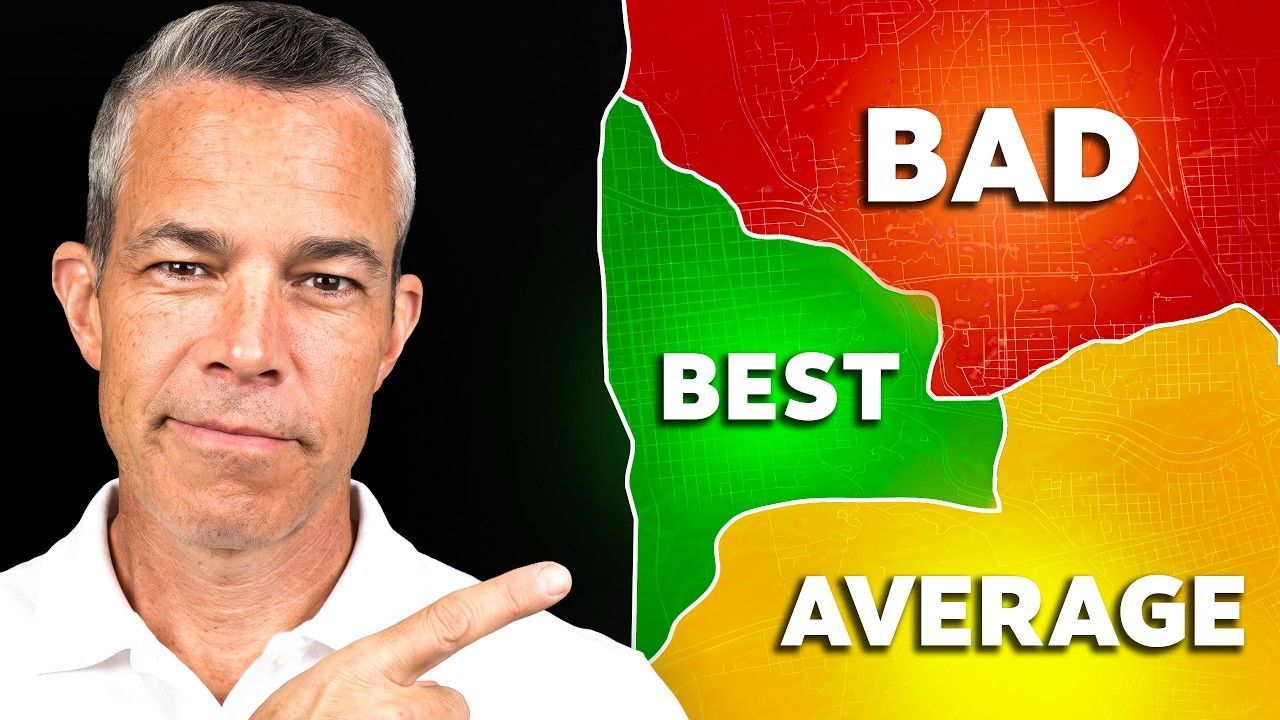
The Indianapolis housing market has grown in a very predictable direction for roughly 40 years. Find affordable land north of the city, extend roads and utilities, build subdivisions, attract employers, and then bring in buyers. That formula built modern Carmel, Fishers, and Westfield.
But that era is hitting a structural wall. Not because central Indiana has run out of land, but because affordability, infrastructure capacity, land constraints, buyer preferences, and statewide housing policy are all changing at the same time.
That means the Indianapolis housing market is no longer one big story. It is becoming far more specific by suburb, price range, property type, and even neighborhood. Some areas have the ingredients to keep attracting demand. Others may struggle if they rely on the old model of turning cheap farmland into subdivisions without the roads, amenities, schools, employment, or municipal support to go with it.
Key Takeaways
- The traditional northward expansion model is being challenged by affordability, supply shortages, zoning changes, and land constraints.
- Westfield, Noblesville, Fishers, Greenwood, and Zionsville each have different strengths in the changing metro landscape.
- Entry-level homes remain competitive, while many buyers have more negotiating room in higher price ranges and slower segments.
- Sellers need accurate pricing, strong preparation, and a strategy built around the crucial first days on market.
Table of Contents
- Indianapolis Housing Market: How the Old Growth Model Shaped the North Side
- Why the Indianapolis Housing Market Is Changing
- Which Indianapolis Suburbs Are Positioned to Win?
- What Could Struggle in the New Indianapolis Housing Market?
- What the Indianapolis Housing Market Means for Buyers
- What Sellers Need to Know in the Indianapolis Housing Market
- Why the Indianapolis Housing Market May Outperform the National Market
Indianapolis Housing Market: How the Old Growth Model Shaped the North Side
For decades, Hamilton County was the engine of suburban expansion. Developers could buy large parcels at relatively affordable prices north of Marion County, create master-planned communities, and count on infrastructure to follow.
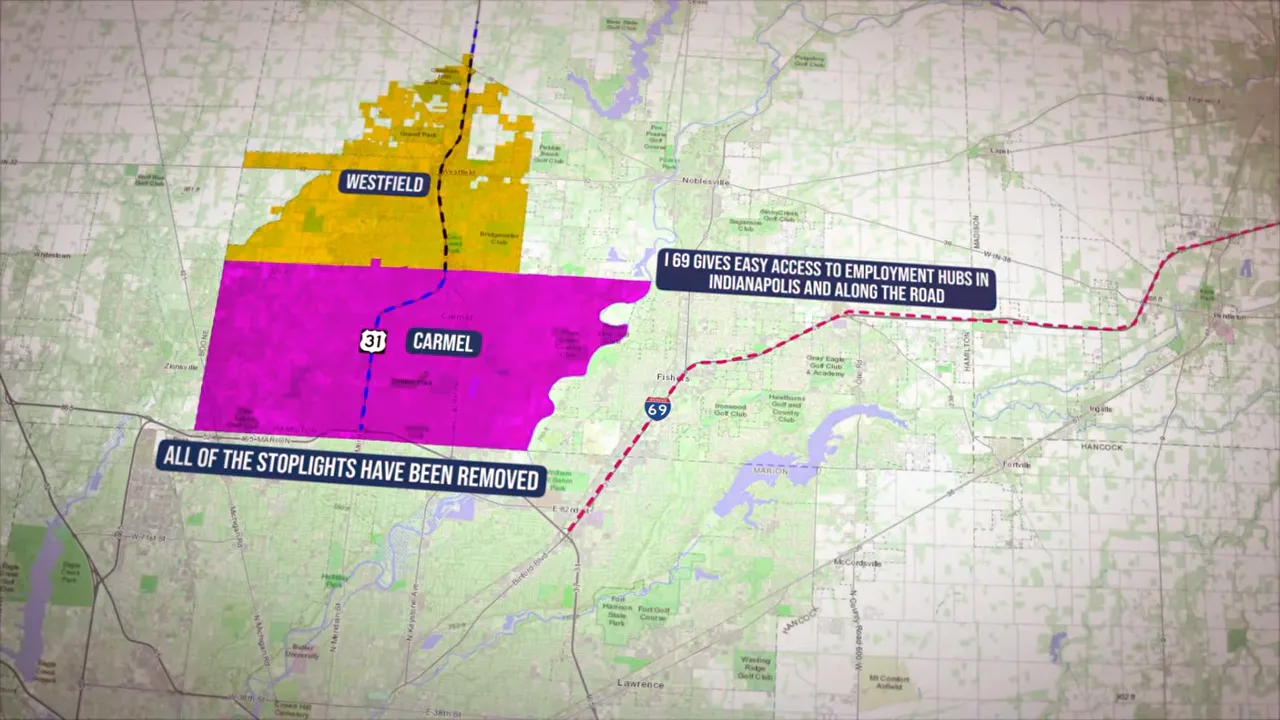
Major corridors made the formula work. I-465 connected the metro. I-69 opened up the northeast side. US 31 was upgraded through Carmel and Westfield, removing stoplights and making a long commute much more manageable. We cannot change the actual mileage, obviously, but better roads make that mileage feel a whole lot different.
The results were enormous:
- Carmel’s population more than quadrupled between 1980 and 2018.
- Fishers’ population nearly quintupled over that period and now exceeds 100,000 residents.
- Westfield evolved from a small town into a city anchored by Grand Park, a sports complex that draws millions of annual visitors.
This was not accidental growth. It was a repeatable formula where land, highways, utilities, employers, and housing demand lined up. For a buyer in a Hamilton County master-planned community during the 1990s or early 2000s, appreciation often followed the northward push.
The Indianapolis housing market still benefits from the investments made during that period. The difference is that the formula is no longer as easy to repeat.
Why the Indianapolis Housing Market Is Changing
Three forces are arriving together, and together they are changing what works in the Indianapolis housing market.
1. The affordability ceiling is real
Homeownership costs in the Indianapolis metro reached about 36% of median household income in late 2025. The traditional affordability threshold is closer to 30%. Once a market known for affordability moves beyond that line, entry-level buyers get squeezed first.
That pressure is especially obvious in the roughly $250,000 to $308,000 range, where buyer competition remains very tight. Sellers in that entry-level segment are still in a strong position because demand is there and the available supply is limited.
2. Housing supply has not kept up
Indiana added approximately 125,000 homeowner households over five years, while fewer than 99,000 single-family and duplex units were permitted during the same period. That is a meaningful structural gap.
In areas where land is still inexpensive enough for builders, the infrastructure is not always ready. Roads, utilities, school capacity, and amenities matter. A subdivision can be built quickly. A truly functioning community takes a lot more than lots and rooftops.
3. Policy and geography are pushing density
Indiana’s House Enrolled Act 1001 requires cities, towns, and counties to conduct public hearings on whether their development rules support housing supply and density. That is a major shift in how Indiana municipalities must think about zoning.
At the same time, Carmel and Fishers are largely boxed in. They do not have unlimited room to keep pushing outward. The future of the Indianapolis housing market is likely to include more redevelopment, mixed-use projects, infill, townhomes, apartments, and higher-density residential options in locations where roads and utilities already exist.
Which Indianapolis Suburbs Are Positioned to Win?
The new model rewards places that already have infrastructure, employment access, municipal planning, and a live-work-play environment. We are not just talking about bedroom communities anymore. Buyers increasingly want places with real amenities, usable roads, restaurants, retail, parks, and an identity beyond the next subdivision.
Westfield: room to grow with major infrastructure
Westfield has been extremely deliberate about planning. US 31 changed the commute calculation not just for Westfield but for the entire northern corridor. Grand Park gives the city a major economic and visitor draw that supports continuing investment.
Most importantly, Westfield still has land to the north and northwest. In the Indianapolis housing market, that combination of land, infrastructure, and a destination amenity is tough to ignore.

Noblesville: the suburb to keep a close eye on
Noblesville is the one we should be watching especially closely. It had roughly 80,000 residents in 2026 and an annual growth rate of about 1.66%, the highest among Indiana’s large cities. Its eastward expansion corridor near Hamilton Town Center has room to grow, access to major routes, and a price point that remains below Carmel and Zionsville.
The median home price in Noblesville was around $365,000. That places it in a very interesting position for buyers who want a strong north-side location without immediately paying the premium attached to the most mature Hamilton County markets.
Fishers: already built for the next phase
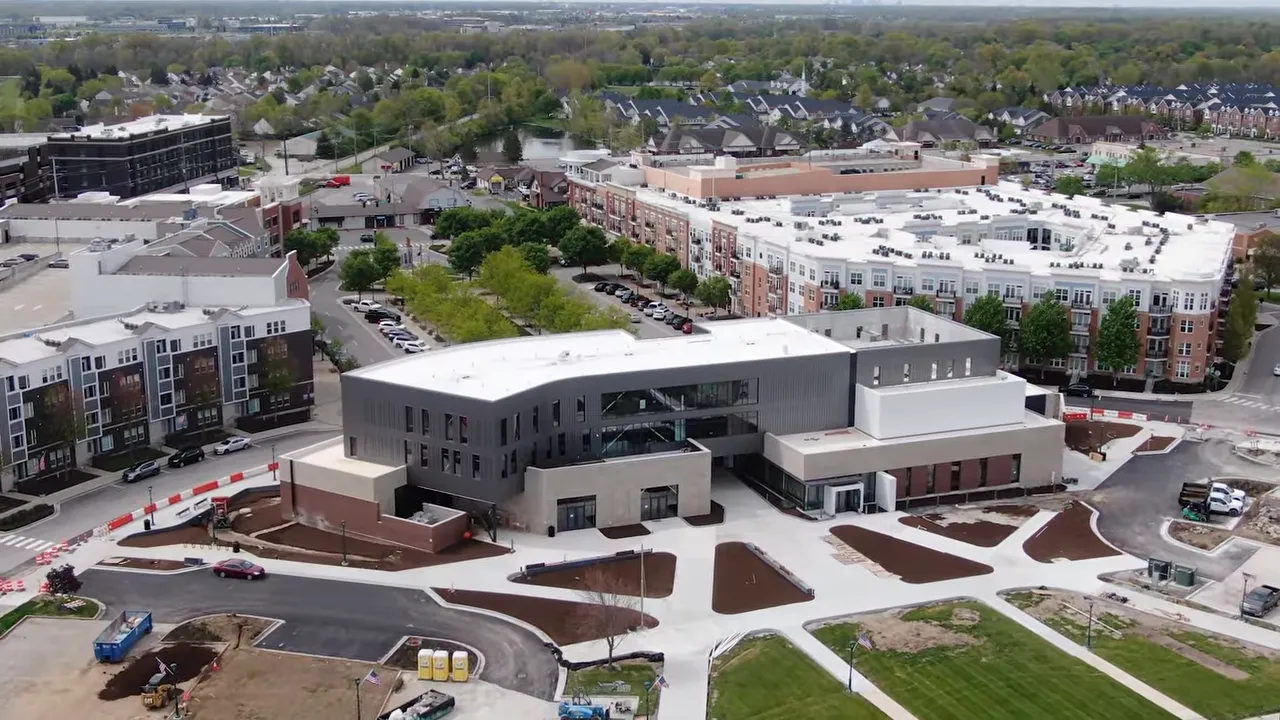
Fishers is different because it has already begun the shift from sprawling suburb to mixed-use city. Its population is around 106,000, its density is roughly 2,900 people per square mile, and its growth has created the critical mass needed to support destinations like Fishers District.
Fishers does not have a huge amount of remaining room to expand, but it has already built the dining, retail, walkable development, and density that many buyers want. Its median price was just over $414,000, reflecting that established demand.
Greenwood and Zionsville serve very different demand
Greenwood remains one of the more under-the-radar options in the Indianapolis housing market. Its position along I-65 and I-69 gives buyers access to multiple employment centers, and it can offer more square footage for the money than Hamilton County locations.
Zionsville sits at the other end of the spectrum. With a median home value just over $578,000, it is a low-density, high-demand pocket that is difficult to replicate. Zionsville does not try to be everything to everyone, and that is exactly part of why it has been so consistent in holding value.
|
What Could Struggle in the New Indianapolis Housing Market?
Not every suburb is set up to win under this new growth model. That does not mean these are bad places to live. It means the appreciation story becomes less certain when a community depends on one thing only: continued cheap land and outward expansion.
We need to watch for a specific pattern:
- Poor or delayed infrastructure planning
- Schools that approach capacity quickly
- Heavy dependence on a single employer
- Few walkable amenities or no identifiable town center
- Large-scale farmland-to-subdivision conversion without broader municipal investment
Luxury homes are particularly exposed in outer suburbs with little differentiation. In the $750,000-and-up tier, inventory was around 4.2 months, the only segment sitting near a historically normal supply level. If there is no walkable core, major employment anchor, unique amenity, or distinctive setting, these homes can take longer to sell and may require more seller concessions.
Rental behavior is sending a similar signal. Metro-wide vacancy rates were running roughly 6% to 7%, and outdated properties in less differentiated locations were tending to sit longer or need stronger incentives.
The clearest dividing line in the Indianapolis housing market is simple: the places doing well have already invested in the infrastructure buyers want. The places that may struggle are still waiting for that investment to arrive.
What the Indianapolis Housing Market Means for Buyers
There is a buyer opportunity here that we have not seen in several years. Zillow ranked Indianapolis as the number one buyer-friendly metro for 2026. As of January 2026, the metro had about 2.6 months of supply, and homes were spending roughly 33 to 55 days on market. That is a very different environment from the buying frenzy of 2021 and 2022.
Late in 2025, 56% of listings had price reductions. That tells us sellers in many areas are more open to negotiation and concessions than they have been in years.
At the same time, it is important not to confuse “more opportunity” with “no competition.” The $250,000 to $400,000 range remains highly competitive, particularly for well-maintained homes in desirable suburbs near I-465. First-time buyers and move-up buyers are competing for much of the same inventory.
For buyers in the $400,000 to $600,000 range, the Indianapolis housing market can offer more options. Consider areas with room, infrastructure, and ongoing development, including eastern Noblesville, northern and northwestern Westfield, and the eastern edge of Fishers.
A practical buyer strategy right now looks like this:
- Get pre-approved early rather than waiting until the perfect house appears.
- Consider locking a rate around 6% if the loan structure makes sense for your situation.
- Move quickly on clean, well-priced homes in the most competitive price bands.
- Negotiate assertively where inventory is deeper or a property has been sitting.
- Choose the suburb based on infrastructure and long-term fit, not just the lowest initial price.
Prices across the metro were projected to rise roughly 3.2% to 4.5% over the next 12 months, with a metro median around $245,000 at the time of these figures. If rates fall and more buyers re-enter the market, selection could tighten fast and multiple-offer competition could return in a bigger way.
What Sellers Need to Know in the Indianapolis Housing Market
In a market this specific, how we sell matters more than simply when we sell. The sellers winning in the Indianapolis housing market are not the ones listing at the highest possible number and waiting around for an offer. They are pricing correctly from day one and making the house stand out.
The first 7 to 10 days are still the most important part of a listing. If buyers see a home as overpriced immediately, they may skip it entirely or never see it because it falls outside the search range they set online. A home that sits overpriced for 45 days usually performs much worse than one that entered the market correctly.
Nearly half of listings experienced price reductions in 2025. That is a leftover habit from the 2021 and 2022 market, when sellers could often stretch the asking price and still get rewarded. That is not the reliable strategy it used to be.
Sometimes a properly analyzed price slightly below expected value can create attention and competition, resulting in a better final outcome than starting too high and reducing later.
Preparation matters too. Well-staged homes in Fishers, Carmel, and Westfield can move very quickly. Strong staging can generate offers 1% to 3% higher by helping a home feel move-in ready. The highest-return updates are still targeted kitchen and bathroom improvements, not necessarily full renovations. The point is to show buyers the home has been cared for.
February through July is historically the strongest selling period around Indianapolis because so much activity follows the school calendar. But the buyer pool is more consistent than headlines make it sound. Corporate relocations in healthcare, logistics, and technology happen all year, and move-up buyers often have strict timelines.
Why the Indianapolis Housing Market May Outperform the National Market
The Indianapolis housing market is not simply following national trends. Local data has been stronger than many people realize. In the fourth quarter of 2025, closed sales were up 11.4% year over year, pending sales were up 18.7%, and inventory was at 1.8 months of supply, about half the national average at that time.
National price forecasts for 2026 were around 1.1%, while Indianapolis was projected to appreciate around 2% to 4% across the metro. Highly desirable suburbs such as Carmel and Zionsville were forecast in the 6% to 9% range.
The metro median sale price remained 44% below the national average. That affordability gap continues to attract interest from buyers moving from more expensive markets. The National Association of Realtors ranked Indianapolis among the country’s top home-buying locations for 2026.
There is a counterpoint, and we need to keep it honest. Indiana immigration declined about 53% in 2025, while natural population growth fell roughly 7%. Slower population growth could moderate some suburban markets in 2027 and 2028, particularly outer-ring areas that lack the infrastructure or identity to compete for demand.
Over the next 12 to 24 months, the Indianapolis housing market is likely to favor buyers in the $300,000 to $600,000 range who focus on infrastructure-ready suburbs, along with sellers in that same range who price and prepare their homes correctly.
The old assumption that every direction of outward expansion will perform the same way is no longer enough. The real question is which suburb and which property type puts us on the right side of a very real market shift.
Whether you're looking at new construction homes in Indianapolis or trying to find the right suburb for your next move, I can help you understand your options, compare communities, and make a confident decision.
Call or text (317) 932-8620 or book a FREE consultation to discuss your relocation, new construction, or home-buying goals.
Frequently Asked Questions About the Indianapolis Housing Market
Is the Indianapolis housing market still affordable?
Indianapolis remains more affordable than many major U.S. metros, with a median sale price reported as 44% below the national average. However, ownership costs have risen to about 36% of median household income, putting pressure on entry-level buyers.
Which Indianapolis suburbs have the strongest growth outlook?
Westfield, Noblesville, and Fishers stand out because of infrastructure, development capacity, amenities, and access to employment. Greenwood offers a south-side value alternative, while Zionsville remains a high-demand premium market.
Is it a good time to buy a home in Indianapolis?
Buyers have more selection and negotiating leverage than during the 2021 and 2022 frenzy, especially in certain price ranges. However, well-priced homes in the $250,000 to $400,000 range can still move quickly and attract competition.
What is the biggest risk for outer Indianapolis suburbs?
Areas that depend primarily on cheap land and continued subdivision growth may face a less certain outlook if infrastructure, school capacity, walkable amenities, and employment access do not keep pace with development.
Read More: BEST AREAS TO LIVE IN INDIANAPOLIS FOR ROI IN 2026