Indianapolis real estate is sitting at a pretty interesting crossroads in 2026. There are new rules around AI and listing photos, major Indiana HOA changes, a property tax credit, a federal reporting rule that is currently suspended, and seller disclosure requirements that can create serious problems long after closing.
Most homeowners in Carmel, Fishers, Westfield, Noblesville, Greenwood, Plainfield, Brownsburg, and Indianapolis itself are busy living their normal lives. Totally understandable. These rules tend to live inside legislative sessions, agency bulletins, and industry policy updates that nobody has time to read until they suddenly affect a sale, a tax bill, or a dispute with an HOA.
The good news is that none of this has to be complicated if we understand what applies to us before a transaction is already moving. Here are the five biggest changes affecting Indianapolis real estate in 2026 and the practical steps we should take.
Table of Contents
- Indianapolis Real Estate: Digital Photo Rules
- Indiana HOA Law Changes
- Indiana Property Tax Credit
- FinCEN & Indianapolis Real Estate
- Indiana Seller Disclosure Rules
- 2026 Indianapolis Real Estate Impact
- FAQs About Indianapolis Real Estate in 2026
Indianapolis Real Estate: Digital Photo Rules
The first change is technically coming from California, but it matters to Indianapolis real estate because it is setting a national expectation for how homes are marketed.
California Assembly Bill 723 took effect January 1, 2026. Under that law, real estate listing photos that have been materially altered with editing software or AI need a clear disclosure. Agents and brokers must also make the original, unaltered version available.
This is not about ordinary brightness adjustments, color balancing, or basic cleanup. The concern is material visual manipulation, including:
- AI virtual staging in an empty room
- Removing objects from a background
- Adding or replacing objects
- Replacing a gray sky with a sunny one
- Adding greener grass to a poor lawn
- Making an unfurnished space appear furnished
Virtual staging can be useful. An empty living room in Fishers or Noblesville may be hard to picture, and staged images can help someone understand how the room could function. The issue is not the technology itself. The issue is a buyer believing the altered image is a literal representation of the property.
This matters even more in Indianapolis real estate because remote purchases are common. A buyer relocating from out of state may make decisions from online photos before getting into the home in person.
The National Association of Realtors already has ethical disclosure expectations under Articles 2 and 12, and local MLS practices require virtual staging to be labeled. California's framework is likely to influence what courts and buyers consider reasonable industry practice across the country.
What sellers should do
- Ask directly which listing photos have been digitally altered.
- Require clear labels such as virtually staged or digitally enhanced.
- Make sure original versions are available when AI staging is used.
- Do not let a marketing decision turn into a trust issue, commission dispute, or post-closing claim.
Clear disclosure protects everyone. It gives buyers honest context and gives sellers a much stronger footing if questions come up later.
Indiana HOA Law Changes
HOAs are a major part of Indianapolis real estate, particularly across the suburban communities surrounding the city. Carmel, Fishers, Westfield, Noblesville, Zionsville, Greenwood, and Plainfield all have plenty of neighborhoods where HOA membership comes with the home.
Indiana's 2026 legislative session changed how associations provide notice, handle records, address quorum issues, and regulate flags.
Four days of written notice for board meetings
Under House Bill 1115, HOA boards must give at least four days of written notice before board meetings. That might sound procedural, but it is a big deal when boards are making financial, enforcement, or community decisions that affect residents.
Homeowners now have a better window to attend, ask questions, and understand decisions affecting their community.
Free access to association records
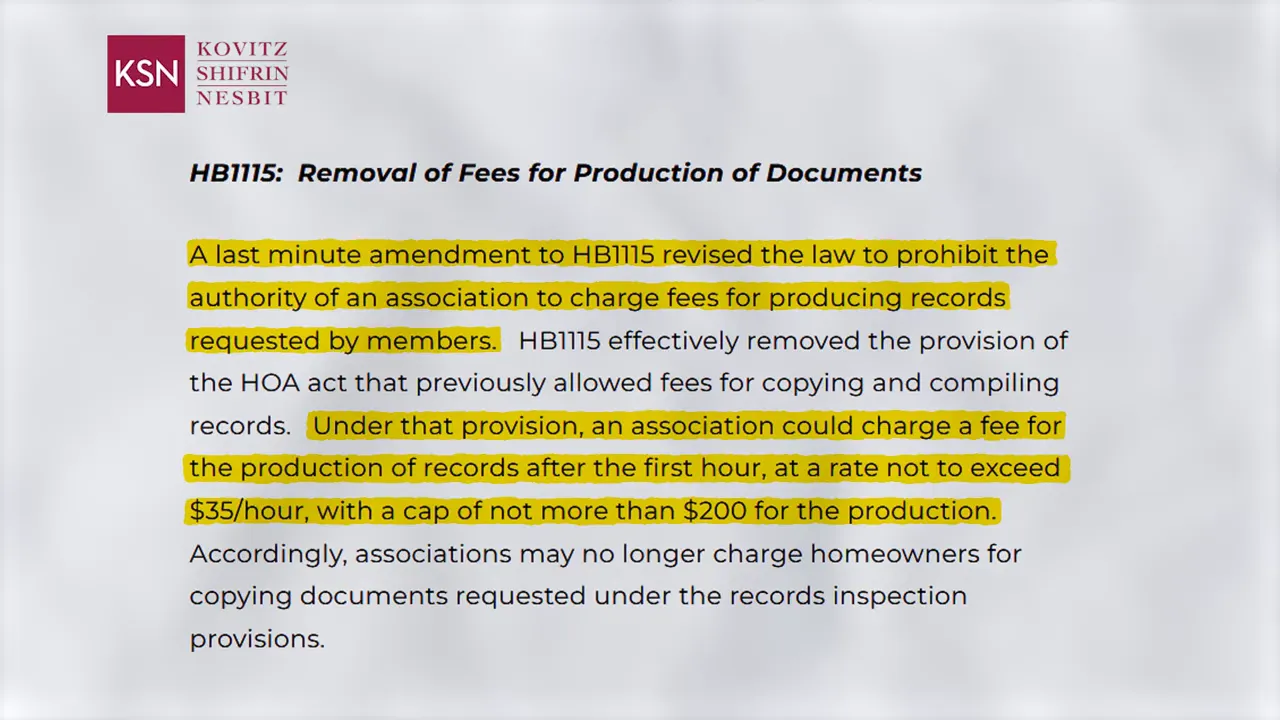
House Bill 1115 also removed the ability for associations to charge members for producing association records. Previously, an HOA could charge up to $35 per hour to compile records, with a cap of $200 per request. Under the new framework, homeowners should not be charged for access to financial records, meeting minutes, or governing documents they have a legal right to review.
Quorum clarification and flag protections
House Bill 1210 clarifies that a failure to establish a quorum does not release homeowners from complying with the governing documents. It also addresses a loophole involving board decisions made without a proper quorum.
House Bill 1150 prohibits an HOA from adopting or enforcing a policy that prevents a homeowner from displaying a United States flag or Indiana state flag on the property.
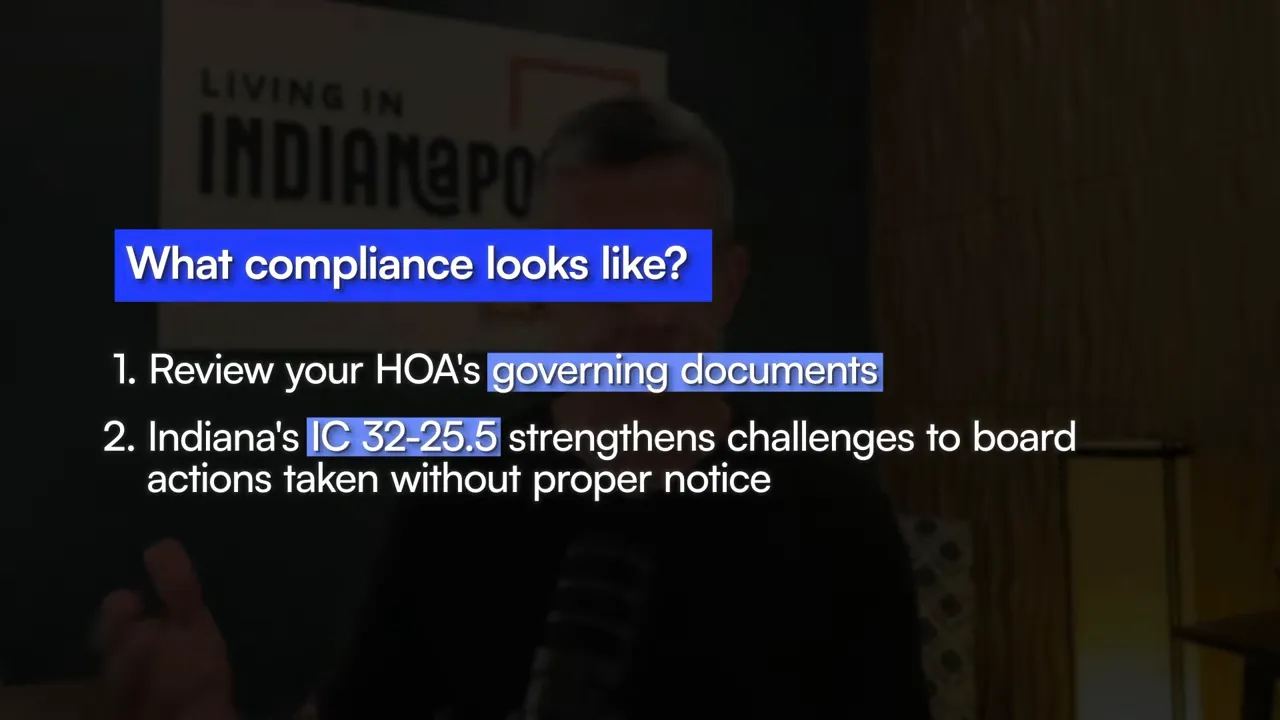
For homeowners in Indianapolis real estate communities with an HOA, the practical move is simple: review the CCRs, bylaws, covenants, restrictions, and recent meeting notices. If a board imposed fines or made significant financial decisions without proper notice, the mandatory Indiana grievance resolution procedure may provide a path to challenge it.
Indiana Property Tax Credit
Here is one change that can work in homeowners' favor without a lot of extra work. Starting with 2026 property tax bills, qualifying Indiana homeowners receive an automatic credit equal to 10% of annual property tax liability, capped at $300.
This came from State Enrolled Act 1, passed during the 2025 Indiana legislative session. The state estimates the broader package will save Indiana homeowners more than $1.3 billion over three years.
The math is straightforward:
- A Carmel home with a $2,800 annual property tax bill would receive a $280 credit.
- A home with a $4,000 annual tax bill would receive the maximum $300 credit.
If the homestead deduction is already on file for a primary residence, the county auditor applies the credit automatically. This is why it is especially important to verify records if we bought in 2025, refinanced, transferred property into a trust, or experienced another ownership change.
If the homestead deduction is missing or incorrect, the credit may not show up. The filing deadline for the 2026 tax year was January 15, 2026, so missed filings may affect this cycle.
The legislation also transitions the supplemental homestead deduction percentage toward 66.7% of assessed value by 2031. Separately, the former over-65 deduction is now an over-65 credit. Homeowners who previously received that deduction need to reapply in the new credit format. The stated income limits are $60,000 for individual filers and $70,000 for joint filers, based on 2024 federal adjusted gross income.
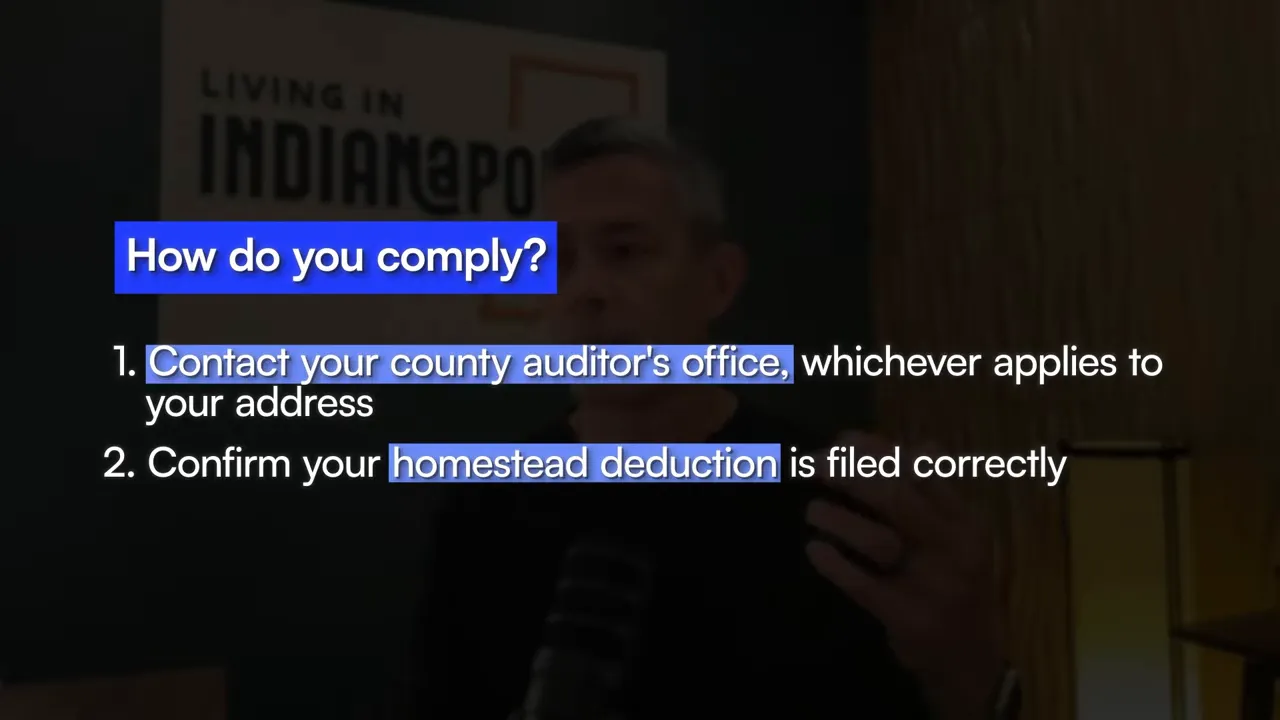
For Indianapolis real estate owners, this is worth a quick call to the county auditor's office. Hamilton, Marion, Boone, Johnson, and other county offices can confirm whether the homestead deduction is properly filed. It takes just a few minutes and can help prevent missing a meaningful credit.
FinCEN & Indianapolis Real Estate
This one is important for investors and anyone purchasing Indianapolis real estate through an LLC or trust.
On March 1, 2026, a federal Financial Crimes Enforcement Network rule took effect for certain non-financed residential purchases. It focused on transactions where a buyer was a legal entity or trust and the purchase was all cash or privately financed.
Title companies and settlement agents, not buyers, would have been responsible for reporting. But buyers using LLCs or trusts would have needed to provide beneficial ownership documentation at closing.
Then, on March 19, 2026, a federal district court vacated the rule, finding that FinCEN exceeded its authority under the Bank Secrecy Act. As things stand right now, compliance is not required, and reporting parties are not liable for failing to file reports under that vacated rule.
That does not mean we should ignore it. The government could appeal, and the original goal of combating money laundering through shell-company real estate purchases has not gone away.
Investors using entity structures in Indianapolis real estate should keep entity documents clean and organized, understand beneficial ownership, and work with a title company tracking the changes closely. If the rule returns, incomplete paperwork could delay a closing even though the title company or settlement agent handles the report itself.
Individual buyers purchasing in their personal names are not the target of this particular rule.
Indiana Seller Disclosure Rules
The most important issue for anyone selling Indianapolis real estate is the seller's residential real estate sales disclosure form. This requirement is not brand new, but the form has become more detailed, buyer expectations have increased, and claims after closing are becoming more aggressive.
Indiana sellers of residential property with four units or fewer must complete the form before accepting an offer. Sellers are required to disclose their current actual knowledge of the property's condition across roughly 60 items.
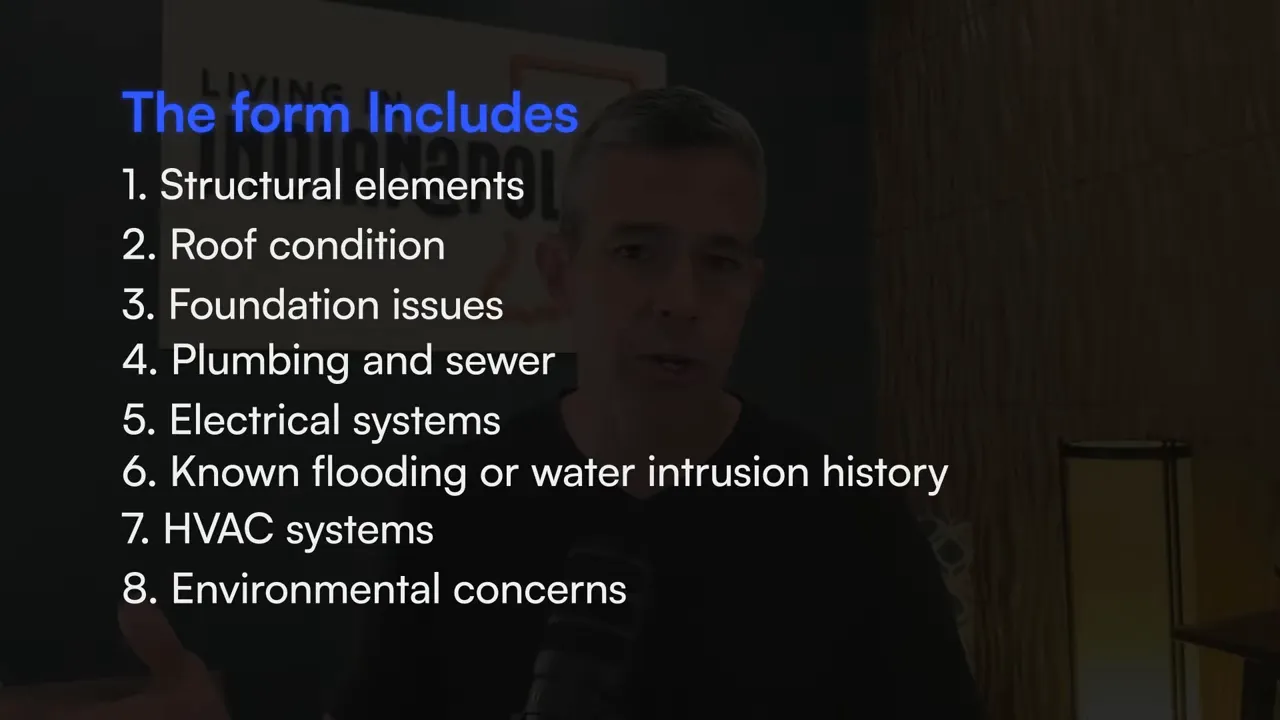
The form covers issues such as:
- Structural elements
- Roof condition and foundation issues
- Plumbing, sewer, and electrical systems
- Known flooding or water intrusion
- HVAC systems
- Environmental concerns
- HOA membership, assessments, and governing documents
This is especially relevant in older Indianapolis real estate areas such as Broad Ripple, Fall Creek, Meridian Hills, Williams Creek, and older sections of Carmel and nearby suburbs. Older homes often have a longer history, and that means more details that could be relevant to disclose.
Data referenced in the market shows that 28% of buyers find hidden issues after closing, with a third of those buyers placing responsibility on the seller for lack of disclosure. Indiana courts have upheld fraud claims where sellers intentionally misrepresented or omitted information. Even an unintentional omission can create a costly mess when someone forgets about an older repair or does not believe an issue was significant.
A buyer may be able to cancel after contract, and after closing the exposure can include repair costs, damages, diminished property value, and legal fees. This is exactly why vague answers are often more dangerous than specific, honest ones.
A practical seller disclosure checklist
- Before listing, walk through the property and document what we know about its condition and history.
- Complete the disclosure thoroughly and honestly based on actual current knowledge.
- Be specific about past issues, repairs, water events, and known defects.
- Work with an agent or real estate attorney when the property history is complicated.
- Include HOA information and documents when the home is part of an association.
For Indianapolis real estate sellers, good disclosure is not about making a home look worse. It is about avoiding a transaction that falls apart or turns into a lawsuit after the keys have changed hands.
What These 2026 Changes Mean for Indianapolis Real Estate
These five changes touch nearly every part of property ownership: how we market homes, how HOAs operate, how tax credits appear, how entity purchases may be handled, and how sellers protect themselves from post-sale disputes.
The homeowners and buyers who tend to come out ahead are not necessarily the ones who know every section number. They are the ones who ask the right questions early, keep records organized, and get clear guidance before signing documents or moving toward closing.
Indianapolis real estate remains highly local. The neighborhoods, counties, HOA rules, property histories, and transaction structures can all change what matters most in a particular situation. Knowing these rules before the process starts gives us more options and far fewer surprises.
Whether you're planning to build from the ground up, buy a newly constructed home, or simply want to understand how these 2026 Indianapolis real estate changes could affect your next move, having the right guidance makes all the difference. From choosing the right community to navigating builder contracts, HOA rules, disclosures, and local market trends, I'm here to help you make informed decisions every step of the way.
Thinking of building your next home or making a move in the Indianapolis area? Call or text me anytime at 317-932-8620 or book a FREE consultation here . I'd be happy to answer your questions and help you find the right home and community for your lifestyle and goals.
Frequently Asked Questions
Do Indianapolis sellers have to disclose AI virtual staging?
Local MLS practices require virtually staged images to be labeled, and industry standards are moving strongly toward clear disclosure. Sellers should ask which photos were digitally altered, label them clearly, and ensure original photos are available when AI staging is used.
Can an Indiana HOA charge for copies of financial records or meeting minutes?
Under the 2026 HOA changes discussed here, associations cannot charge members to produce records such as financial records, meeting minutes, and governing documents that members have a right to access.
How much is the new Indiana property tax credit?
Qualifying homeowners receive a credit equal to 10% of annual property tax liability, up to $300. A $2,800 tax bill would produce a $280 credit, while a $4,000 bill would reach the $300 maximum.
Does the FinCEN reporting rule affect every Indianapolis homebuyer?
No. The rule was aimed at certain non-financed purchases by legal entities and trusts. It does not target buyers purchasing as individuals, and it is currently vacated following a federal court decision.
What is the most important thing an Indianapolis seller can do before listing?
Complete the seller disclosure form thoroughly, honestly, and specifically based on current actual knowledge. Document known issues, prior repairs, water events, and HOA details before accepting an offer.
Read More: MOVING TO INDIANAPOLIS? 10 THINGS THAT MAKE INDIANAPOLIS UNLIKE ANY OTHER U.S. CITY