Most real estate agents are good people who genuinely want to help. Still, the industry is built around getting a transaction to the closing table. In 2025, combined agent commissions on a median-priced Indianapolis home averaged 5.44% of the sale price, and agents generally are paid only when a deal closes. That creates a real incentive to focus on the positive and keep momentum moving.
That does not automatically mean anyone is hiding illegal defects or breaking disclosure laws. Indiana sellers must complete disclosure forms. The bigger issue is the gray area: the neighborhood details, financial exposures, future costs, property conditions, and pricing assumptions that may not be volunteered unless we ask the right questions.
What They Don't Tell You About Moving to Indianapolis
When moving to Indianapolis from out of state, virtual tours can be especially risky. A home may look beautiful online, yet the immediate surroundings can tell a very different story. There could be broken-down vehicles next door, poor exterior upkeep, a deteriorating outbuilding, or other conditions that affect the experience of living there and eventually affect resale.
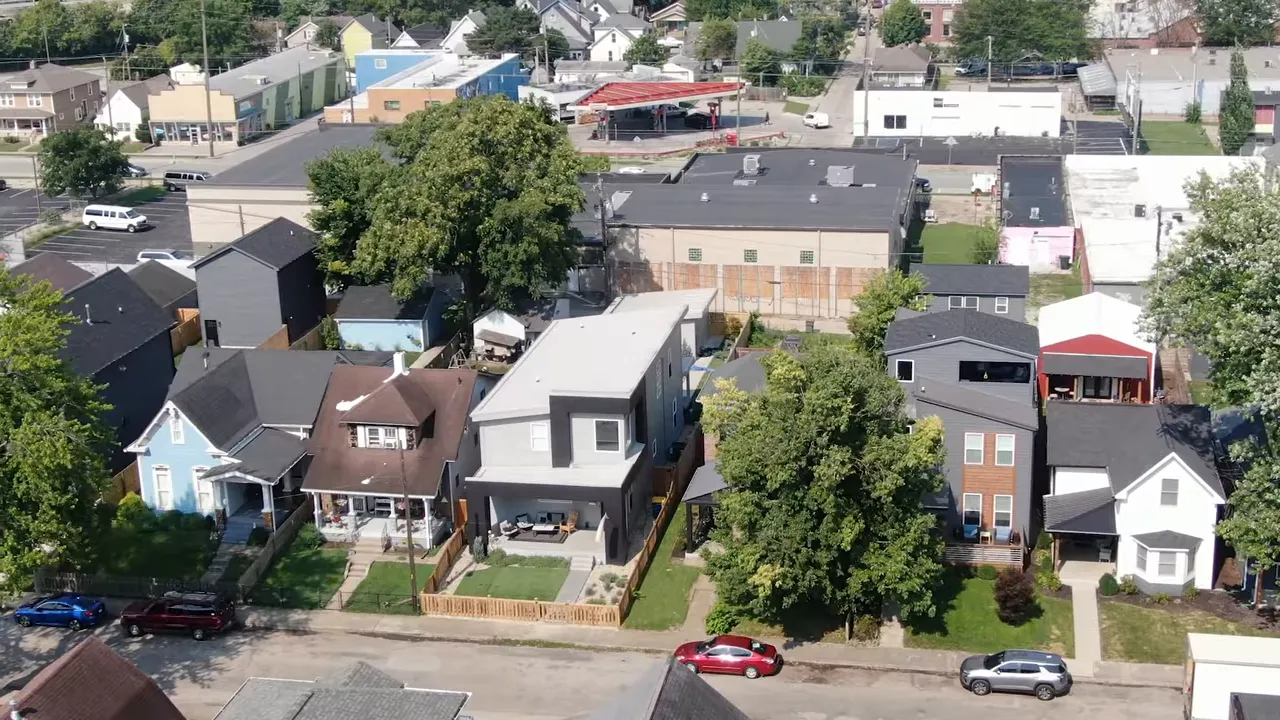
Those conditions may be visible during an in-person visit, but they are easy to miss when we are relying on photographs, a polished listing, or a virtual walkthrough. The same goes for HOA health. A community may have an HOA, but its reserves, finances, and operational issues may deserve much more investigation than a quick mention of the monthly fee.
The key distinction is simple: illegal non-disclosure is one thing, while information that an agent is not technically required to volunteer is another. That second category is where buyers can lose real money.
Before making an offer, ask this directly:
“Is there anything about this house, property, street, or surrounding area that you would want to know if you were buying it yourself?”
A strong agent should give a specific answer. A deflection, vague reassurance, or quick pivot is also useful information. We should pay attention to how someone responds when the question gets uncomfortable.
How Agent Compensation Can Affect Advice
Moving to Indianapolis means learning the current rules around buyer representation, not just choosing a house. Following the 2024 National Association of Realtors settlement, buyer representation agreements must be signed in writing before touring homes, and listing agents can no longer advertise buyer-agent compensation on the MLS.
Those rule changes matter, but the basic financial structure still exists. In most transactions, both agents are paid from the same sale price. The higher the final price, the larger the commission can be. In the first quarter of 2025, average buyer-agent commission was 2.4%, after rising for three consecutive quarters under the new rules.
Only about 27% of buyers in 2025 tried to negotiate their agent’s commission. That is worth thinking about before signing an agreement.
We should ask every prospective agent:
- How are you compensated?
- Does your commission change with the final sale price?
- What does the buyer representation agreement require from me?
- What happens if the seller does not offer compensation?
There is nothing wrong with an agent being paid. The important thing is clarity. A professional should explain the arrangement plainly, without defensiveness or irritation.
Why Clean Offers Can Increase Buyer Risk
In a competitive market, buyers are often encouraged to write a “clean” offer. That can mean fewer contingencies, a shortened inspection period, inspection concessions, or a complete inspection waiver.
Here is what a clean offer can really do: it transfers the cost of unknown defects from the seller to us. Nationally, 21% of buyers waived inspection contingencies in September 2025, up from 17% a year earlier. At the peak of the 2022 market, that number reached 30%, and some especially competitive local markets went higher.
We should be very careful about waiving the right to understand what we are buying. If a seller refuses to allow any kind of inspection, it is reasonable to ask why.
Sometimes, particularly when moving to Indianapolis during a competitive stretch of the market, an information-only inspection can be a middle ground. We receive a full inspection report, but the offer is not contingent on the findings. It can preserve some competitiveness while still helping us see the condition of the home.
That does not make the risk disappear. Backing out after an information-only inspection could still cost earnest money. We should also hire an independent third-party inspector. Agent recommendations can be useful, but buyers should always understand whether any financial relationship exists.
The Real Cost of Owning a Home in Indianapolis
A mortgage payment is not a full ownership budget. This is one of the biggest financial mistakes people make when moving to Indianapolis or anywhere else.
In 2025, average annual non-mortgage homeownership expenses in the United States were estimated at about $21,400, or roughly $1,800 a month. That figure includes maintenance, repairs, insurance, property taxes, and utilities.
Not every household will spend exactly that amount, but the direction is clear. Eighty-one percent of homeowners said ownership costs exceeded expectations. Nearly half said they did not understand the true cost before buying, and 56% had not set aside money for repairs before moving in.
A reasonable planning rule is to reserve 1% to 2% of a home’s value each year for maintenance and repairs. On a $500,000 home, that is $5,000 to $10,000 annually before mortgage payments, insurance, taxes, or utilities.
We also need to account for:
- Homeowners insurance, which rose 12% in 2025 and was projected to rise again in 2026.
- HOA fees, which can run $100 to $200 per month in some single-family communities.
- Property taxes that can change after purchase.
- Replacement timelines for roofs, HVAC systems, water heaters, appliances, and other major systems.
For many buyers, actual ownership costs can be $400 to $800 more each month than the mortgage payment alone. Before moving to Indianapolis, ask for a complete ownership-cost estimate rather than settling for a loan payment quote.
How Comparable Sales Influence Home Prices
A comparative market analysis, or CMA, is supposed to help validate a listing price or offer price. But a CMA is only as neutral as the comparable sales included in it.
Indianapolis had a median sale price of $317,000 in October 2025, up 5.5% year over year. In a rising market, there is already pressure to justify higher pricing. The data may be real, but an agent can still choose which sales to include, which to call outliers, and which ones to leave out.
We have seen CMAs exclude lower-priced nearby sales because they were labeled outliers. We have also seen homes with finished basements used to justify the price of a home without one. Those are not necessarily fabricated numbers, but they are not neutral comparisons either.
Signs of a weak CMA
- Comparable homes are located too far away.
- Properties come from a different school district without a strong reason.
- Different property types are treated as interchangeable.
- Price per square foot is used as the only meaningful valuation metric.
- Lower sales are dismissed without a convincing explanation.
For a more grounded review, we can pull our own sale data through Zillow or Redfin before sitting down with an agent. Focus on sales from the last 90 days when possible, stay within about a half-mile to one mile, and compare homes within roughly 200 square feet of the property under consideration. The tighter and more recent the comparison, the better.
Indianapolis Neighborhoods, Taxes, Utilities, and Foundation Risks
When moving to Indianapolis, citywide averages are not enough. Neighborhood-level research is where we get closer to the real experience of a particular property.
Look at local crime data, not just broad averages
IMPD reported 152 homicides in 2025, a significant decline from 209 in 2024 and well below the 2021 level. That is meaningful citywide progress. But Indianapolis still had an overall crime rate of 41 per thousand residents, and auto theft in Marion County was up 38% since 2024.
Citywide numbers can mask huge differences by neighborhood and even by street. We should use the IMPD Crime Viewer Map at maps.indy.gov, along with services such as NeighborhoodScout and CrimeGrade.org. It is also smart to review the city’s capital improvement plan for the specific area and spend time in the neighborhood at different hours and on different days.

Do not assume the seller’s property tax bill will be our bill
Indiana properties are assessed at 100% of market value. After a purchase, the county may update the assessed value to reflect the new sale price or something close to it. That means a previous owner’s low tax bill may have been based on an outdated assessment and may not reflect our future costs.
This is especially important for homes that have been owned for many years. Buyers purchasing in 2025 and 2026 could face back-to-back pressure on tax bills: one reassessment related to their purchase and another from administrative base-rate changes.
Utilities are part of the affordability equation
For Marion County residents, estimated home electricity costs reached about $126 per month in April 2026. That was about 10% higher than the previous month and roughly 27% higher than April 2021.
AES Indiana had requested a 13.5% residential increase, later reduced through a city settlement. Even with that reduction, customers also faced a separate approved infrastructure-related increase in 2026, plus Indiana’s 7% sales tax on electric bills.
When moving to Indianapolis, use current utility estimates as a baseline and budget for seasonal peaks. Before closing, request 12 months of actual utility bills or at least 12-month averages from the seller.
Clay soil and foundations deserve a closer look
Indianapolis-area soil often contains a lot of clay. Clay expands when wet and contracts as it dries. Indiana’s wet-dry cycles, along with freeze-thaw conditions, can put pressure on a home’s foundation.
The issue can be particularly important in older neighborhoods such as Fountain Square, where we may find original homes, new construction, and newer houses built around older foundations.
Routine foundation repair in Indianapolis averages a little over $4,300, with a typical range around $2,500 to $7,000. More substantial work involving piers, underpinning, or major structural intervention can reach $15,000, $30,000, or more. Standard homeowners insurance generally does not cover these repairs.
Watch for sticking doors, uneven floors, diagonal drywall cracks, or cracks near doors and windows. A standard home inspection is largely visual. If an inspector identifies a concern, spending $300 to $700 for a structural engineer’s dedicated foundation assessment can be money very well spent.
Five Questions to Ask Before Moving to Indianapolis
Moving to Indianapolis is easier when we work with an agent who is willing to slow the process down, point out risk, and tell us when a house is not worth buying.
- What would make you advise me not to buy a particular house? A good answer should be specific and based on experience.
- Have you ever talked a client out of a purchase that looked good on the surface? Ask for the story and listen for real details.
- How are you compensated, and does your commission change with the final sale price? The explanation should be clear and calm.
- Who do you recommend for inspections, and do you have a financial relationship with any of them? Buyers have every right to ask.
- What are the three biggest risks of buying in this specific area right now? A knowledgeable local agent should have a meaningful answer.
We should also watch behavior. The right agent takes notes when we point out what we do not like. They identify concerns before we ask. They tell us when a listing appears overpriced. They slow us down when emotion is taking over, and they deliver difficult news with a plan.
A sales-focused agent often does the opposite. They lean heavily on urgency, avoid giving reasons not to offer, and rarely push back when we are about to overpay.
Before committing, verify an agent independently through the Indiana Professional Licensing Agency e-verification portal. Confirm that the license is active and review any disciplinary history. Then check reviews for words that actually matter: honesty, communication, transparency, and examples of an agent helping a buyer walk away from a bad deal.
Thinking about moving to Indianapolis or exploring new construction homes? Whether you're comparing neighborhoods, weighing resale versus new builds, or trying to avoid costly mistakes, we're here to help. Call or text (317) 932-8620 or book a FREE consultation to discuss your relocation plans, get expert guidance on new construction communities, and find the right home for your lifestyle and budget.
FAQs About Moving to Indianapolis
What is the biggest financial mistake people make when moving to Indianapolis?
Relying on the mortgage payment alone. A complete budget should include maintenance, repairs, taxes, insurance, HOA fees where applicable, utilities, and reserves for major systems such as the roof, HVAC, and water heater.
Should we waive a home inspection in Indianapolis?
We should be very cautious. Waiving an inspection shifts the risk of hidden defects to the buyer. In a competitive situation, an information-only inspection may offer a compromise, but buyers should understand that ending the contract could still put earnest money at risk.
How can we research a neighborhood before buying?
Use neighborhood-level crime resources, review local capital improvement plans, examine recent comparable sales, request utility histories, and spend time in the area at multiple times of day. Broad city averages are rarely enough for a specific address.
Will property taxes change after moving to Indianapolis?
They can. Indiana assessments are intended to reflect market value, and a sale may trigger an updated assessed value. The previous owner’s property tax bill should not be treated as a guaranteed estimate of the new owner’s bill.
What should we ask a buyer’s agent before signing an agreement?
Ask what would make them advise against a purchase, whether they have ever talked a buyer out of a deal, how they are paid, whether they have financial relationships with inspectors, and what they see as the major risks in the target area.
Buy the Right House in the Right Indianapolis Neighborhood
The goal of moving to Indianapolis is not simply getting keys to a house. It is making a decision we can live with after the excitement fades and the first repair bill, tax reassessment, insurance renewal, or utility spike arrives.
Ask difficult questions. Review the numbers yourself. Inspect the property thoroughly. Study the neighborhood at the street level. And work with someone who is willing to say, “We cannot recommend this one,” when that is the honest answer.
Read More: PROS AND CONS OF LIVING IN INDIANAPOLIS IN 2026: THE REAL STORY