When we are moving to Indianapolis, the biggest regret usually is not the house itself. More often, it is the location. A place can be beautiful, popular, well built, and still be the wrong fit once daily life starts.
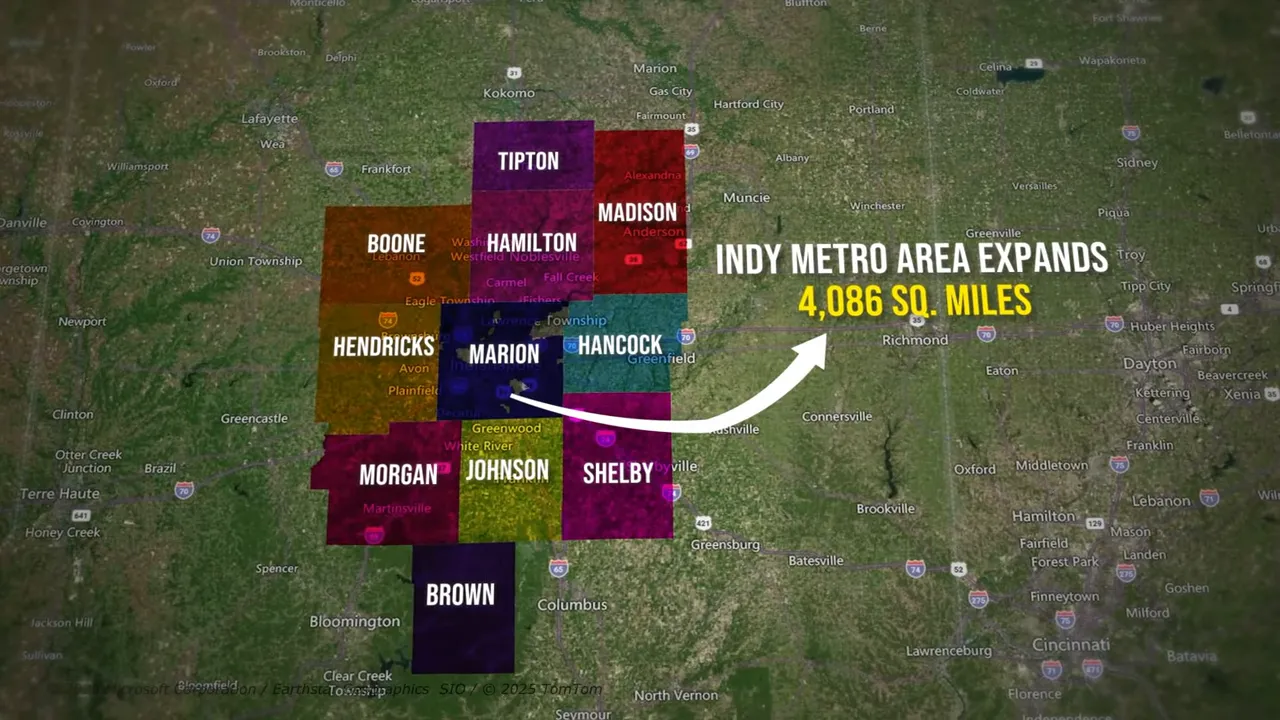
That is what catches people off guard in the Indianapolis area. This is not a tiny metro where every suburb feels five minutes from the next. Indianapolis is huge by land area, and the metro stretches across multiple counties. Two places can both sound like they are basically Indianapolis and still live very differently.
So if we are moving to Indianapolis, we need to think beyond square footage, finishes, and price. We need to ask a better question: what will life feel like in this spot on a Tuesday at 5:30 p.m.?
The suburbs below are not bad choices. Not even close. In fact, many of them are some of the most desirable places in the whole metro. The issue is simply that each one has tradeoffs that relocating buyers often miss until after closing.
Table of Contents
- Why Moving to Indianapolis Requires More Research
- Plainfield, IN: Value vs. Location
- Westfield, IN: Growth and Construction
- Noblesville, IN: Living Around the White River
- Carmel, IN: What Buyers Don't Expect
- Fishers, IN: Understanding Traffic Hotspots
- Zionsville, IN: Is the Premium Worth It?
- McCordsville & Whitestown, IN: Growth Challenges
- Moving to Indianapolis: Search by School District
- How to Avoid Regret When Moving to Indianapolis
- FAQs About Moving to Indianapolis
Why Moving to Indianapolis Requires More Research
One of the easiest mistakes people make when moving to Indianapolis is assuming the metro works like a smaller, tighter area. It does not.
Indianapolis itself covers an enormous footprint, and the broader metro stretches across 11 counties. That matters because a suburb can sound close to everything on paper while still feeling pretty disconnected in real life.
If we are comparing suburbs, we cannot stop at home prices or school ratings. We need to understand:
- How often we will cross town
- Whether we will rely on one major corridor
- How much construction is nearby
- Whether retail and groceries are already in place
- How the city feels once we leave the neighborhood
That is the thread running through all of these areas. None are bad. Some are excellent. But if we are moving to Indianapolis, the details of location matter more than many people expect.
Plainfield, IN: Value vs. Location
Plainfield often jumps out as a smart buy. The pricing can look very attractive compared with higher priced northern suburbs, and the town has a lot going for it. The schools are strong, the community is solid, and the parks and trail system are genuinely impressive.
So what is the catch?
Plainfield lives a little more on its own island than many people realize.
If we choose Carmel, Fishers, Westfield, or Noblesville, there is a kind of connected feel among those northern suburbs. It is easy to bounce around between them for dinner, events, errands, or visiting friends. Plainfield does not offer that same kind of casual access.
From Plainfield, heading to places like Carmel, Fishers, or Noblesville can easily become a 30 to 50 minute commitment depending on destination and traffic. That may not sound dramatic if we are coming from a major coastal city. But in practice, it changes behavior. A place that seems close enough on a map can become a place we just do not go very often.
That creates a specific kind of regret for people moving to Indianapolis. They buy in Plainfield for value, then later realize most of the metro amenities they wanted feel farther away than expected.
If Plainfield is on the short list, the best test is simple. Spend time there like normal life is already happening. Drive common routes. Go from the neighborhood to dinner somewhere else in the metro. See whether the distance bothers us or not.
Westfield, IN: Growth and Construction
Westfield is one of the most exciting suburbs in the state. It is growing fast, the schools are strong, Grand Park is a major draw, and the downtown area around Grand Junction Plaza has a lot of momentum.
There is a real energy to Westfield. For a lot of people moving to Indianapolis, that energy is exactly the appeal.
But fast growth has consequences, and right now the most obvious one is infrastructure work. Westfield has multiple road projects happening at once. That means closures, detours, congestion, lane shifts, and some extra noise near certain neighborhoods.
The problem is not that Westfield is headed in the wrong direction. Quite the opposite. The city is investing to catch up with its growth. Long term, that is a positive.
The issue is timing.
If we buy in a spot that is close to a major project, the next 12 to 18 months may feel very different from what we pictured. Commutes can stretch out. Familiar routes can disappear for a while. Daily routines can become more annoying than expected.
So if we are moving to Indianapolis and Westfield is in the mix, we should check current and upcoming city construction plans for the exact roads near any home we like. This is one of the most avoidable surprises in the metro because the information is public.
Noblesville, IN: Living Around the White River
Noblesville has a lot of variety and a lot of charm. It is one of the more balanced suburbs in the area because it offers an established downtown, newer construction, parks, and neighborhoods with different personalities.
But there is one geographic feature that matters more than many buyers realize: the White River.
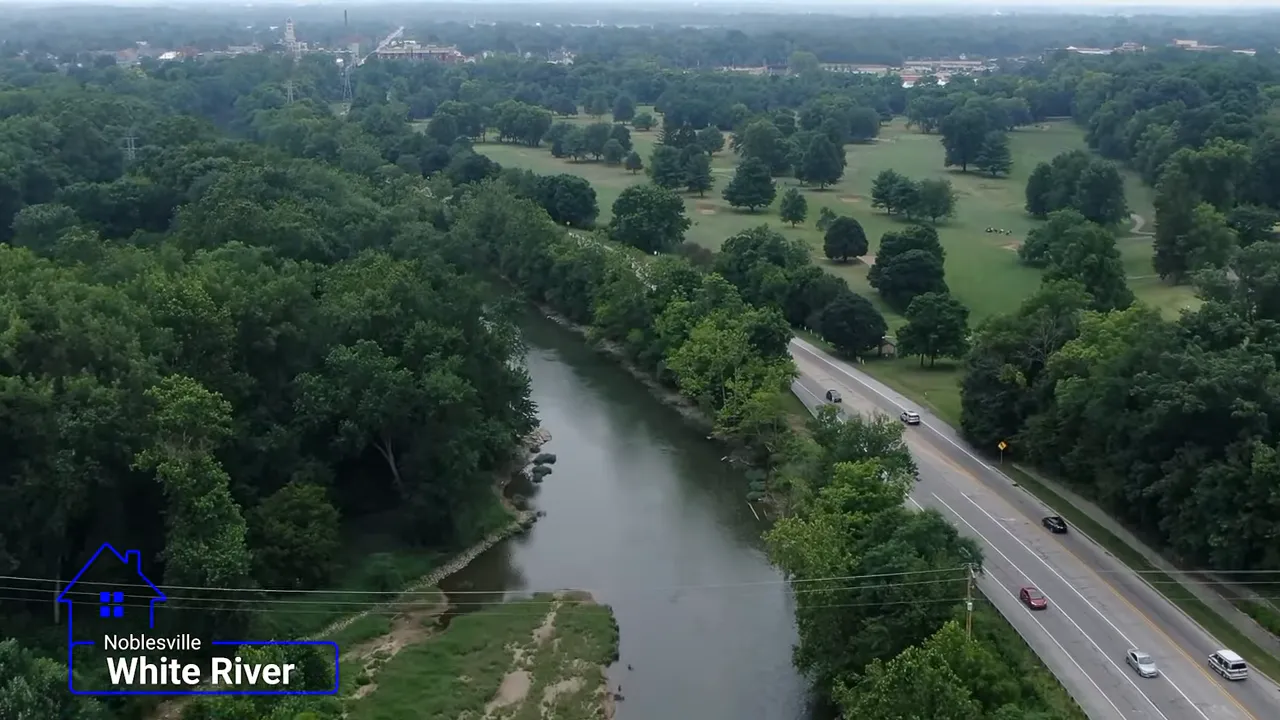
The river runs right through the city and creates a practical east side and west side divide. There are ways across it, so this is not a disaster by any means. But it does shape movement. If our routine regularly requires crossing the river, we are going to feel it.
That can mean:
- A few extra minutes added to normal drives
- More dependence on certain bridge crossings
- Different traffic experience depending on the time of day
- A mismatch between where we live and where most of our destinations are
It also matters because the east and west sides do not feel exactly the same. If we want a heavier concentration of newer development, that tends to tilt more east in many cases. If our work, schools, shopping, or favorite routes are concentrated on one side, buying on the other can become a low grade frustration that keeps repeating.
This is a classic moving to Indianapolis lesson. A home can be in the right city and still be on the wrong side of the city for the way we actually live.
Carmel, IN: What Buyers Don't Expect
Carmel gets searched constantly by people moving to Indianapolis, and for good reason. The infrastructure is outstanding. The trail system is excellent. The downtown districts are polished. The shopping and dining are strong. The city has invested heavily in making everyday life easy and attractive.
Here is where some buyers get surprised.
They expect Carmel to feel like a quiet little town. It is not that. Parts of it are peaceful, yes, especially once we are inside certain neighborhoods. But Carmel overall is active. It has real population, real movement, and real commercial energy.
That does not mean terrible traffic. It usually means something more subtle. There are people around. Retail hubs are active. Roads are in use. The city feels alive.
For some people, that is a major positive. For others, especially those who buy before spending time there in person, it can feel busier than imagined. The regret is not buying in Carmel. The regret is expecting one atmosphere and getting another.
If Carmel is on our list, we should spend time not just in a pretty neighborhood but also in the core areas where people actually shop, eat, and move around. That gives us a much more accurate read.
Fishers, IN: Understanding Traffic Hotspots
Fishers is a strong suburb with a lot going for it, and many people love it once they get settled. But Fishers has one location issue that causes more frustration than almost anything else for relocating buyers.
The west side traffic corridors, especially around 116th Street, I-69, and State Road 37, can be very congested.
This matters because that part of Fishers includes major shopping, restaurants, entertainment, and access routes. On a map, some neighborhoods can look close enough to walk or bike to those destinations. In real life, the road design and traffic volume can make that far less pleasant or practical than it appears.
Also, Fishers can give two very different first impressions depending on where we spend time. The east side often feels newer and less busy. The west side can feel more crowded and high traffic.
That is where the regret comes in for people moving to Indianapolis. They like Fishers as a whole, but later realize they bought in a part of Fishers that forces them into a traffic corridor more often than they wanted.
If we are considering Fishers, we should look closely at how often we would need to interact with the west side commercial and highway area. Visiting once in the middle of a quiet day is not enough. The route needs a test during busier hours too.
Zionsville, IN: Is the Premium Worth It?
Zionsville is one of the most aspirational suburban choices in the metro. The brick streets, independent shops, local restaurants, and postcard worthy downtown all give it a special character that is hard to replicate.
People are drawn to it for good reason.
But Zionsville is also a place where price and expectations need to line up very clearly.
Homes there tend to be expensive relative to much of the metro, and once we work below the average price point, inventory can get tighter and compromises increase. Some homes may need updating. Some may come with tradeoffs that would feel less acceptable at the same price in another suburb.
In other words, our money simply does not stretch as far in Zionsville.
For some buyers, that is perfectly fine because the town itself is the priority. They are choosing Zionsville intentionally, and they would not really want to be anywhere else.
For others, especially those moving to Indianapolis from out of state, the long term comparison game can creep in. After a few years, they start noticing how much more house they could have bought in Carmel, Westfield, Fishers, or elsewhere.
That does not make Zionsville a mistake. It just means it works best when we are crystal clear that we are paying for place, charm, and identity as much as square footage.
McCordsville & Whitestown, IN: Growth Challenges
McCordsville and Whitestown are fast growing communities with real upside. New homes, expanding neighborhoods, and long term potential make them appealing for many buyers moving to Indianapolis.
But buying early in a growth cycle comes with a very specific challenge: the future can look fantastic before the present is fully functional.
This shows up in several ways:
- Roads that are not fully widened yet
- Intersections that were not built for current traffic volume
- Construction that continues for years
- Retail and restaurant options that lag behind rooftops
- Essential conveniences, like grocery access, that are still catching up
That difference between a community that is 40 percent built out and one that is 90 percent built out is enormous. Listing photos and development renderings tend to sell the future version. But what we actually live in at first is the current version.
In McCordsville specifically, one practical example is how key roads can back up because they were not originally designed for the traffic they are now carrying. Another example is the slower arrival of shopping infrastructure. At one point, even a major grocery option was still something people had to drive elsewhere to get.
That can be frustrating if we thought brand new home also meant fully built lifestyle.
So if we are looking at these growth suburbs while moving to Indianapolis, we should evaluate them in real conditions. Visit on weekdays and weekends. Drive the main corridors. Talk to people who already live there. Do not rely only on sales office optimism.
Moving to Indianapolis: Search by School District
This one surprises almost everybody.
If schools are a major priority, searching by city name can cause us to miss exactly the homes we should be seeing.
In the Indianapolis metro, addresses and school districts do not always line up the way people expect. A Whitestown address can land in Zionsville schools. An Indianapolis address can be in Carmel schools. A Noblesville address can be in Hamilton Southeastern schools. On the south side, a Greenwood address can connect to multiple different districts.
That means a buyer moving to Indianapolis can search the right city and still miss the right school district.
If schools are driving the decision, the search should start with district boundaries first and city labels second. Otherwise, we may never even see homes that fit our priorities.
How to Avoid Regret When Moving to Indianapolis
The good news is that almost all of these regrets are preventable.
Here is the basic approach we should take when moving to Indianapolis:
- Test the routine, not just the house. Drive work routes, grocery routes, school routes, and entertainment routes.
- Visit at different times. Midday calm can hide rush hour reality.
- Study the exact pocket, not just the suburb name. East side versus west side can matter a lot.
- Check construction plans. A strong suburb can still be a headache for the next year if the nearby roads are torn up.
- Distinguish current reality from future promise. Especially in newer communities.
- Search by school district when schools matter most. City name alone can be misleading.
The central lesson is simple. The right place in the Indy metro absolutely exists for us. We just need to understand what we are buying before we buy it.
When we are moving to Indianapolis, that kind of clarity is what turns a good house into a good life.
FAQs About Moving to Indianapolis
What is the most common regret when moving to Indianapolis?
The most common regret is choosing the wrong location rather than the wrong house. Many buyers like the property itself but later realize the suburb, traffic pattern, distance, or day to day feel does not match their lifestyle.
Is Plainfield a bad choice for relocating buyers?
No. Plainfield is a solid community with strong schools, parks, and value. The key issue is that it can feel more isolated from the rest of the metro than some buyers expect.
Why does Westfield create buyer frustration?
Westfield is growing rapidly, and that growth has brought significant road and infrastructure work. Depending on the location, buyers may deal with closures, detours, and congestion during major improvement projects.
Does the White River really matter in Noblesville?
Yes. It affects how people move through the city and can add friction if daily routines require frequent crossings. It also contributes to east and west sides having slightly different feels.
Is Carmel quieter than Fishers or Westfield?
Not necessarily. Carmel has quiet neighborhoods, but the city overall is active and busy in a polished, well developed way. Some buyers expect a smaller town atmosphere and are surprised by how much energy the city has.
What should we focus on if schools are the top priority?
We should search by school district rather than only by city name. In the Indianapolis metro, addresses and district lines often overlap in ways that can hide good opportunities if we search too narrowly.
If you’re moving to Indianapolis and want to avoid location regret, contact me and let’s narrow down the right neighborhoods based on your real routine. Not just suburb names. Call or text 317-932-8620, or schedule a meeting here and I’ll walk you through the best-fit options for your budget and commute.