If you are moving to Indianapolis, one of the biggest mistakes you can make is assuming it works like every other major metro in America. On the surface, it can look familiar. There is a downtown, there are suburbs, there are interstates, and there is the usual Midwestern sprawl that makes a lot of places blend together if you only look quickly.
But Indianapolis is not a copy of somewhere else. It was planned differently, expanded differently, and forced to build its identity differently. That matters a lot when you are moving to Indianapolis because the city’s layout, economy, neighborhoods, and day to day lifestyle all come from those differences.
Two facts explain almost everything. First, Indianapolis was created from scratch in 1821 as a state capital rather than growing up around a port or trading post. Second, the city changed its boundaries in a dramatic way in 1970 through Unigov, which reshaped what the city physically is. Put those together, and you get a place that breaks a lot of the normal American city rules.
If you are seriously thinking about moving to Indianapolis, these ten characteristics will help you understand what makes it so unusual and why those differences actually matter in real life.
Table of Contents
- Why Moving to Indianapolis Is Different
- Unique Feature #10: Indianapolis Motor Speedway & the Indy 500
- Unique Feature #9: Understanding I-465 in Indianapolis
- Unique Feature #8: Farmland Inside Indianapolis City Limits
- Unique Feature #7: Downtown Indianapolis Street Layout
- Unique Feature #6: Indianapolis War Memorials & Monuments
- Unique Feature #5: Why Indianapolis Is the Crossroads of America
- Unique Feature #4: Indianapolis' Sports Culture
- Unique Feature #3: The Children's Museum of Indianapolis
- Unique Feature #2: Indianapolis Weather & Climate
- Unique Feature #1: Why Indianapolis Was Built Without Navigable Water
- FAQs About Moving to Indianapolis
Why Moving to Indianapolis Is Different
Most major American cities became important because of water. They formed around harbors, great rivers, lakes, or coastlines that made trade and transportation possible long before highways and airports ever existed.
Indianapolis did not.
Instead, it had to rely on planning, location, roads, rail, and eventually interstates. That changed everything. It influenced downtown design. It shaped the suburbs. It created a logistics economy. It even pushed the city toward motorsports and amateur athletics as major parts of its identity.
That is why moving to Indianapolis can feel different from moving to comparable places like Columbus, Charlotte, Nashville, or Kansas City. The city did not evolve the same way they did, and it does not function the same way now.
THINKING OF BUILDING YOUR NEXT HOME? HERE'S A LOCAL GUIDE TO BUILDERS AND PITFALLS
Unique Feature #10: Indianapolis Motor Speedway & the Indy 500
The Indianapolis Motor Speedway is not just a famous racetrack. It is the highest capacity sports venue on earth.
Permanent seating sits in the range of roughly 257,000 people, and when you include the infield, attendance for the Indianapolis 500 can reach around 350,000. That is not a normal event size. That is a city changing shape for a month.
To put that in perspective, the Indy 500 dwarfs attendance figures that already sound huge elsewhere. It massively outscales events like the Kentucky Derby or a packed major college football stadium. In practical terms, this means May in Indianapolis is not just busy. It is transformed.
Hotels fill up. Restaurants stay packed. International media rolls in. Race activity stretches well beyond a single Sunday. If you are moving to Indianapolis, you need to know that the Month of May is part celebration, part tradition, and part controlled chaos.

And here is the funny part. During the race itself, much of the rest of the city can feel oddly quiet because so many people are focused on one place. That contrast is very Indianapolis. It is loud, huge, and globally known, yet also so local that everyone instinctively understands the rhythm of the event.
Unique Feature #9: Understanding I-465 in Indianapolis
I-465 is one of the simplest but most useful things about Indianapolis, and simplicity is exactly why it matters.
It forms a complete loop around the city for all 52.79 miles without changing route numbers. That sounds small until you compare it with other major metro beltways that shift designations or become confusing depending on where you are.
In Indianapolis, people organize location around 465 constantly:
- Inside 465
- Outside 465
- North of 465
- South of 465
It becomes a common language almost immediately. For someone moving to Indianapolis, that matters because understanding your relationship to the loop is one of the fastest ways to understand commute patterns, neighborhood feel, and regional orientation.
Suburbs like Carmel, Fishers, Greenwood, Brownsburg, Plainfield, and others all make more sense once you understand how they sit relative to 465. It is not just infrastructure. It is the geographic backbone of the metro.
Unique Feature #8: Farmland Inside Indianapolis City Limits
You can drive from downtown Indianapolis to active corn and soybean fields without ever leaving the city limits.
That is not a metaphor. It is a direct result of Unigov, the 1970 consolidation that merged Indianapolis with Marion County into a single government structure. The city’s area jumped from 82 square miles to 402 square miles almost overnight.
That expansion brought rural land into the official city boundary. So while many people imagine a city line as the place where urban development stops and agriculture begins, Indianapolis does not always follow that script.
Between 2012 and 2017, farmland in Marion County totaled more than 17,000 acres, much of it dedicated to corn and soybeans. That means Indianapolis contains a development range that is unusually wide. Dense downtown blocks and semi-rural edges are part of the same city.
For anyone moving to Indianapolis, this creates options. You can live in a part of Indianapolis that feels urban, suburban, or surprisingly open depending on what you want. Few big cities offer that inside the same city boundary.
Unique Feature #7: Downtown Indianapolis Street Layout
Downtown Indianapolis has a street pattern that feels different because it is different.
At the center is Monument Circle, and from there four diagonal avenues radiate outward like spokes through a larger street grid:
- Massachusetts Avenue
- Virginia Avenue
- Kentucky Avenue
- Indiana Avenue
This layout comes from Alexander Ralston, the surveyor who helped with the original plan for Washington, D.C. He later designed Indianapolis in 1821. So if parts of downtown feel a little more ceremonial, more intentional, or more visually anchored than a typical Midwestern grid, there is a reason.
Monument Circle is the anchor, and those diagonal corridors help shape some of the city’s most connected and walkable areas. Mass Ave, for example, has become a major cultural district. Virginia Avenue links into Fletcher Place and Fountain Square, two of the city’s best-known urban neighborhoods.
If you are moving to Indianapolis and want a neighborhood with a stronger urban feel, this historic street pattern is part of why certain areas feel so connected and memorable.
Unique Feature #6: Indianapolis War Memorials & Monuments
Indianapolis has devoted an extraordinary amount of downtown land to war memorials, monuments, parks, and remembrance.
The Indiana War Memorial Plaza Historic District spans six city blocks and about 25 acres right in the heart of downtown. That is an enormous civic commitment for a city of this size.
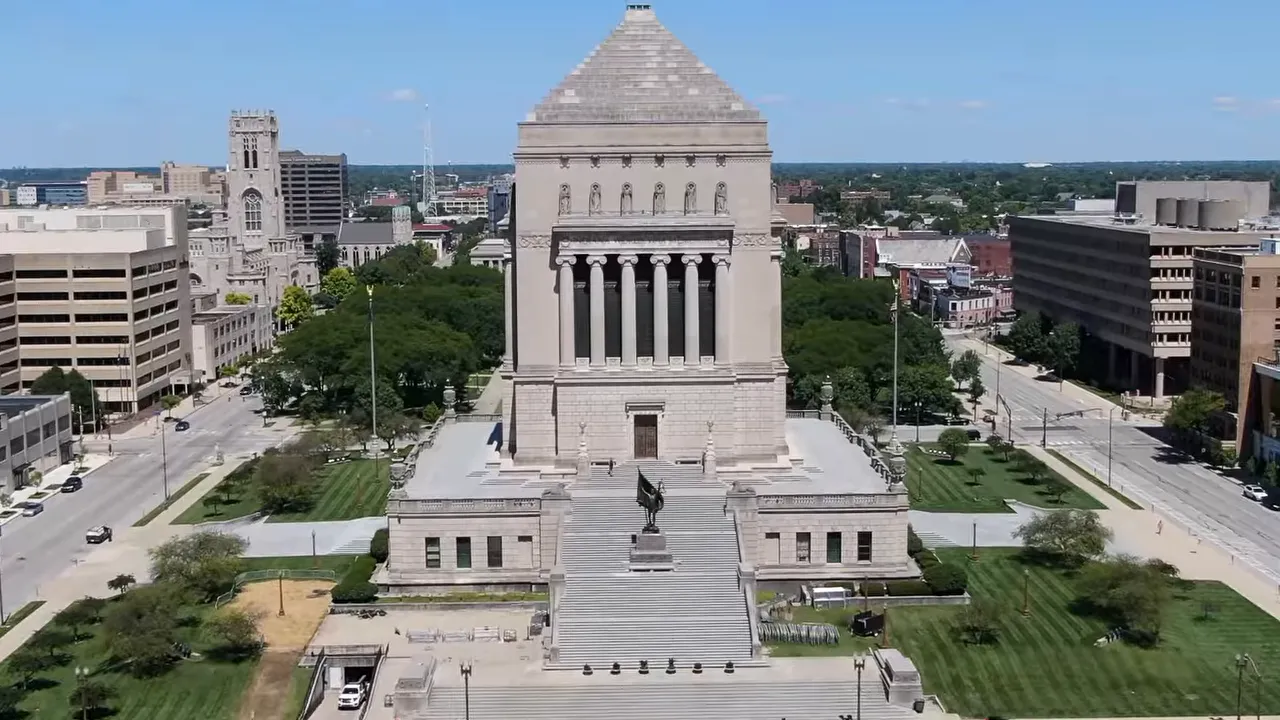
The district includes one museum, multiple parks, and memorials recognizing veterans and conflicts reaching back to the Revolutionary War. The Indiana War Memorial building rises about 210 feet, while the Soldiers and Sailors Monument at Monument Circle reaches roughly 284 feet and stands at the center of the city.
That much symbolic space in a downtown core is rare. It shapes the whole atmosphere. Indianapolis can feel more formal, more commemorative, and more civically planned than many peer cities.
For someone moving to Indianapolis, it means downtown is not just a business district. It has visual breathing room, historical weight, and a kind of monumental identity that surprises a lot of people.
Unique Feature #5: Why Indianapolis Is the Crossroads of America
The slogan "Crossroads of America" is not just branding. It is geography telling the truth.
Indianapolis sits at the intersection of four major interstates:
- I-65
- I-69
- I-70
- I-74
Because of where the city sits, more than 75 percent of the U.S. population lives within a one day drive. Chicago, Cincinnati, Louisville, Columbus, St. Louis, and Nashville are all within practical reach.
This is one reason Indianapolis became such a major logistics hub. Companies like FedEx, Amazon, and other big distribution players are here because the city can reach so much of the country efficiently.
The airport helps too. Indianapolis International is only about 15 minutes from downtown and offers more than 50 nonstop destinations across the country. That combination of highway access and airport convenience is tough to beat.
If you are moving to Indianapolis for work, family access, or travel convenience, this central location is one of the city’s biggest everyday advantages.
Unique Feature #4: Indianapolis' Sports Culture
In the late 1970s, Indianapolis made a very deliberate choice. Instead of building its identity only around heavy industry or one or two pro teams, it went hard into amateur and collegiate sports.
That decision ended up being one of the most important long term moves the city ever made.
Today, Indianapolis is home to the NCAA headquarters and the National Federation of State High School Associations. The NCAA moved downtown in 1999, and the city has hosted major collegiate events over and over, including many men’s Final Fours.
Even more important, Indianapolis has an agreement to host a major NCAA event at least once every year through 2039. That means the sports calendar is not occasional. It is built into the city’s identity.
So when people think of Indianapolis as a sports city, it is not only about the Colts, Pacers, Fever, or racing. It is also about championship culture at the amateur, collegiate, and Olympic trial level.
For anyone moving to Indianapolis, that creates a nice quality of life bonus. There is almost always something meaningful happening at a high level.
Unique Feature #3: The Children's Museum of Indianapolis
The Children’s Museum of Indianapolis is not just big. It is the largest children’s museum in the world.
It sits on North Meridian Street just north of downtown and is absolutely enormous at 472,900 square feet across five floors. The collection includes more than 130,000 artifacts, and annual attendance tops 1.2 million.
This is not a small local amenity. It is a world class institution. The Dinosphere is one of the headline attractions, recreating prehistoric habitats on a huge scale. The museum also includes a towering glass sculpture running through multiple floors, a 7.5 acre outdoor sports experience, and even a working carousel.
Families return again and again because there is too much to do in one trip. If you are moving to Indianapolis with kids, this is one of those amenities that genuinely changes the rhythm of family life.
Unique Feature #2: Indianapolis Weather & Climate
Indianapolis sits right on the boundary between two major climate zones.
That makes the weather more variable than people often expect. The city is not firmly in the same category as Columbus to the north or Louisville to the south. It lives in between, and that in-between quality shows up all year.
Spring and fall can be fantastic, especially fall, but they can also be wildly inconsistent. Temperatures can swing sharply. Warm spells can disappear fast. A spring day in the 80s can be followed by a cold snap and even flurries not long after.
That does not mean the climate is harsh. It just means all four seasons are real here. Sometimes two of them show up in the same week.
If you are moving to Indianapolis from somewhere like California or Florida, this is worth understanding ahead of time. You will want a wardrobe and mindset that can handle change. The payoff is that summer is usually quite enjoyable, fall is beautiful, and seasonal variety is very much part of life.
Unique Feature #1: Why Indianapolis Was Built Without Navigable Water
Here is the most remarkable thing of all: Indianapolis is one of the largest cities in the world that is not located on navigable water.
That may sound like trivia until you realize how unusual it is. Almost every major American city was built on a meaningful water advantage. New York has its harbor and rivers. Chicago has Lake Michigan. New Orleans has the Mississippi. San Francisco has the bay. Boston has the harbor. Pittsburgh, Cincinnati, Louisville, Cleveland, all of them have navigable water tied directly to their growth.
Indianapolis does not. The White River is here, and at a glance it can look promising. In fact, early leaders partly chose the site in 1821 because they believed the river could become a transportation artery.
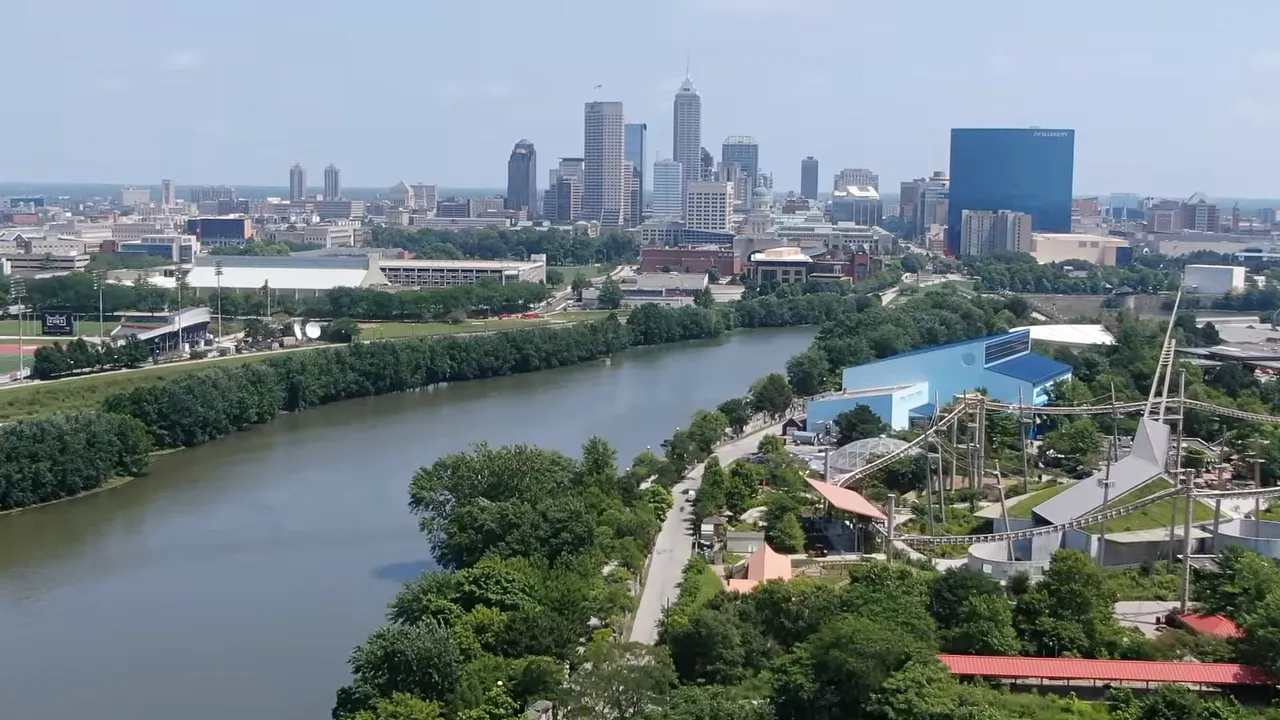
It never became that. The river was too shallow, too unreliable, and too obstructed by sandbars and log jams for the kind of heavy navigation that built other cities.
So Indianapolis had to invent another path. Railroads came first. Then highways. Then the interstate system. In a strange way, the lack of navigable water is exactly what pushed Indianapolis into becoming the Crossroads of America.
This is the key to understanding why moving to Indianapolis can be such a smart fit for the right person. The city’s biggest strengths were not handed to it by geography in the usual way. They were built through planning, centrality, adaptation, and necessity.
And that is why Indianapolis is not just another American city. It was built differently, and it still feels different because of it.
THINKING OF BUILDING YOUR NEXT HOME? HERE'S A LOCAL GUIDE TO BUILDERS AND PITFALLS
FAQs About Moving to Indianapolis
Is moving to Indianapolis a good idea for someone who wants city amenities without giving up space?
Yes. One of the most unusual things about Indianapolis is its range. You can find dense downtown neighborhoods, suburban areas, and even parts of the city with rural character because of how large the city boundaries are.
Why is Indianapolis called the Crossroads of America?
Because the city sits at the intersection of I-65, I-69, I-70, and I-74, and more than 75 percent of the U.S. population lives within a one day drive. It is one of the most central and connected major metros in the country.
What should I know about Indianapolis weather before moving?
Expect all four seasons and expect some unpredictability. Indianapolis sits between major climate zones, so spring and fall can shift quickly. The weather is not usually extreme, but it does keep you on your toes.
Is the Indianapolis 500 a big deal if you live in the city?
Absolutely. The Month of May has a real effect on the city. Hotels book up, restaurants get busy, and the event becomes part of daily life. It is one of the biggest recurring identity markers Indianapolis has.
What makes Indianapolis different from other Midwestern cities?
It was planned as a capital city from scratch, it expanded dramatically through Unigov, it has a uniquely simple beltway system, it contains farmland inside city limits, and it became a major city without navigable water. That combination is very rare.
If you’re ready to start your home search in Indianapolis (or you want help picking the right neighborhoods first), contact me and I’ll walk you through what fits your budget and goals. Call/text me anytime at 317-932-8620 or book a FREE consultation here.
READ MORE: Moving to Indianapolis: Which Suburbs Are Hot and Which Are Cooling?