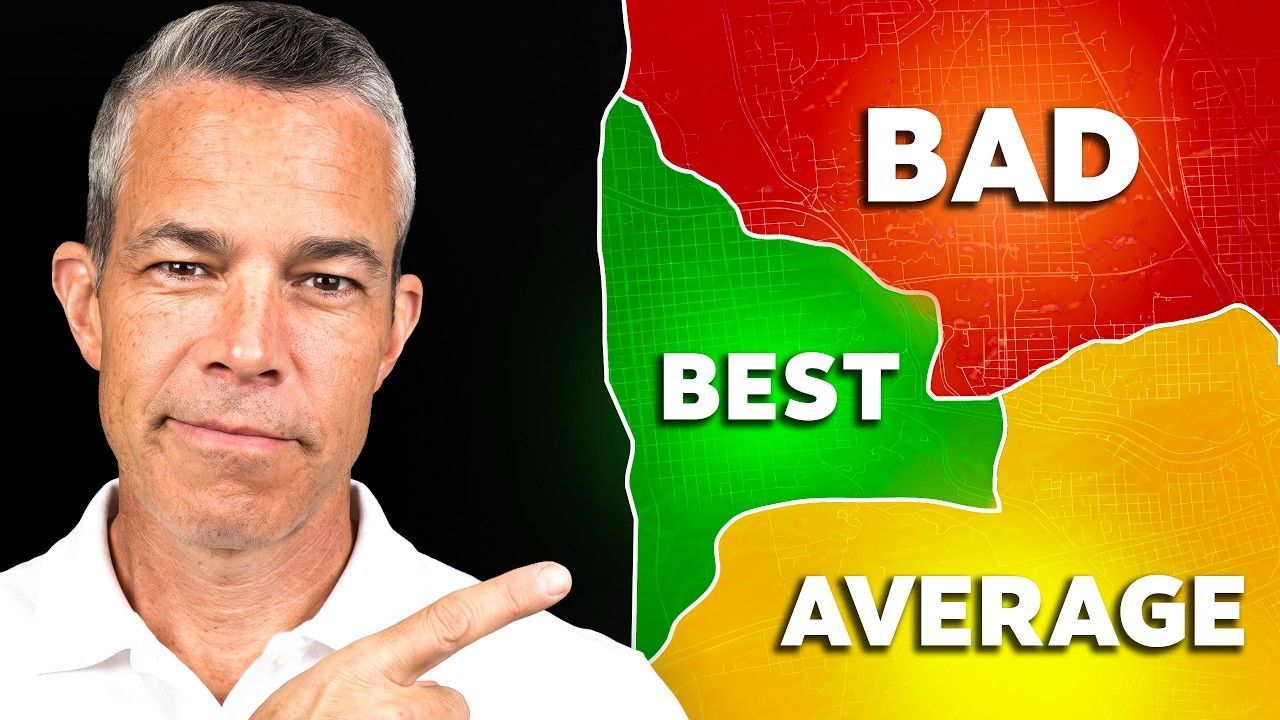
If you are moving to Indianapolis, one of the most important things to understand is that this is not one single market. It is a split market.
Right now, some homes around the Indianapolis metro are lingering with price cuts, long days on market, and frustrated sellers. At the exact same time, other homes are still getting snapped up quickly, sometimes with multiple offers.
That matters a lot if you are moving to Indianapolis as a buyer, and it matters just as much if you are trying to sell before or after a move. The trick is knowing which categories are soft, which ones are still hot, and why.
The easiest way to make sense of this is with one number: months of inventory.
Table of Contents
- Why the Indianapolis Market Is Split
- Struggling Type #6: High-End Condos in Indianapolis
- Struggling Type #5: Downtown Indianapolis Condos Under $300K
- Struggling Type #4: Luxury Homes in Indianapolis
- Struggling Type #3: Move-Up Homes in Indianapolis ($350K–$500K)
- Struggling Type #2: New Construction vs Resale in Indianapolis
- Struggling Type #1: Overpriced Homes in Indianapolis
- Hot Type #5: Homes Under $300K
- Hot Type #4: Turnkey Homes in Carmel & Fishers
- Hot Type #3: Starter Homes Under $200K
- Hot Type #2: Updated Homes in $400K–$600K Range
- Hot Type #1: Accurately Priced Homes in Indianapolis
- What This Means When Moving to Indianapolis
- FAQs About Moving to Indianapolis Housing Market
Why the Indianapolis Market Is Split
Months of inventory tells you how long it would take to sell all the homes currently on the market in a given category if no new listings showed up. Lower numbers favor sellers. Higher numbers favor buyers.
- 3 months or less usually means sellers have the advantage
- 6 months is closer to balanced
- Above 6 months usually gives buyers more leverage
Metro wide, Indianapolis is still sitting around 2.6 months of supply. On paper, that looks like a seller's market. But that broad number hides some major differences.
Under $300,000 is around 0.9 months of supply, which is extremely competitive. The $300,000 to $500,000 range sits around 1.6 months. The $500,000 to $750,000 range is around 2.8 months. Once you move above $750,000, inventory climbs to about 4.2 months.
So if you are moving to Indianapolis, the price point, home type, location, and condition all matter. A lot.

THINKING OF BUILDING YOUR NEXT HOME? HERE'S A LOCAL GUIDE TO BUILDERS AND PITFALLS
Struggling Type #6: High-End Condos in Indianapolis
Attached homes in higher price ranges
This category includes condos, townhomes, and anything sharing a wall with another unit. Across the metro, condos as a whole average much lower than the upper price tiers, but once attached housing gets into the $400,000 to $600,000 range, things get tougher.
The reason is pretty simple. At that price point, the monthly mortgage is already meaningful. Then you layer on an HOA fee. Around Indianapolis, condo HOA fees can average a few hundred dollars a month, and in some amenity heavy communities they can run dramatically higher.
That changes the affordability equation quickly.
Buyers in this range also have enough inventory to be choosy. They do not have to settle the way they did a few years ago. If they are going to spend that much per month, many start comparing attached homes against single-family homes at similar total monthly cost.
For sellers, this is where presentation and clarity really matter. Buyers need to understand what they are getting for the HOA cost. If that story is not obvious, the listing can sit.
Struggling Type #5: Downtown Indianapolis Condos Under $300K
Downtown condos under $300,000 with high HOA fees
This one sounds counterintuitive at first. A downtown condo under $300,000 looks affordable. But when the HOA gets high enough, the monthly cost can start feeling closer to a more expensive single-family home.
That is the issue. Buyers are not just looking at the purchase price. They are adding up:
- Mortgage payment
- HOA dues
- Property taxes
- Insurance
Once they do that math, some units stop looking like a bargain.
There is also another psychological hurdle. HOA fees can increase over time, and there is no hard cap protecting owners from future jumps. That uncertainty makes some buyers back away.
For anyone moving to Indianapolis and considering downtown condo living, this is not automatically a bad category. It can actually create opportunity. If the numbers work for your lifestyle and the monthly total compares well with alternatives, there can be real value here.
But you have to run the full affordability analysis before getting emotionally attached to a specific unit.
Struggling Type #4: Luxury Homes in Indianapolis
Luxury homes above $750,000
Luxury is not immune to market pressure. In fact, this is the only broad price segment in the metro that starts to look anything like a balanced market.
At roughly 4.2 months of supply, buyers at this level have more room to negotiate. The buyer pool is smaller because the payment jump is much larger, and current rates make that even more noticeable.
That means sellers in the luxury segment need to be realistic. Condition has to be excellent. Pricing has to reflect today's market, not the highs from a few years ago.
For buyers, this can be one of the better places to find leverage. If you are moving to Indianapolis with a higher budget, this is one of the categories where patience and negotiation can pay off.

Struggling Type #3: Move-Up Homes in Indianapolis ($350K–$500K)
The move-up range between $350,000 and $500,000
This is one of the more surprising soft spots. The inventory number does not look terrible, but homes in this range are taking longer to sell than they were recently, and price reductions are becoming more common.
A big reason is the mortgage rate lock-in effect. A lot of homeowners bought or refinanced when rates were very low. Moving up now often means trading a mortgage in the 2.5 to 3.5 percent range for something much higher.
That hurts both sides of the move-up market.
Potential sellers hesitate because the new payment feels painful. Potential buyers in the same range are wrestling with the exact same issue. So even though the inventory count is not screaming weakness, the segment can feel slower and more negotiable than the numbers alone suggest.
If you have owned for five years or more, though, your existing equity may improve the math more than you expect. That is especially relevant for families moving to Indianapolis or moving around the metro and trying to step into a larger home.
Struggling Type #2: New Construction vs Resale in Indianapolis
Existing homes competing directly with new construction
This has become a real issue in active suburban price bands.
For a long time, new construction usually commanded a premium over resale homes. But builders have been under pressure to move inventory, especially spec homes that were built without a buyer already lined up.
So what are they doing? Offering incentives.
- Mortgage rate buydowns
- Closing cost help
- Design credits or upgrades
- Flexible move-in timing
If you are an existing home seller in the same range, you are not just competing with nearby resales anymore. You are competing with builder concessions that can materially lower a buyer's monthly payment.
That means resale sellers have to lean into the things builders cannot easily replicate:
- Established neighborhoods
- Mature trees and landscaping
- Better lot privacy
- Closer access to key destinations
For buyers moving to Indianapolis, this is one of the strongest negotiation environments in the metro because both builders and resale sellers may be willing to negotiate.
Struggling Type #1: Overpriced Homes in Indianapolis
Overpriced homes
This is the biggest one by far.
Overpriced homes are getting punished in this market. Broadly speaking, homes around Indianapolis are taking much longer to sell than they were a year ago, and price cuts have become far more common.
That does not mean Indianapolis is a weak market overall. It means the market is no longer covering up bad pricing decisions.
When buyers have choices, they compare. They slow down. They skip the home that feels ambitious on price and move toward the one that feels aligned with current reality.
So if a home sits for 60, 70, or 90 days, the issue is often not the market itself. It is usually one of two things:
- The price was based on what the seller wanted or needed
- The presentation did not match the asking price
For anyone moving to Indianapolis, this creates an important opportunity. Some stale listings are stale for good reason. Others are simply mispositioned and may become negotiable.
Hot Type #5: Homes Under $300K
Homes under $300,000
This is still the most extreme seller's market in the entire metro, with about 0.9 months of supply.
If no new listings came on, the current inventory in this price range would be gone in less than a month. That is why buyers here still face multiple offers, quick closings, and in some cases waived contingencies.
If you are moving to Indianapolis and shopping under $300,000, speed matters. You need financing lined up before you start making serious moves. You need to know your comfort zone. And you need to be prepared to act fast on the good ones.
Sellers in this range are in a strong position, but they still cannot get lazy. Condition and presentation still matter.
Hot Type #4: Turnkey Homes in Carmel & Fishers
Turnkey single-family homes in Carmel, Fishers, Westfield, Zionsville, and Noblesville
This is where demand stays very real.
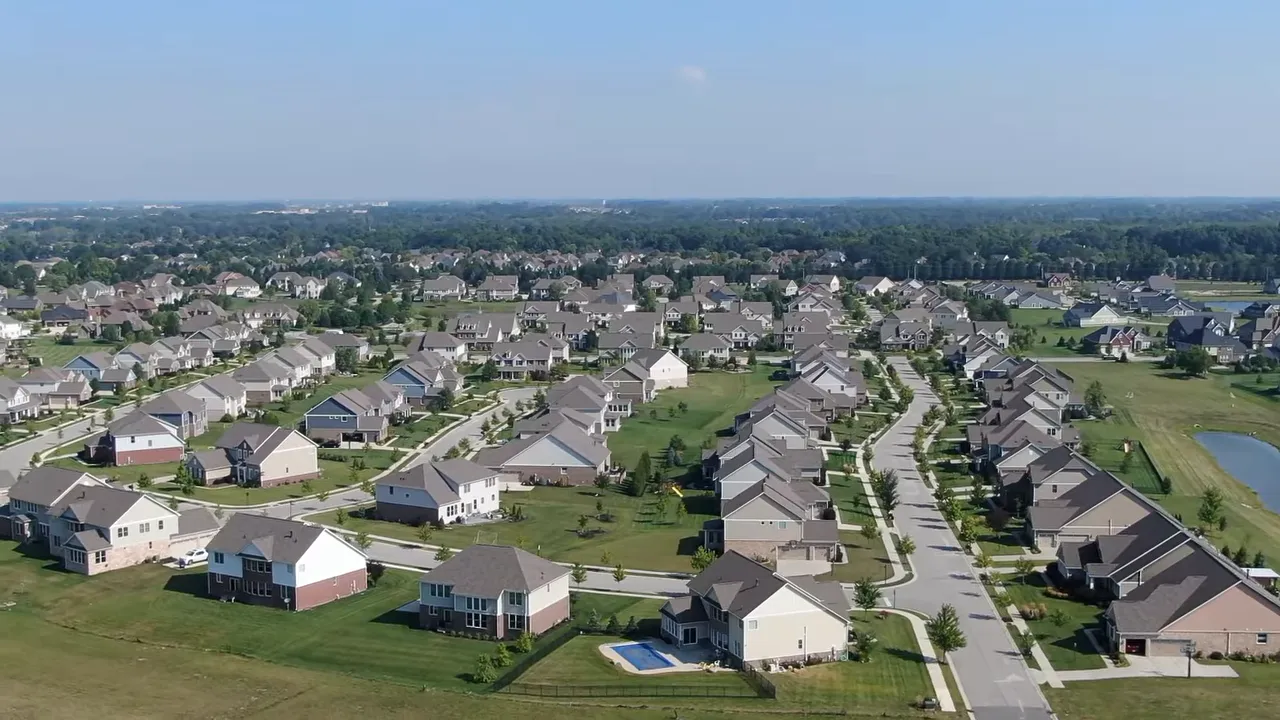
These suburbs consistently come up for people moving to Indianapolis, especially relocation buyers who want strong amenities, highly regarded schools, and a polished suburban feel.
Carmel remains one of the strongest examples because it holds demand even at a higher price point. Fishers and Westfield have built out dramatically over the last decade and have become much more complete as places to live day to day. Noblesville often flies under the radar relative to its size and value, especially for buyers trying to access Hamilton County at a somewhat lower average price point.
The homes that do best here are not just any homes. They are the clean, updated, move-in ready single-family houses that check the boxes for relocation buyers.

Hot Type #3: Starter Homes Under $200K
Well-priced starter homes under $200,000 in excellent condition
There is an important qualifier here: excellent condition.
Not every home under $200,000 is hot. Plenty of cheaper homes still sit because they need too much work or are in lower demand pockets.
But if a starter home is priced correctly and truly in strong shape, it is still some of the fastest moving inventory in the city.
The reason is straightforward. Entry-level inventory is still in short supply. Buyers who can make the payment work at that price point are competing for a limited number of solid options.
If you are moving to Indianapolis and hoping to buy an affordable first home, this is one area where preparation is everything.
Hot Type #2: Updated Homes in $400K–$600K Range
Turnkey, updated single-family homes from $400,000 to $600,000 in strong suburbs
This is where the market gets really specific.
Earlier, the broader move-up range looked softer. But there is a subset within it that still performs very well: updated, beautifully presented single-family homes in desirable suburban locations.
These are the homes with:
- Modern kitchens
- Updated bathrooms
- Clean finishes
- Strong photography
- Pricing based on current comparable sales
Buyers are selective now, but they are still willing to pay up for move-in ready homes that do not feel like a project.
What they are not doing is overlooking deferred maintenance the way they might have in a frenzy market. If a home in this range feels dated or neglected, buyers often just move on.
Hot Type #1: Accurately Priced Homes in Indianapolis
Any home priced accurately for today's market
This is the hottest category of all, and it is not tied to one city, one neighborhood, or one exact price point.
Accurate pricing still wins.
The fundamentals have not changed. Homes sell based on market conditions, location, condition, and price. Of those factors, price is the one that can offset a lot of weaknesses.
If a seller gets the price right and the presentation supports it, the home can still move quickly. Hot homes are still going under contract fast. That is the part of the Indianapolis market many people miss when they assume everything has slowed down.
And that is exactly why broad headlines can mislead people who are moving to Indianapolis. Some categories are soft. Some are very competitive. Some are both, depending on whether the home is positioned correctly.
What This Means When Moving to Indianapolis
If you are moving to Indianapolis, the biggest mistake is treating the whole metro like one market.
Here is the cleaner way to think about it:
- If you are buying in a hot segment, preparation matters more than negotiation
- If you are buying in a softer segment, negotiation matters more than speed
- If you are selling, pricing correctly matters more than ever
- If you are comparing suburbs, the same budget can produce very different outcomes depending on city and home type
The good news is Indianapolis still has a lot going for it. It continues to attract relocation interest, and multiple sources are still projecting price growth rather than decline. That means opportunity exists on both sides of the table, but only if you understand which slice of the market you are actually in.
So whether you are buying a starter home, trying to land a turnkey house in Hamilton County, comparing downtown condos, or weighing resale versus new construction, the real answer is not whether the Indianapolis market is hot or cold.
It is which Indianapolis market you are talking about.
THINKING OF BUILDING YOUR NEXT HOME? HERE'S A LOCAL GUIDE TO BUILDERS AND PITFALLS
FAQs About Moving to Indianapolis Housing Market
Is moving to Indianapolis a good idea in this housing market?
It can be a very good time for moving to Indianapolis, but it depends on your budget and target area. Some segments are still highly competitive, especially under $300,000 and in popular suburbs. Other segments give buyers more room to negotiate.
What price range is most competitive in Indianapolis?
The under $300,000 range is the most competitive overall, with about 0.9 months of supply. Well-priced homes under $200,000 in great condition are especially fast moving.
Are condos a good option for moving to Indianapolis?
They can be, especially if you want lower maintenance or a downtown lifestyle. But you need to evaluate the full monthly cost, not just the purchase price. HOA dues can change the value equation quickly.
Which Indianapolis suburbs stay the hottest?
Turnkey single-family homes in Carmel, Fishers, Westfield, Zionsville, and Noblesville continue to perform well, especially when they are updated and priced to current comparable sales.
What is the biggest reason some homes are not selling?
The biggest reason is overpricing. In this market, buyers have enough options to ignore listings that are not aligned with current value or that do not present well enough for the asking price.
If you’re buying in Indianapolis and want to make sure you’re targeting the right “slice” of the market (or you’re worried you might be looking at the wrong segment), I can help you map out a smart plan. Contact me at 317-932-8620 and let’s talk about your budget, timeline, and best next steps.