When we compare Carmel vs Zionsville Indiana, it is easy to land on the conclusion that both are excellent places to live. They are neighboring communities on the north side of Indianapolis, both are highly desirable, and both offer strong daily conveniences, attractive neighborhoods, and a lot of appeal for people moving into the area.
But the differences become clearer once we look beyond the obvious. The choice between Carmel vs Zionsville Indiana often comes down to the pace of life we want, how we prefer to get around, the type of housing inventory we need, and whether a connected suburban feel or a more tucked-away atmosphere fits us better.
This is not a case of one being better than the other. Carmel and Zionsville have distinct personalities. Here are five practical differences that can help us narrow down which one feels more like home.
Population and Community Size
The most obvious difference in Carmel vs Zionsville Indiana is population. Carmel is much larger, with a population of more than 100,000 people. Zionsville is closer to roughly 30,000 people. That makes Carmel at least three times the size of Zionsville.
Numbers alone do not always tell the whole story, especially because these communities share a border. On the east side of Zionsville and the west side of Carmel, the lines can feel a little less obvious in certain areas. U.S. 421 is generally thought of as the dividing line, though the actual municipal boundary zigzags in places.
Still, population affects daily life. Carmel has more neighborhoods, more schools, more overall housing inventory, and more activity spread across a larger developed area. Zionsville has a smaller-town scale, even though it still has the services and amenities most people need.
School size is one practical way this shows up. Carmel schools are larger because the city itself is larger. For some households, that bigger environment is exactly what they are looking for. Others may prefer the more compact scale that comes with Zionsville.
In the Carmel vs Zionsville Indiana decision, it helps to ask a simple question: do we want the options and reach that come with a larger city, or do we want a community that feels smaller in overall scale?
Lifestyle and Small-Town Feel
The second difference is the general energy level. Zionsville is not empty or inconvenient. Far from it. But it does feel less busy than Carmel, largely because there are fewer people, fewer vehicles, and less traffic moving through town.
Carmel has plenty of traffic because of its location. It sits between Indianapolis, Westfield, Noblesville, Fishers, and Zionsville, so there is a lot of movement through the city. People use Carmel as part of their route to other destinations across the north side.
That said, Carmel traffic is often overstated. There are certainly a few spots where congestion can happen at particular times, but it is generally not dramatic. A normal 10-minute trip might become 11 minutes when traffic is heavier. The roads move well in many areas despite the number of people and vehicles.
Zionsville has less of that transient traffic. People traveling between Indianapolis, Lebanon, or Chicago may use I-65, but interstate travel does not necessarily bring vehicles through the middle of Zionsville. As a result, Zionsville feels calmer on an ordinary weekday.
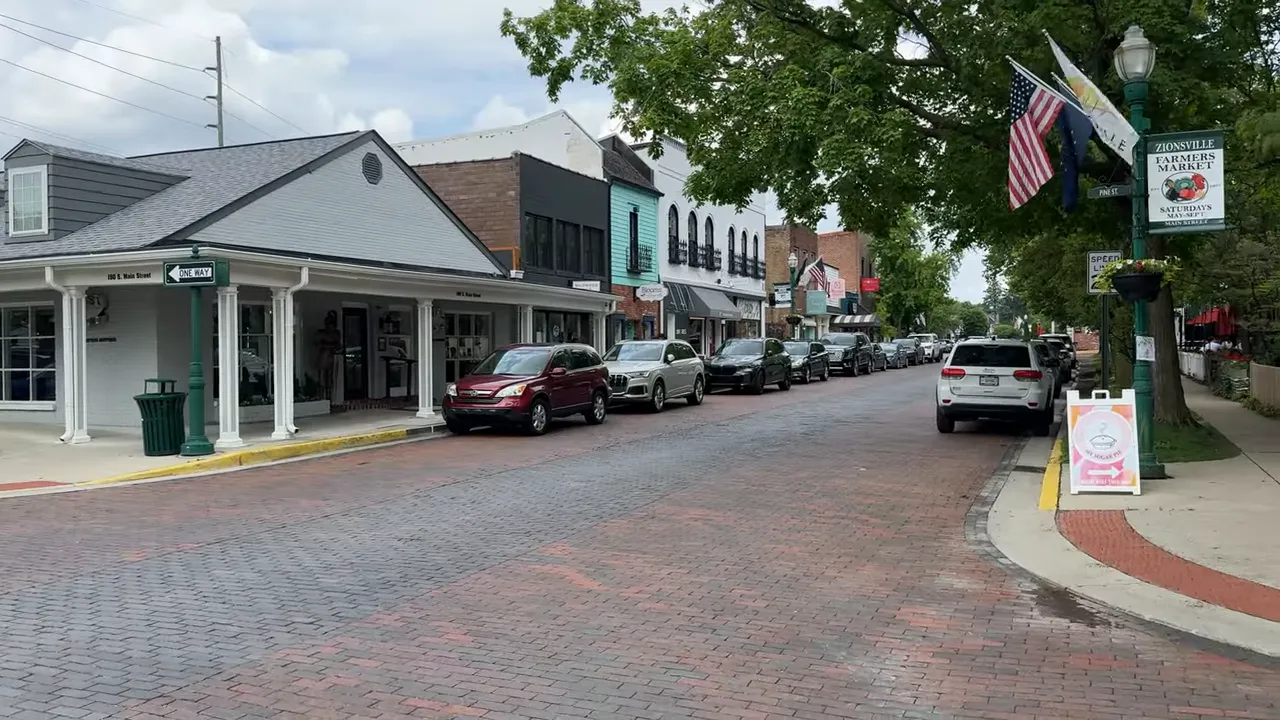
Downtown Zionsville illustrates the point well. Main Street has restaurants, local businesses, useful shops, and a genuinely walkable small-town setting. On a farmers market morning or around nearby Lions Park, there can be plenty of activity. But on a typical late morning during the week, the overall tone is more relaxed.
For Carmel vs Zionsville Indiana, neither pace is wrong. Carmel has more movement and more activity across a larger area. Zionsville offers enough happening to feel alive, while maintaining a quieter day-to-day rhythm.
Daily needs are still close by
A quieter setting does not mean giving up convenience. Zionsville has everyday shopping nearby, including grocery options and larger retailers such as Target, Lowe's, and Home Depot. Many of those practical destinations are located along the edges of town, especially around U.S. 421 and Whitestown Parkway.
In the center of Zionsville, particularly around Main Street, the mix is more unique and local. But residents are not facing a 20- or 30-minute drive simply to pick up groceries for the week. That is an important distinction when comparing Carmel vs Zionsville Indiana.
Road Layout, Traffic, and Getting Around
One of the most visible differences in Carmel vs Zionsville Indiana appears on a map. Carmel is laid out in a more organized grid. There are major east-west roads such as 96th Street, 106th Street, 116th Street, 126th Street, 131st Street, 141st Street, and 146th Street. Major north-south routes include U.S. 31, Keystone Parkway, Gray Road, Hazel Dell Parkway, Ditch Road, Towne Road, and Shelborne Road.
That grid is a big part of how Carmel functions. It provides a lot of route options and makes traveling across the city relatively direct. It also helps the city blend smoothly into adjacent communities. In many areas, we may cross from Indianapolis into Carmel, from Westfield into Carmel, or from Carmel toward Fishers and barely notice the transition beyond a city sign.
Zionsville is laid out differently. Roads wind, change names, dead-end, and require turns that do not exist in Carmel's more predictable grid. For example, 116th Street becomes Sycamore Street and then winds into downtown Zionsville as Oak Street. Main Street in Carmel becomes Willow Road after crossing U.S. 421, eventually connecting toward Elm Street and downtown Zionsville.
There are fewer direct east-west and north-south routes through Zionsville. That is not necessarily a negative. It creates a different physical feel, one that is less uniform and more distinctive. The roads themselves contribute to the town's character.
When thinking through Carmel vs Zionsville Indiana, this matters because street design shapes more than driving. It affects how connected a place feels, how quickly we can move from one side to another, and whether an area feels like part of the larger metro flow or like a destination of its own.
Location and Access to Indianapolis
The road layout leads directly into the fourth difference: accessibility. Carmel is highly connected to the other north side communities. It is easy to move between Carmel, Indianapolis, Westfield, Fishers, and Noblesville, especially because of the grid and the number of major roads.
Even geographic features such as the White River do not create a major sense of separation between Carmel and Fishers, Westfield, or Noblesville. There are bridges, but in many cases the transition can feel seamless.
Zionsville is connected to Carmel, Whitestown, Westfield, and the rest of the Indianapolis metro. It is not isolated. But getting from central Carmel to downtown Zionsville is not always a simple straight-through drive. There are fewer options, and GPS can sometimes suggest routes using U.S. 31 and the interstate before bringing us back toward Whitestown Parkway.

U.S. 421 is the general reference point for the Carmel and Zionsville border, but the route network tells the bigger story. We often have to intentionally make the trip into Zionsville. That creates a slight feeling of geographic separation and exclusivity, even though Zionsville is still very much part of the broader north Indianapolis area.
For many people weighing Carmel vs Zionsville Indiana, that is a major appeal of Zionsville. It can feel a little more removed without actually being remote. Carmel, meanwhile, works especially well for those who value direct routes, more road choices, and easy access to nearby communities.
Home Prices and Housing Options
The final difference is housing availability by price point. Both Carmel and Zionsville are among the more expensive places around Indianapolis. This is not a comparison where one community is broadly inexpensive and the other is expensive.
The major difference is selection. Carmel is larger, so there are generally more homes for sale and more possibilities across a broader range of home types. Zionsville has fewer total listings simply because it has a smaller population and fewer homes overall.
When we narrow the search to lower price points, the contrast becomes more noticeable. In Carmel, finding a home under $400,000 can be difficult, particularly for a single-family home. There may be more townhome and condo options at that level, along with the occasional single-family opportunity.
In Zionsville, options under $400,000 are extremely rare. Finding something below $500,000 can also reveal a similar gap between the two communities. It is not impossible to find a home in these price ranges, but the available choices are much more limited in Zionsville.
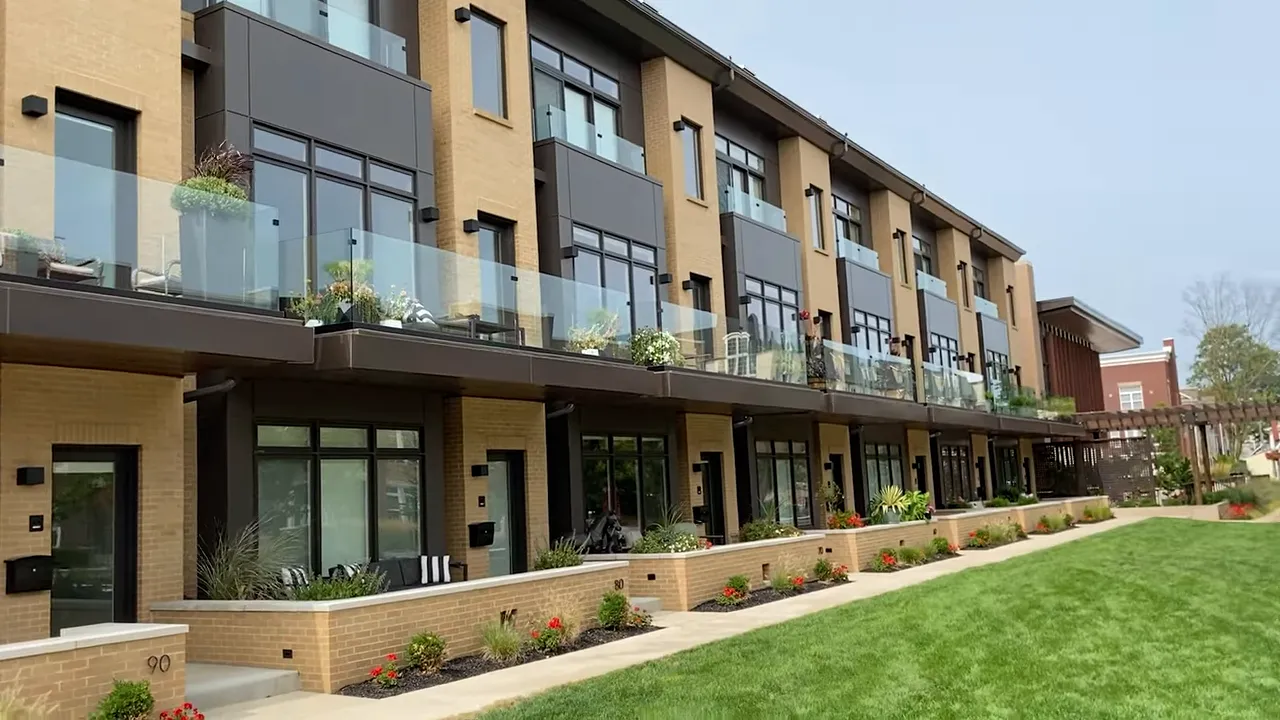
That makes the housing question in Carmel vs Zionsville Indiana fairly straightforward:
- Carmel usually offers more total listings because it is much larger.
- Carmel may provide more townhome, condo, and lower-price opportunities.
- Zionsville generally has fewer homes to choose from at any given time.
- Zionsville has especially limited inventory at more entry-level price points.
Price matters, of course, but so does flexibility. If we have a very specific budget, home style, or timeline, a larger inventory can make the search easier. If the setting and character of Zionsville are the priority, it may be worth accepting fewer choices and being patient for the right home.
How to Choose Between Carmel and Zionsville
The best way to frame Carmel vs Zionsville Indiana is not as a competition. Both are exceptionally nice communities with a lot going for them. The better fit depends on what matters most in our daily lives.
Carmel may fit better when we want:
- A larger city with more neighborhoods and housing inventory
- More direct road connections and a predictable grid
- Easy movement between Indianapolis, Westfield, Fishers, and Noblesville
- A more active overall pace without severe everyday traffic
- More potential choices at lower price points, especially condos and townhomes
Zionsville may fit better when we want:
- A smaller-scale community feel
- A quieter atmosphere with less transient traffic
- A distinctive downtown with brick streets, local businesses, and walkable character
- A setting that feels a bit more tucked away from the surrounding suburban flow
- A home search focused more on location and atmosphere than maximum inventory
Ultimately, Carmel vs Zionsville Indiana comes down to personality. Carmel feels broader, more connected, and more structured. Zionsville feels lower key, more intentionally separate, and less direct by design. Neither is a bad choice. They simply offer different versions of north-side Indianapolis living.
Whether you're drawn to Carmel's vibrant suburban lifestyle or Zionsville's quieter small-town atmosphere, finding the right community is about choosing the one that best fits your lifestyle and long-term goals. Whether you're searching for an existing home or exploring new construction homes in either area, having a local expert can make all the difference. If you're relocating to the Indianapolis area, I'd love to help you compare communities, tour homes, and navigate every step of the buying process. Call or text (317) 932-8620 or book a FREE consultation to start your home search with confidence.
FAQs About Living in Carmel vs Zionsville Indiana
Is Carmel bigger than Zionsville?
Yes. Carmel has more than 100,000 residents, while Zionsville has roughly 30,000. Carmel is at least three times larger by population.
Is Zionsville quieter than Carmel?
Generally, yes. Zionsville has fewer people, fewer vehicles, and less pass-through traffic. Carmel is not overwhelmingly congested, but it has more activity because it connects several major north-side communities.
What is the main road between Carmel and Zionsville?
U.S. 421 is commonly considered the general dividing line between the west side of Carmel and the east side of Zionsville, although the municipal boundary is not perfectly straight.
Why does Zionsville feel more separate from Carmel?
Zionsville has fewer direct through roads and a less grid-like layout than Carmel. Reaching downtown Zionsville from central Carmel often requires more intentional routing, which gives Zionsville a slightly more exclusive and tucked-away feel.
Are homes less expensive in Carmel or Zionsville?
Both are among the more expensive communities around Indianapolis. Carmel usually has more available homes and more opportunities at lower price points, while Zionsville has fewer entry-level and first-time buyer options, especially below $400,000.
Which is better for Carmel vs Zionsville Indiana?
There is no universal winner. Carmel may be a stronger fit for those who prioritize connectivity, road access, and more housing selection. Zionsville may be a stronger fit for those who prefer a calmer, smaller-town atmosphere with a more distinct sense of place.
Read More: MOVING TO INDIANAPOLIS: WHAT REAL ESTATE AGENTS MAY NOT TELL YOU BEFORE YOU BUY